
How to disinfect your well
1. Thoroughly clean all accessible outside surfaces removing any loose debris and mud around the well or spring. Then, wash the well area with a strong chlorine solution (1 quart of household bleach per 5 gallon of water). 2. Determine the amount of water in the well. Calculate the amount of bleach chlorine needed. DO NOT USE SCENTED BLEACHES. Health officials recommend using the normal strength household bleach, which is 5.25 percent sodium hypochlorite. 3. Remove the well cap or place a funnel into the small vent pipe of the well cap. Use the table below and add the appropriate amount of bleach. A minimum of 50 ppm chlorine solution is required: 4. Run water from an outside faucet through a hose until a strong chlorine odor can be detected.Place the end of the hose in the well allowing the water to run down the sides of the casing and circulate for at least 15 minutes.Replace the well cap. 5. Turn off the hose and enter the home opening each tap, one at a time, until the smell of chlorine can be detected. Please include hot water faucets, toilets, bathtubs, washing machine, etc. 6. Once the chlorine odor reaches all outlets, let the water system stand for 8 hours, preferably overnight. Refrain from any water use during this time, except for flushing toilets. 7. Flush the system of chlorine by turning on an outside faucet letting it run until the chlorine odor dissipates. Finally, run indoor faucets until the water is clear and the chlorine odor is gone. Do not run any unnecessary water into the septic system or allow the chlorinated water to drain directly into a stream or pond. Continue this process until the odor of bleach is completely gone. 8. The water should be laboratory tested to determine if it is safe to drink. It is recommended that over the next several weeks two additional samples be taken to be sure results are satisfactory. Repeated chlorination and/or a well professional should be called if problems remain.
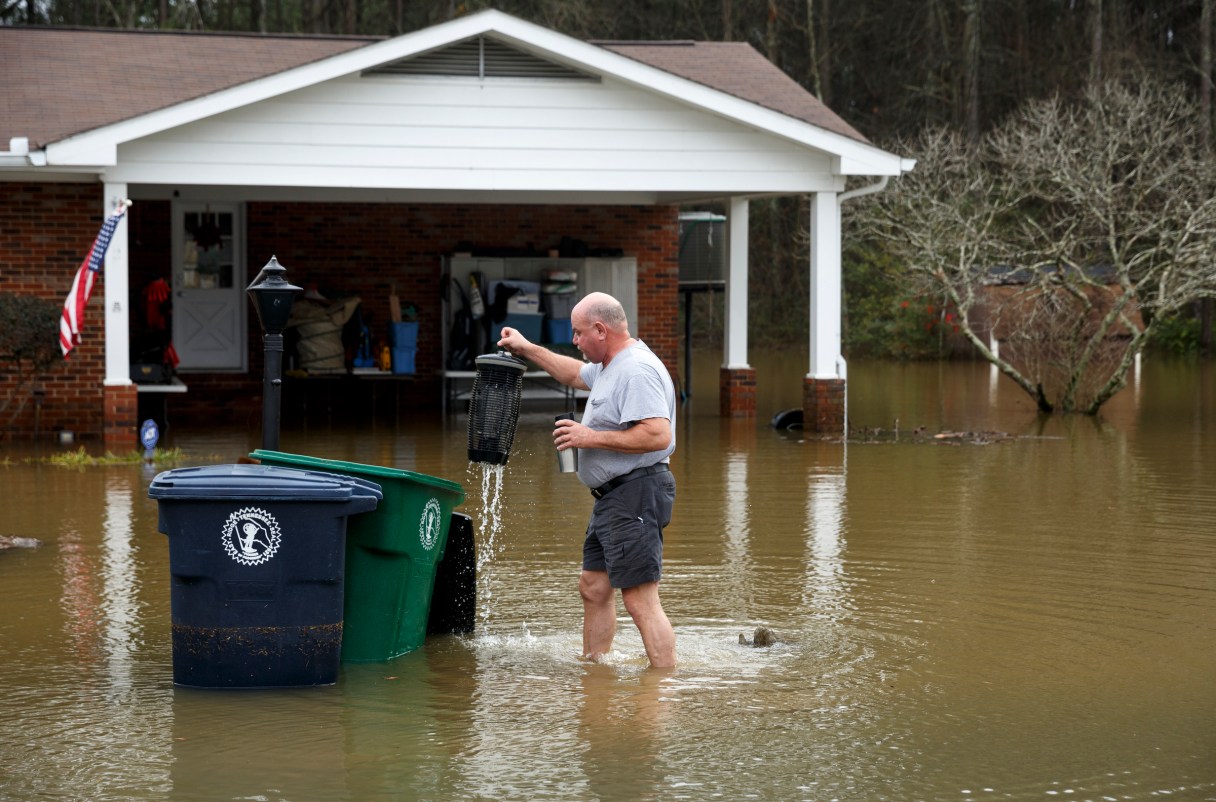
Chattanooga officials are urging caution as water rises and overflows onto city streets, calling for residents to avoid walking or driving through flooded areas.
A warning issued by the North Georgia Health District stated that any well or spring that has been covered with floodwaters must be considered contaminated.
Though all roads previously closed during the holiday floods are now open, that could change as rain continues to fall.
The Chattanooga area remains under a flash flood watch through Wednesday, and a wind advisory through tonight, according to the National Weather Service.