
Monday, November 9, 2026Nov 9

California condor that helped save species returns to wild

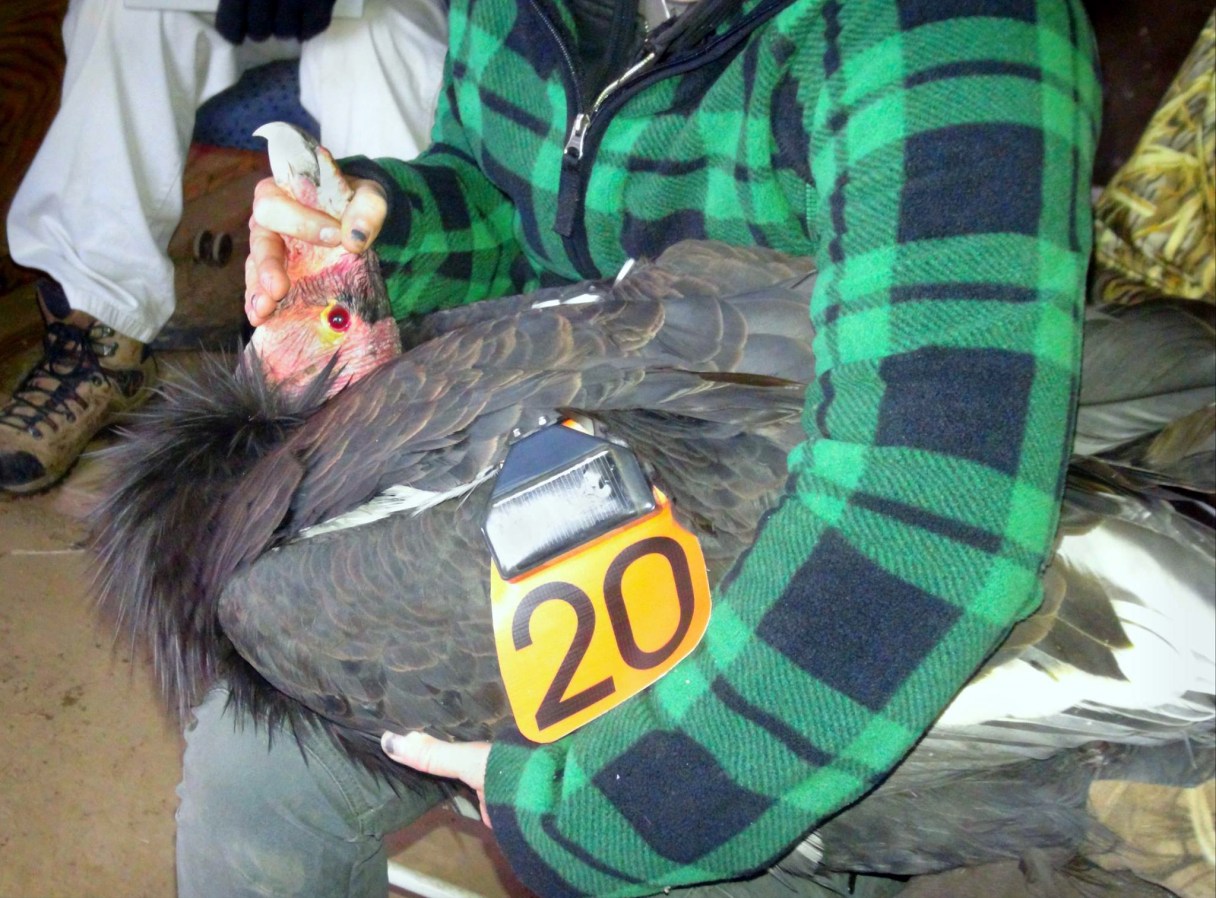
In this Dec. 28, 2015 photo provided by the U.S. Fish and Wildlife Service, a California condor designated AC-4, whose captive breeding helped save the species, is re-branded as California condor 20 before its release at the Bitter Creek National Wildlife Refuge near Maricopa, Calif. AC-4 fathered the first condor chick born in captivity, and went on to sire 29 more chicks for reintroduction to the wild. (Jon Myatt/U.S. Fish and Wildlife Service via AP)
In this Dec. 28, 2015 photo provided by the U.S. Fish and Wildlife Service, a California condor designated AC-4, whose captive breeding helped save the species, is re-branded as California condor 20 before its release at the Bitter Creek National Wildlife Refuge near Maricopa, Calif. AC-4 fathered the first condor chick born in captivity, and went on to sire 29 more chicks for reintroduction to the wild. (Jon Myatt/U.S. Fish and Wildlife Service via AP) In this Dec. 28, 2015 photo provided by the U.S. Fish and Wildlife Service, a California condor designated AC-4, whose captive breeding helped save the species, is re-branded as California condor 20 before its release at the Bitter Creek National Wildlife Refuge near Maricopa, Calif. AC-4 fathered the first condor chick born in captivity, and went on to sire 29 more chicks for reintroduction to the wild. (Jon Myatt/U.S. Fish and Wildlife Service via AP)

SAN FRANCISCO (AP) – Banking into the wind and then gliding out of sight, a male California condor flew back into the wild after a captive breeding program that helped save North America’s largest species of land bird.

The 35-year-old bird named AC-4 soared out of his open pen earlier this week at a canyon rim inside the Bitter Creek National Wildlife Refuge, in central California’s Kern County. He had been one of just 23 condors left in the world in the 1980s.

It was the bird’s first free flight since 1985, when a U.S. Fish and Wildlife Service team captured him near the same spot. It was part of a last-ditch attempt to stop the extinction of the California condor, which has a wing span of more than 9 feet.

AC-4 needed only a few minutes to get his bearings before flying out of the pen and over the canyon, said Joseph Brandt, a lead condor biologist with the wildlife service. Brandt was sitting on a hilltop nearby to watch the release.

“He kind of flew right past us. It was really incredible,” Brandt said by telephone Thursday.