
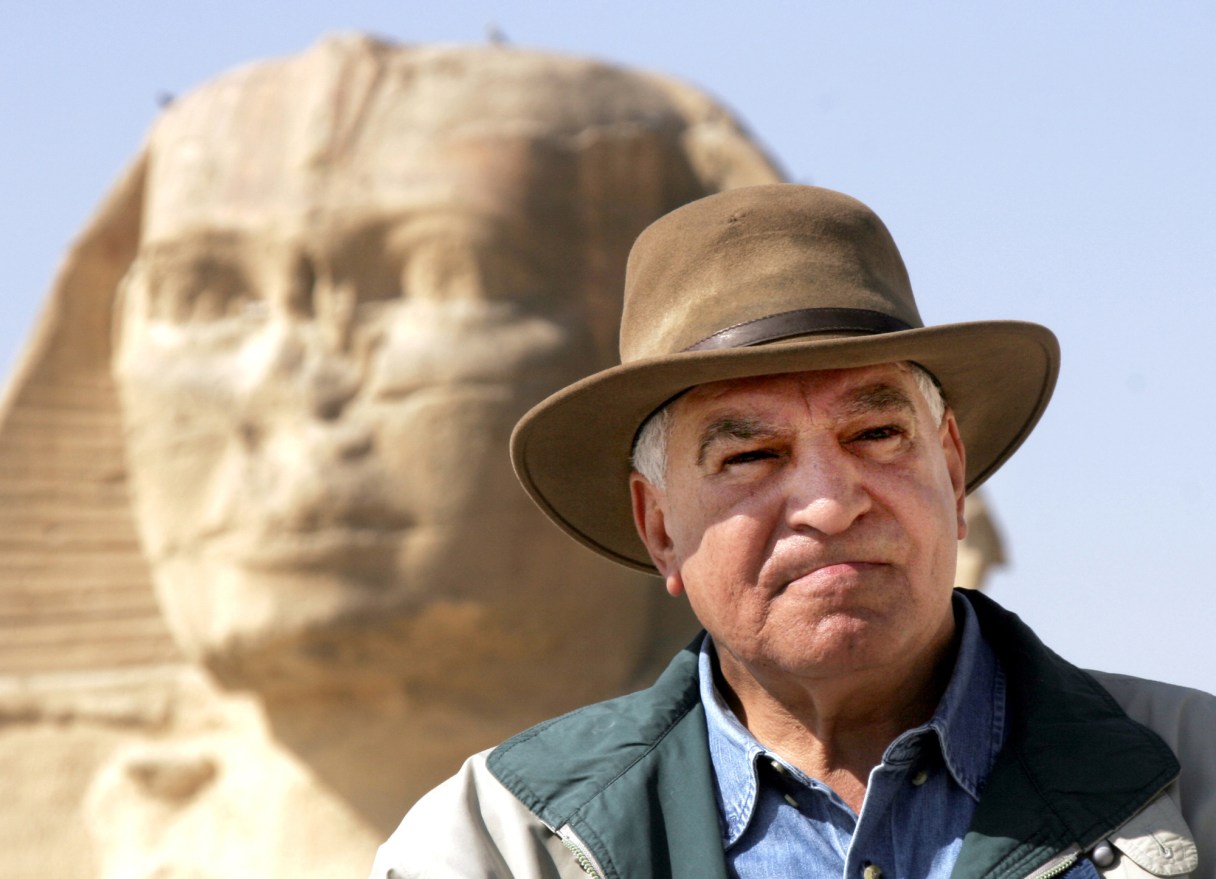
KRUGERSDORP, South Africa (AP) – Egypt’s best-known archaeologist is a passionate showman with an explorer’s fedora who joined the last, doomed Cabinet of President Hosni Mubarak, then resigned in a swirl of corruption allegations after the 2011 revolution ousted his patron. Admired or reviled, he is once again a frontman for Egypt, exhorting international audiences to see the heritage of a country where unrest has hit tourism hard.
“Egypt is safe,” Zahi Hawass declared last week at a South African casino complex where schoolchildren roamed an exhibition of replicas of King Tutankhamun’s treasures. Egyptian hotels and antiquities sites are secure, said Hawass, who planned to welcome a tour group of 120 Americans to Egypt at the end of January.
Tourism is resurfacing, but it is a hard sell. The uprising that toppled Mubarak, the 2013 military ouster of Islamist President Mohammed Morsi, and sporadic violence have slammed the key Egyptian industry. On Thursday, militants killed 31 security force members in the restive Sinai Peninsula. On Jan. 24, a female activist was shot dead by police during a peaceful rally near Tahrir Square in Cairo, according to witnesses.
The Egyptian Museum, home to King Tut’s gold mask, lies near Tahrir Square, the epicenter of the 2011 protests. Hawass was then antiquities minister, assuring journalists that Egypt’s heritage was mostly intact despite some looting and damage. A stalwart of the old regime, he soon left his post and was besieged by allegations that he abused his position for personal gain.
“The devils came out of the sewage. They hurt me a lot,” Hawass said of his detractors in an interview with The Associated Press. He said it took two years to clear his name.