
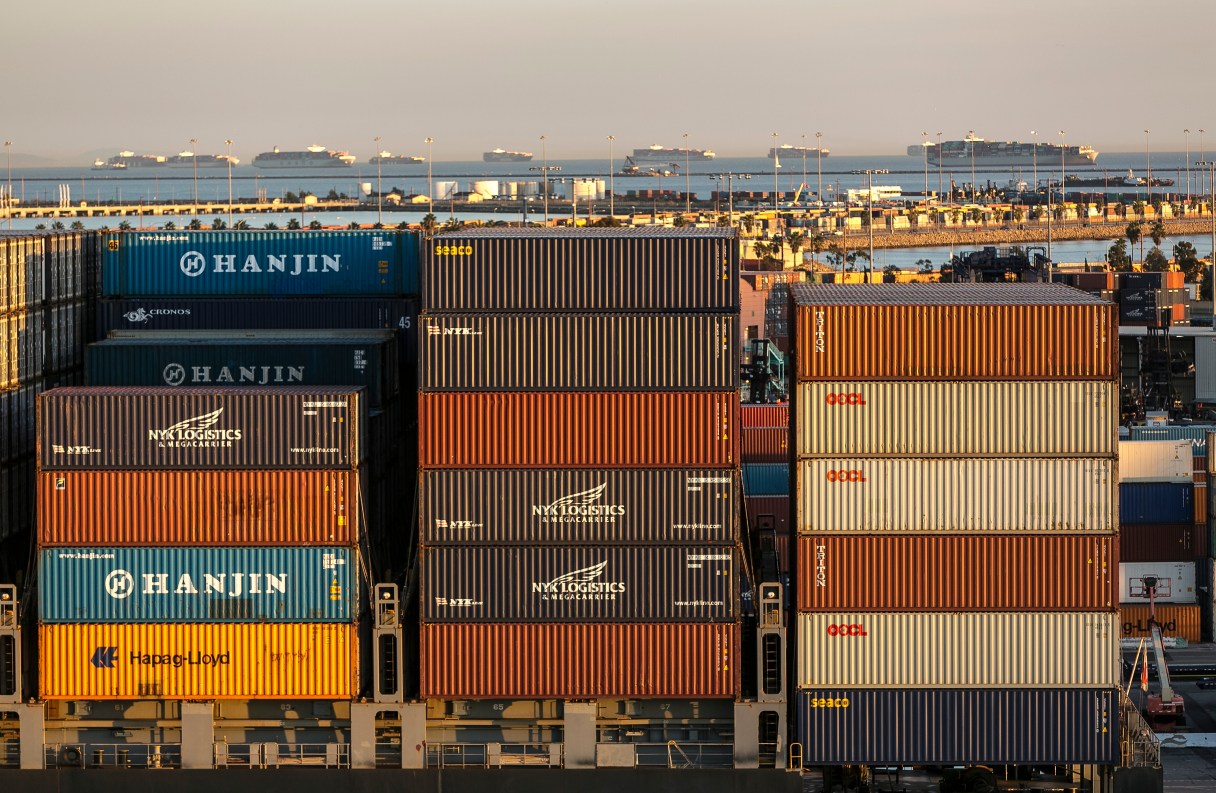
LOS ANGELES (AP) – Companies that handle billions of dollars of cargo at West Coast seaports said Friday they will hire far fewer workers this weekend, the latest escalation in a contract dispute with dockworkers that threatens to shut down a vital link in U.S.-Asia trade.
The association representing port terminal operators announced its members would not hire crane drivers to move containers on and off massive ocean-going ships. Instead, employers could order smaller crews to clear already-unloaded containers from congested dockside yards.
The announcement could foreshadow a full port shutdown as soon as Monday, or be a hardball bargaining tactic designed to force a contract after nine months of talks.
Congestion has been a huge issue at the West Coast’s 29 ports, where containers are taking two to three times longer than usual to clear dockside yards on their way to distribution warehouses.
The International Longshore and Warehouse Union has blamed employers, saying they failed to manage the supply chain efficiently. The Pacific Maritime Association, which represents shipping companies as well as port terminal operators, has said for months that workers have slowed their work by about 50 percent to gain bargaining leverage.