
Saturday, November 14, 2026Nov 14

Pope focuses on paradox of abundance in address to experts

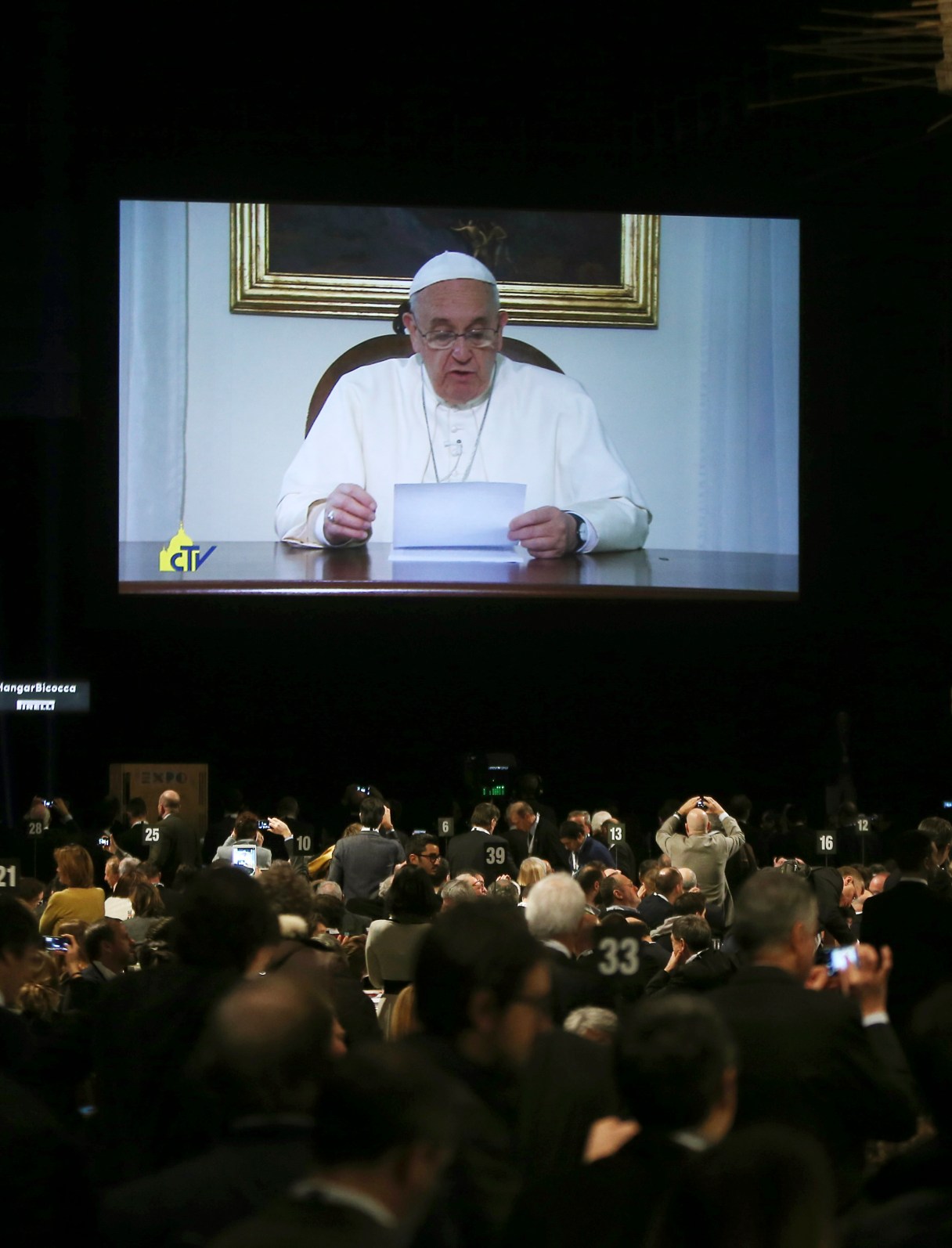
Pope Francis is seen on a giant screen during his video address to a session of 500 experts drafting the so-called Milan Charter that seeks commitments from governments, organizations and individuals during the Expo 2015 world's fair to resolve such issues as food security, decreasing food waste and ensuring biodiversity. in Milan, Italy, Friday, Feb. 7, 2015.  Pope Francis emphasized the right to food as fundamental saying the paradox of abundance described by Pope John Paul II -- whereby there is food for everyone yet not everyone can eat -- continues to be an issue.(AP Photo/Antonio Calanni)
Pope Francis is seen on a giant screen during his video address to a session of 500 experts drafting the so-called Milan Charter that seeks commitments from governments, organizations and individuals during the Expo 2015 world's fair to resolve such issues as food security, decreasing food waste and ensuring biodiversity. in Milan, Italy, Friday, Feb. 7, 2015. Pope Francis emphasized the right to food as fundamental saying the paradox of abundance described by Pope John Paul II -- whereby there is food for everyone yet not everyone can eat -- continues to be an issue.(AP Photo/Antonio Calanni)

MILAN (AP) – Pope Francis emphasized the right to food as fundamental in a video address to 500 experts working on a wide-ranging document aimed at raising awareness of issues surrounding food and nutrition.

Francis said the paradox of abundance described by Pope John Paul II – there is food for everyone yet not everyone can eat – has not been resolved.

The pope addressed a session Saturday of 500 experts drafting the so-called Milan Charter that seeks commitments from governments, organizations and individuals during the Expo 2015 world’s fair to resolve such issues as food security, decreasing food waste and ensuring biodiversity.

Francis urged delegates to focus on resolving “the structural causes of poverty,” and to maintain the dignity of the individual at the heart of economic policy.