
Friday, October 30, 2026Oct 30

This story is free to read.

Rosetta space probe takes sharp, close-up images of comet

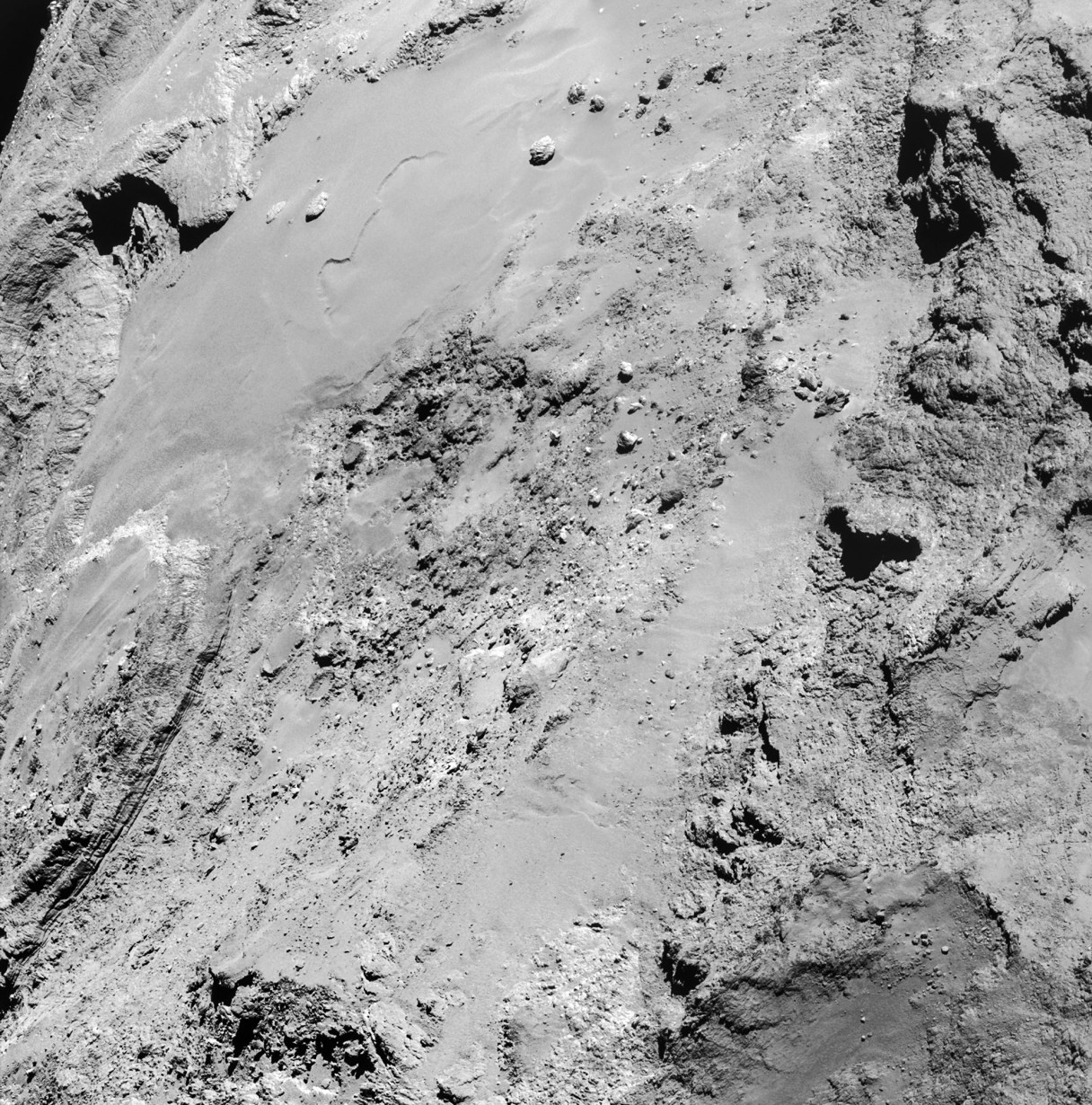
The photo provided by European Space Agency ESA on Monday, Feb. 16, 2015 shows a four-image mosaic of Comet 67P/Churyumov–Gerasimenko which comprising images were taken on Feb. 14,  2015 during the first dedicated close flyby from a distance of 8.9 km from the surface. On Saturday Rosetta passed just 6 kilometers (less than 4 miles) above the surface of comet. (AP Photo/ESA/Rosetta/NavCam)
The photo provided by European Space Agency ESA on Monday, Feb. 16, 2015 shows a four-image mosaic of Comet 67P/Churyumov–Gerasimenko which comprising images were taken on Feb. 14, 2015 during the first dedicated close flyby from a distance of 8.9 km from the surface. On Saturday Rosetta passed just 6 kilometers (less than 4 miles) above the surface of comet. (AP Photo/ESA/Rosetta/NavCam) The photo provided by European Space Agency ESA on Monday, Feb. 16, 2015 shows a four-image mosaic of Comet 67P/Churyumov–Gerasimenko which comprising images were taken on Feb. 14, 2015 during the first dedicated close flyby from a distance of 8.9 km from the surface. On Saturday Rosetta passed just 6 kilometers (less than 4 miles) above the surface of comet. (AP Photo/ESA/Rosetta/NavCam)

BERLIN (AP) – The European Space Agency says high-resolution images the Rosetta space probe took during a swoop close to a comet it’s been tracking for months show boulders on the comet’s surface as well as “stunning details of the contrasting terrain.”

The agency said Monday the boulders ranged in size from a few meters (yards) to a few tens of meters, and lie “scattered across the whole surface of the comet.” It says the sun was directly behind Rosetta as the pictures were taken, providing optimal light conditions.

While swooping in as close as 6 kilometers (under 4 miles) Saturday to take the pictures, Rosetta’s instruments also sampled the innermost parts of comet 67P/Churyumov-Gerasimenko’s atmosphere.

Rosetta, which has been alongside the comet since August, is now moving out to take far-view images.