
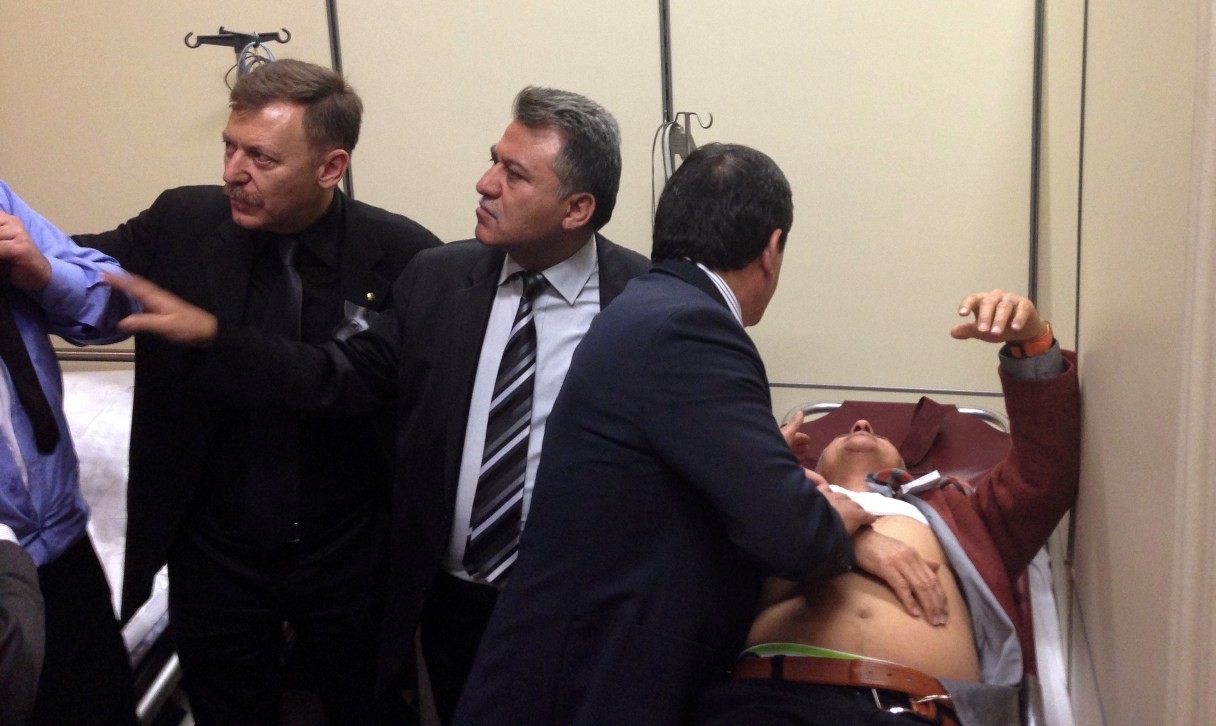
ANKARA, Turkey (AP) – Chairs flew and lawmakers traded punches. A brawl in Parliament over a new security bill has forced the spotlight on mounting suspicions that President Recep Tayyip Erdogan’s real goal is to hand himself more tools to crush dissent.
Five lawmakers were injured early Wednesday in the fight that broke out as opposition leaders tried to delay a debate on the legislation.
The government says the measures to give police heightened powers to break up demonstrations are aimed at preventing violence such as the deadly clashes that broke out last year between Kurds, supporters of an Islamist group and police. Critics say that the new measures are part of a steady march toward preventing mass demonstrations that threaten Erdogan’s iron grip over Turkish politics.
The bill would expand police rights to use firearms, allow them to search people or vehicles without a court order and detain people for up to 48 hours without prosecutor authorization. Police would also be permitted to use firearms against demonstrators who hurl Molotov cocktails. Demonstrators who cover their faces with masks or scarves during violent demonstrations could face four years in prison.
Crucially, the measures would give governors – not just prosecutors and judges – the right to order arrests.