
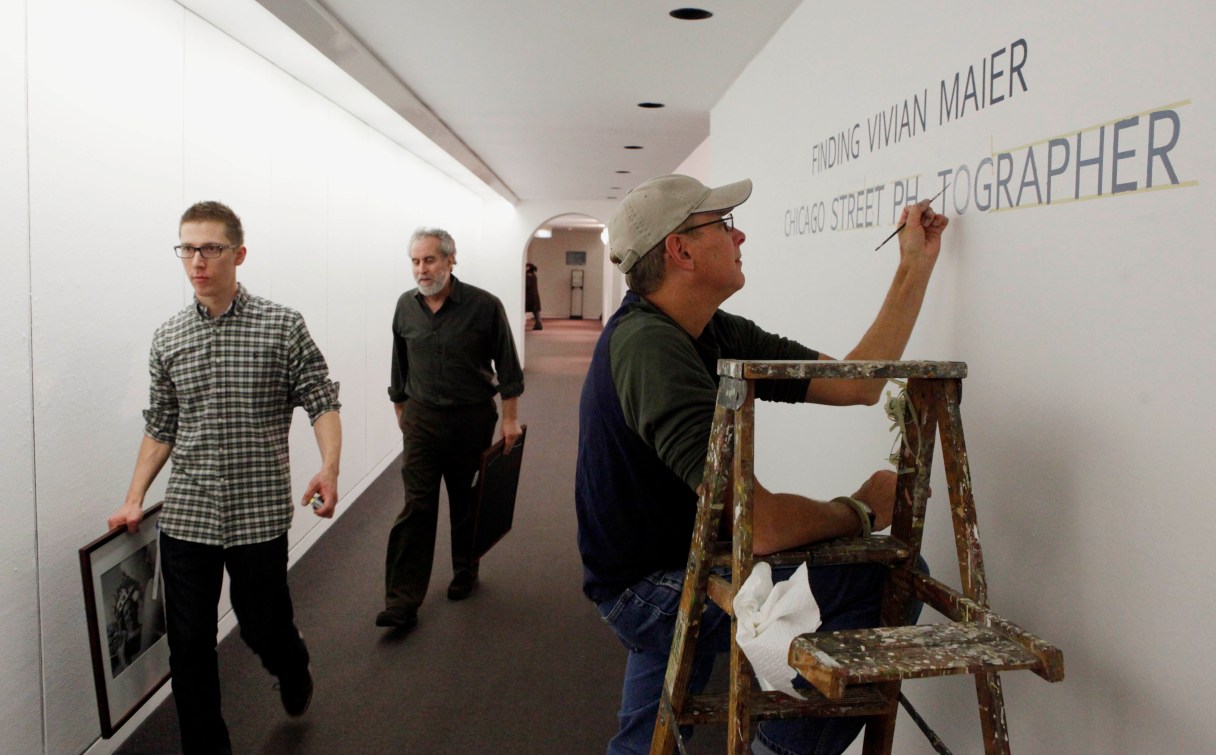
CHICAGO (AP) – A messy legal fight over copyrights to streetscape photos shot by a Chicago nanny whose life is chronicled in “Finding Vivian Maier,” which is nominated for an Oscar on Sunday, threatens to slow or even stop new releases of her once-unknown work that has become a sensation only after her death.
The enigmatic Maier died penniless five years ago with no will, no obvious heirs and no inkling that the more than 150,000 photographs she snapped in her spare time in Chicago and New York from the 1950s onward would become so prized. Now, two men she never knew are tussling over who holds the rights to print, sell and display the images she created.
Maier’s intimate and often-gritty photography, which she made no attempt to sell commercially in her lifetime, focused on everyday people, rich and poor, and captures the flavor of a bygone era. Since interest in her work exploded, prints of her photographs have sold for thousands of dollars.
Center stage in the dispute is John Maloof, a 33-year-old former Chicago real estate agent who features in and co-directs the documentary. He bought a box full of Maier’s negatives at auction for $400 from a repossessed storage locker in 2007. He now owns the vast majority of her work, more than 100,000 images, that are mostly in negatives or undeveloped film. He traced Maier’s whereabouts in the Chicago area in 2009, just days after she died at age 83.
Maloof defends his project – now his full-time job – of managing his Maier collection. Years going through negatives, and paying for professional restorers and printers has cost him hundreds of thousands of dollars. Until recently, he either lost money or just broke even, he said.