
Saturday, October 31, 2026Oct 31

This story is free to read.

AP PHOTOS: Antarctica, a window into mankind’s future

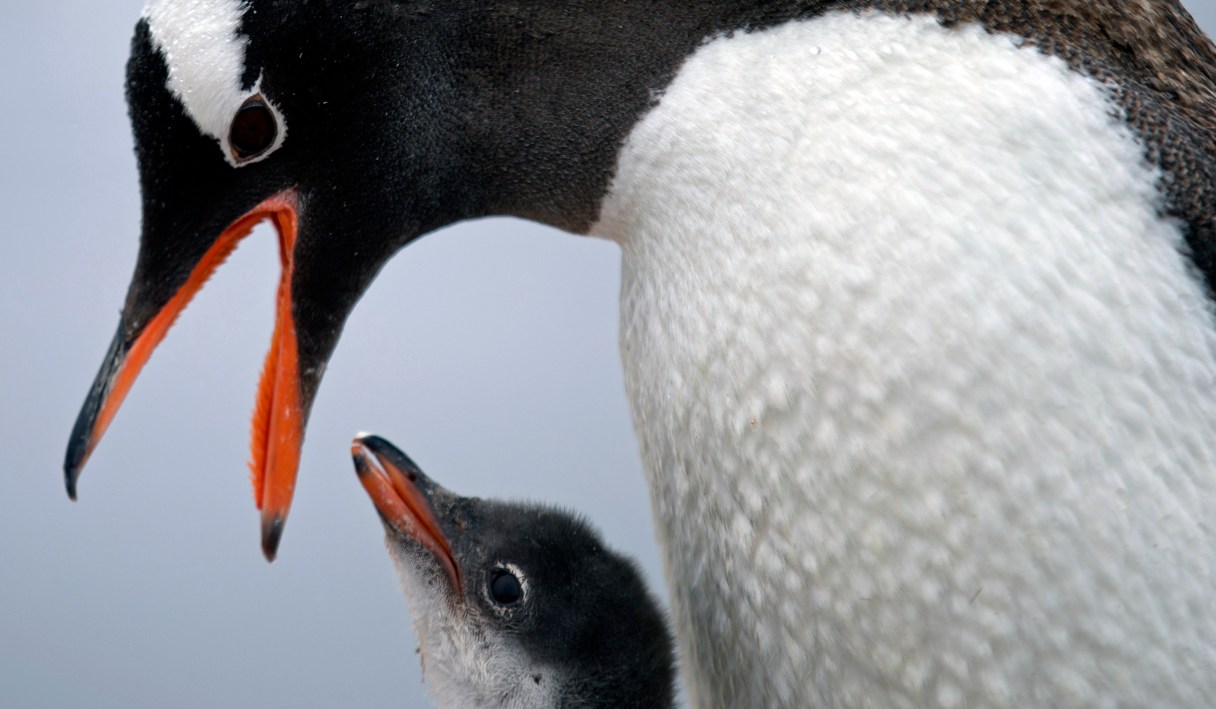
In this Jan. 22, 2015 photo, a Gentoo penguin feeds its baby at Station Bernardo O'Higgins in Antarctica. "To understand many aspects in the diversity of animals and plants it’s important to understand when continents disassembled,” said Richard Spikings, a research geologist at the University of Geneva. “So we’re also learning about the real antiquity of the Earth and how (continents) were configured together a billion years ago, half a billion years ago, 300 million years ago,” he said, adding that the insights will help him understand Antarctica’s key role in the jigsaw of ancient super continents.  (AP Photo/Natacha Pisarenko)
In this Jan. 22, 2015 photo, a Gentoo penguin feeds its baby at Station Bernardo O'Higgins in Antarctica. "To understand many aspects in the diversity of animals and plants it’s important to understand when continents disassembled,” said Richard Spikings, a research geologist at the University of Geneva. “So we’re also learning about the real antiquity of the Earth and how (continents) were configured together a billion years ago, half a billion years ago, 300 million years ago,” he said, adding that the insights will help him understand Antarctica’s key role in the jigsaw of ancient super continents. (AP Photo/Natacha Pisarenko) In this Jan. 22, 2015 photo, a Gentoo penguin feeds its baby at Station Bernardo O'Higgins in Antarctica. "To understand many aspects in the diversity of animals and plants it’s important to understand when continents disassembled,” said Richard Spikings, a research geologist at the University of Geneva. “So we’re also learning about the real antiquity of the Earth and how (continents) were configured together a billion years ago, half a billion years ago, 300 million years ago,” he said, adding that the insights will help him understand Antarctica’s key role in the jigsaw of ancient super continents. (AP Photo/Natacha Pisarenko)

DECEPTION ISLAND, Antarctica (AP) – Earth’s past, present and future come together here on the northern peninsula of Antarctica, the wildest, most desolate and mysterious of its continents.

Clues to answering humanity’s most basic questions are locked in this continental freezer the size of the United States and half of Canada: Where did we come from? Are we alone in the universe? What’s the fate of our warming planet?

The first explorers set foot in Antarctica 194 years ago hunting 19th century riches of whale and seal oil and fur, turning tides red with blood. Since then, the continent has proven a treasure chest for scientists trying to determine everything from the creation of the cosmos to how high seas will rise with global warming.

“It’s a window out to the universe and in time,” said Kelly Falkner, polar program chief for the U.S. National Science Foundation.

For a dozen days in January, in the middle of the chilly Antarctic summer, The Associated Press followed scientists from different fields searching for alien-like creatures, hints of pollution trapped in pristine ancient ice, leftovers from the Big Bang, biological quirks that potentially could lead to better medical treatments, and perhaps most of all, signs of unstoppable melting.

Antarctica “is big and it’s changing and it affects the rest of the planet and we can’t afford to ignore what’s going on down there,” said David Vaughan, science director of the British Antarctic Survey.

Here’s a look at some of the images from the trip:

___

Follow AP photographers and photo editors on Twitter: http://apne.ws/15Oo6jo

___

Associated Press writer Luis Andres Henao reported this story on Deception Island and Seth Borenstein reported from Washington.