
Friday, October 30, 2026Oct 30

This story is free to read.

Survey: China factory activity up but export orders drop

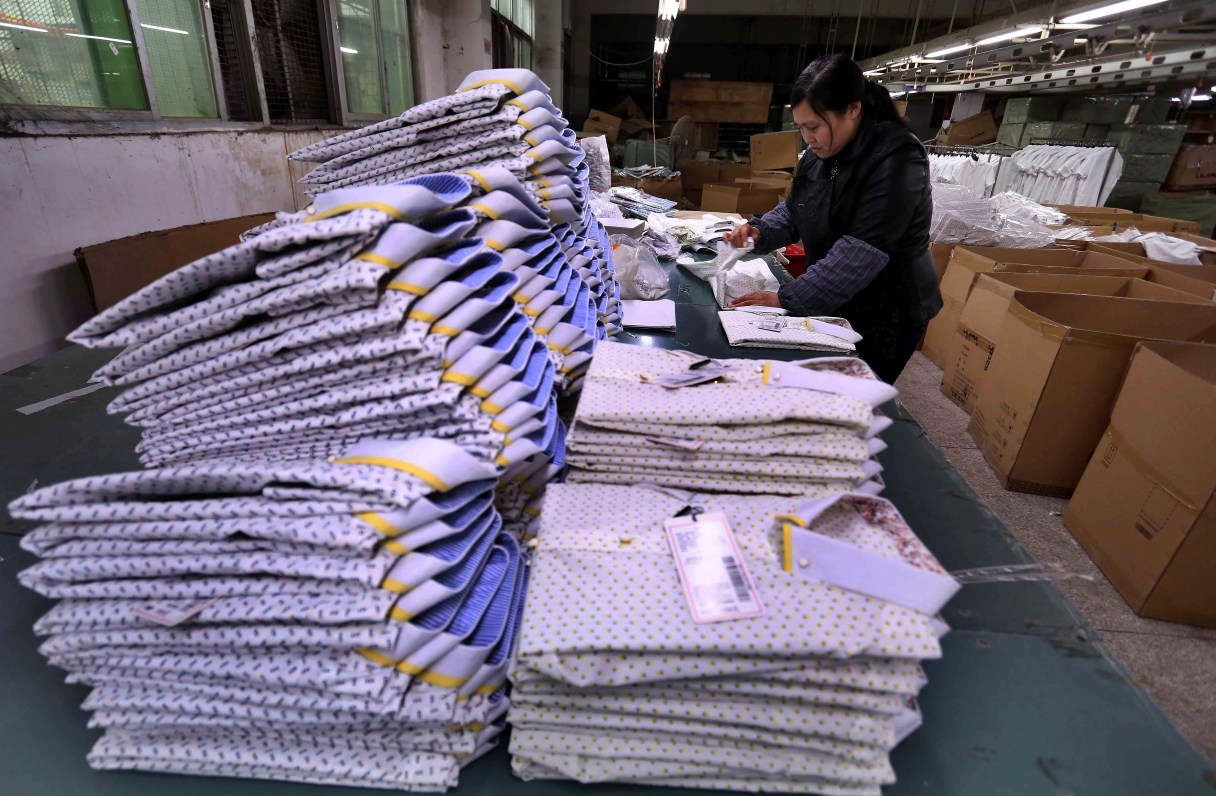
In this Feb. 4, 2015 photo, a woman folds a shirt at a garment factory in Jinjiang in southeast China's Fujian province. China's manufacturing activity edged up to a four-month high in February although export orders decreased for the first time in nearly a year, in the latest sign of uncertainty for the world's No. 2 economy, according to a private survey Wednesday, Feb. 25, 2015. (AP Photo) CHINA OUT
In this Feb. 4, 2015 photo, a woman folds a shirt at a garment factory in Jinjiang in southeast China's Fujian province. China's manufacturing activity edged up to a four-month high in February although export orders decreased for the first time in nearly a year, in the latest sign of uncertainty for the world's No. 2 economy, according to a private survey Wednesday, Feb. 25, 2015. (AP Photo) CHINA OUT In this Feb. 4, 2015 photo, a woman folds a shirt at a garment factory in Jinjiang in southeast China's Fujian province. China's manufacturing activity edged up to a four-month high in February although export orders decreased for the first time in nearly a year, in the latest sign of uncertainty for the world's No. 2 economy, according to a private survey Wednesday, Feb. 25, 2015. (AP Photo) CHINA OUT

HONG KONG (AP) – China’s manufacturing activity edged up to a four-month high in February although export orders decreased for the first time in nearly a year, in the latest sign of uncertainty for the world’s No. 2 economy, according to a private survey Wednesday.

HSBC’s preliminary purchasing managers’ index released Wednesday rose to 50.1 this month from 49.7 in January.

The reading comes in barely above the 50-point level that indicates no change on the 100-point scale.

The bank’s chief China economist, Qu Hongbin, said the reading showed there was a “marginal improvement” in China’s outsize manufacturing sector heading into the Lunar New Year period.

The holiday tends to distort China’s economic data at the beginning of the year, with factories stocking up on raw materials and rushing to complete orders before shutting down for an extended break that begins at different times in January or February.