
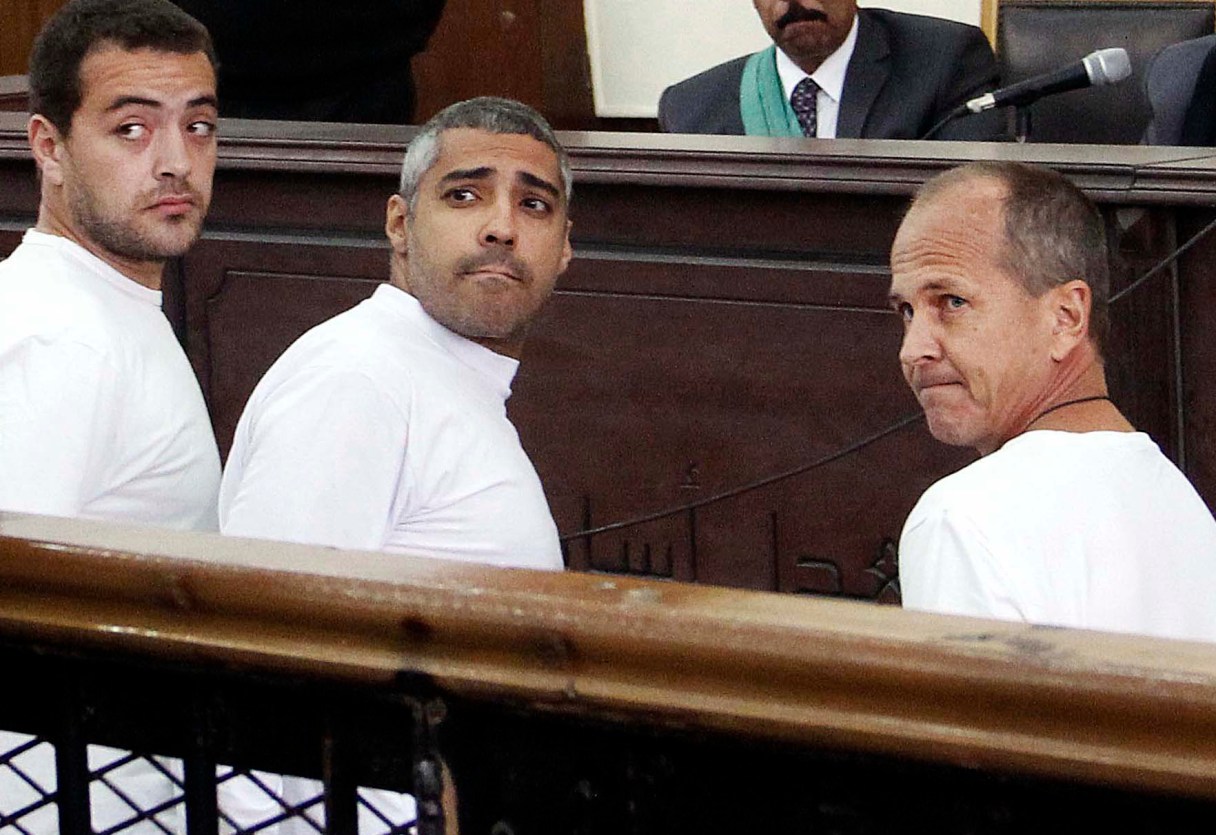
CAIRO (AP) – Three Al-Jazeera English journalists imprisoned in Egypt for over a year will appear in court Thursday to appeal their convictions, as thawing relations between Egypt and Qatar have raised hope they could be freed.
Egypt’s Court of Cassation will hear the appeal by Canadian-Egyptian Mohammed Fahmy, Australian journalist Peter Greste and Egyptian Baher Mohammed, all held since December 2013. Their arrests came after the overthrow of Islamist President Mohammed Morsi, a Muslim Brotherhood member.
Authorities accused Qatar-based Al-Jazeera of acting as a mouthpiece for the Brotherhood. The station denied the accusations and said the journalists were doing their job.
At trial, prosecutors offered no evidence backing accusations the three falsified footage to foment unrest. Instead, they showed edited news reports by the journalists, including Islamist protests and interviews with politicians. Other footage submitted as evidence had nothing to do with the case, including a report on a veterinary hospital and Greste’s past reports out of Africa.
Fahmy and Greste were sentenced to seven years in prison, while Mohammed got 10 years – three more because he was found with a spent bullet casing. Rights groups dismissed the trial as a sham and foreign countries, including the U.S., expressed their concern over the journalists’ detention.