
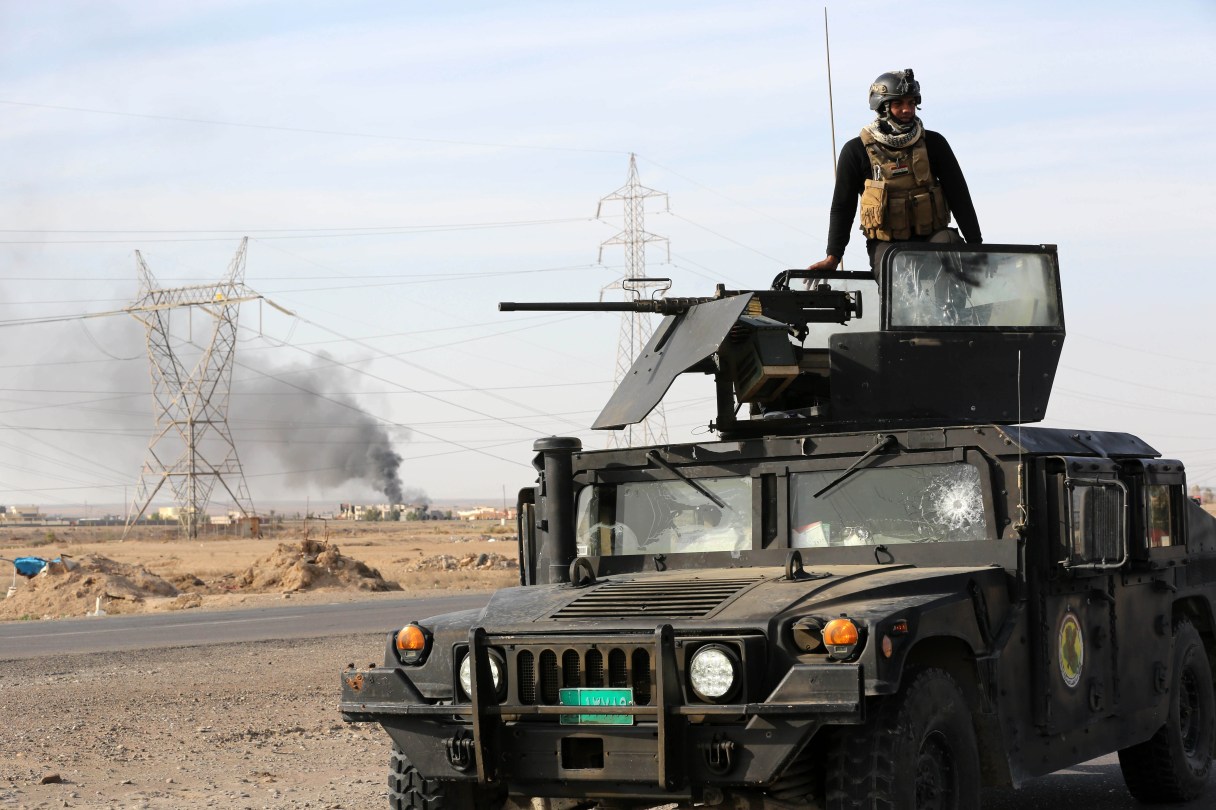
BAGHDAD (AP) – Lt. Gen. Abdul-Wahab al-Saadi had 225 fighters, a single Abrams tank, a pair of mortars, two artillery pieces and about 40 armored Humvees when he set out to retake a strategic city in northern Iraq captured by Islamic State militants over the summer.
It took 30 days as his force made an agonizingly slow journey for 40 kilometers (25 miles) through roadside bombs and suicide car attacks, then successfully laid siege to the oil refinery city of Beiji. The campaign earned al-Saadi the biggest battlefield victory by Iraqi forces since Islamic State fighters swept over most of northern and western Iraq in a summer blitz, prompting the collapse of the military.
Yet al-Saadi is deeply pessimistic. In a two-hour interview with The Associated Press, he said Iraq’s military lacks weapons, equipment and battle-ready troops and complained that U.S. air support was erratic. Both the military and the government remain riddled with corruption, he said. Most of the senior generals serving when the military fell apart had skills “more suited to World War II,” he said.
“If things don’t get better,” warned the general, “the country could end up divided” between its Shiite, Sunni and Kurdish populations.
The extremists are beatable when confronted with a proper force, he said. But he worries that the military’s multiple woes prevent it from doing so. Already, there is a danger the jihadis could retake Beiji, he said.