
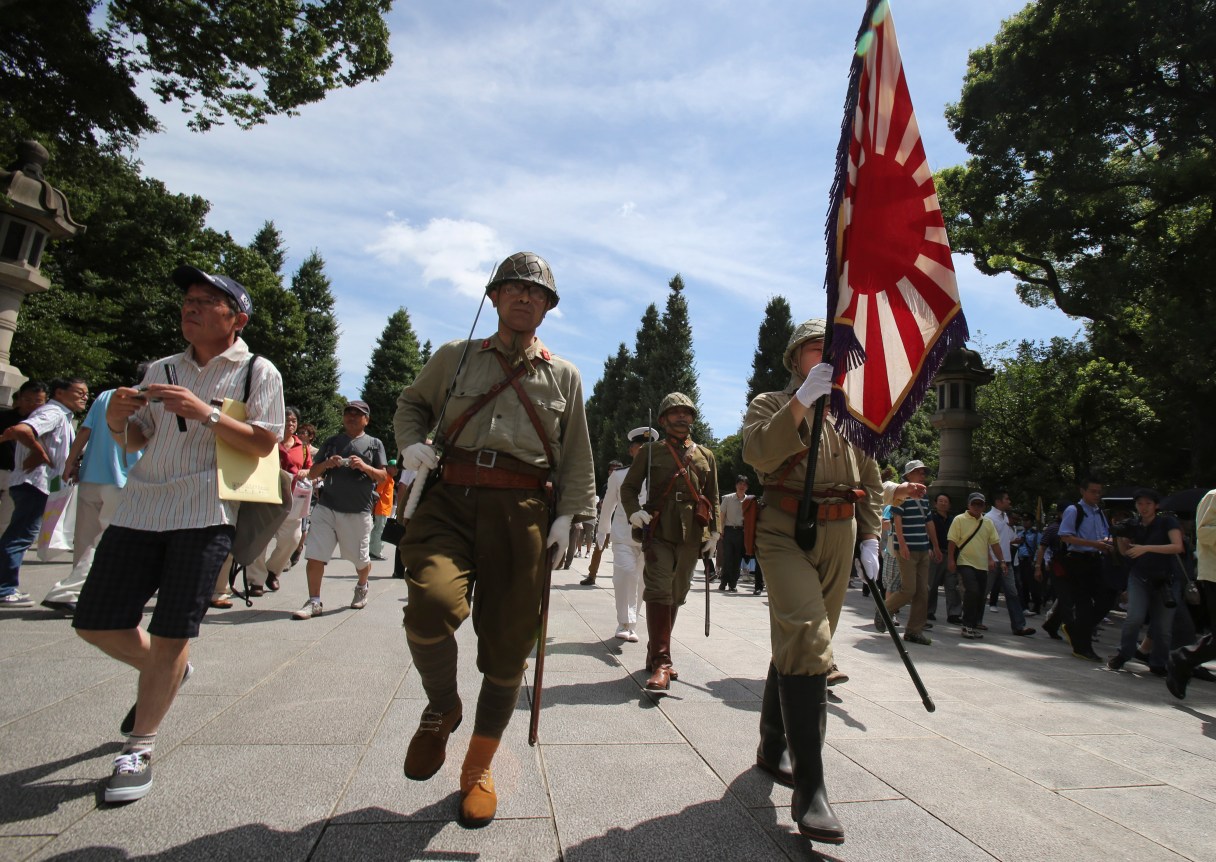
TOKYO – In a year that marks the 70th anniversary of World War II’s end, a question weighs on the minds of policymakers in Asia and as far away as Washington, D.C.: What will Japanese Prime Minister Shinzo Abe say about his country’s role in the war?
At a year-opening news conference Monday, he sought to reassure the world that he wouldn’t veer from past official statements on Japan’s wartime responsibility. Many analysts have speculated that Abe, known for his nationalist views, might downplay Japan’s responsibility for the war in a move that would roil relations with China and South Korea.
“The Abe Cabinet will uphold the general stance on history of successive prime ministers, including the Murayama statement,” he said, referring to a 1995 apology made by then-Prime Minister Tomiichi Murayama on the 50th anniversary of the war’s end.
He said the government would draft a new statement “that includes Japan’s remorse for the war,” though he stopped short of saying it would again apologize. Abe spoke to reporters in the city of Ise after visiting an important Shinto shrine there.
The statement is expected to be issued around the anniversary of the end of the war on Aug. 15.