
Friday, November 6, 2026Nov 6

This story is free to read.

Snow expected from Midwest to Northeast, then bitter cold

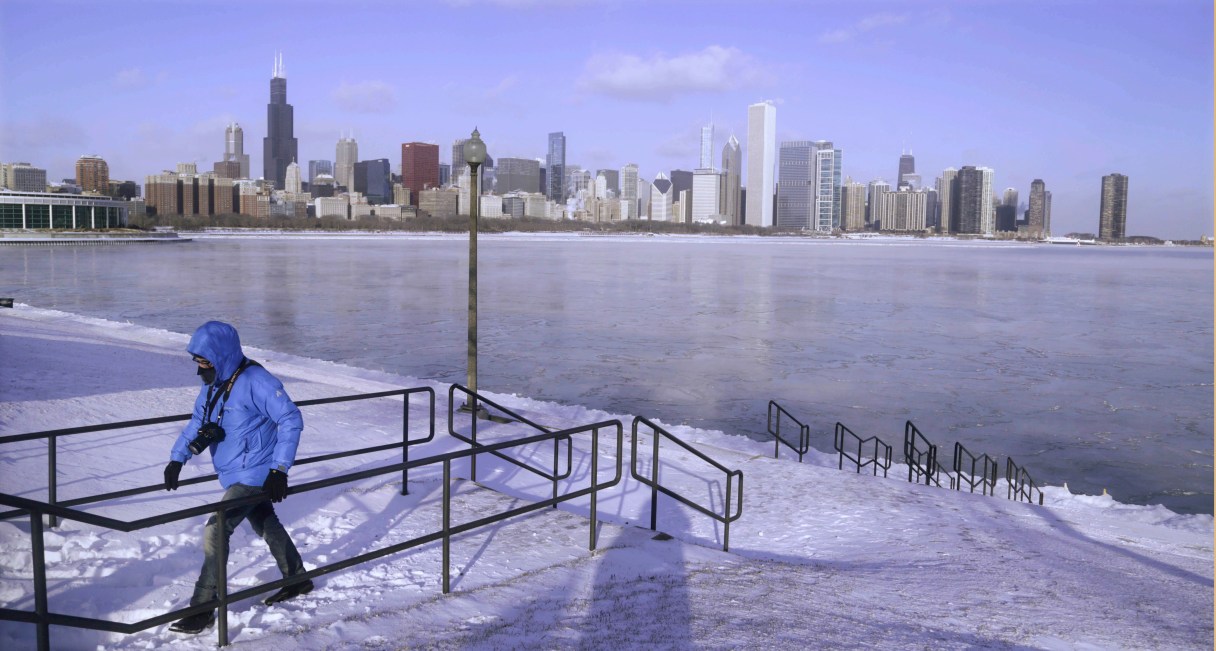
A photographer braves the cold to shoot photos along Lake Michigan, Monday, Jan. 5, 2015, in Chicago. People around the state woke up to below-normal temperatures Monday. The coldest temperatures were in northern Illinois, where the National Weather Service said it was 2 degrees below zero at Chicago's O'Hare International Airport.  It was a bit warmer in central Illinois — 9 degrees in Springfield and in the teens farther south. (AP Photo/M. Spencer Green)
A photographer braves the cold to shoot photos along Lake Michigan, Monday, Jan. 5, 2015, in Chicago. People around the state woke up to below-normal temperatures Monday. The coldest temperatures were in northern Illinois, where the National Weather Service said it was 2 degrees below zero at Chicago's O'Hare International Airport. It was a bit warmer in central Illinois — 9 degrees in Springfield and in the teens farther south. (AP Photo/M. Spencer Green) A photographer braves the cold to shoot photos along Lake Michigan, Monday, Jan. 5, 2015, in Chicago. People around the state woke up to below-normal temperatures Monday. The coldest temperatures were in northern Illinois, where the National Weather Service said it was 2 degrees below zero at Chicago's O'Hare International Airport. It was a bit warmer in central Illinois — 9 degrees in Springfield and in the teens farther south. (AP Photo/M. Spencer Green)

CHICAGO (AP) – A winter weather system expected to dump more than a foot of snow in some places has begun its trek east, with a separate blast of arctic air on its heels.

The National Weather Service says the fast-moving clipper system that’s already brought snow to parts of the upper Plains and Midwest is expected to leave as much as 5 to 7 inches in the Chicago area early Tuesday. Heavier snow bands and lake-effect snow could increase precipitation totals as the system heads east.

It’s expected to weaken as it nears the East Coast, but mid-Atlantic states could get a couple of inches Tuesday.

After the snow, a high-pressure system over Canada will move southeast, bringing even colder temperatures Wednesday to the eastern two-thirds of the U.S.