
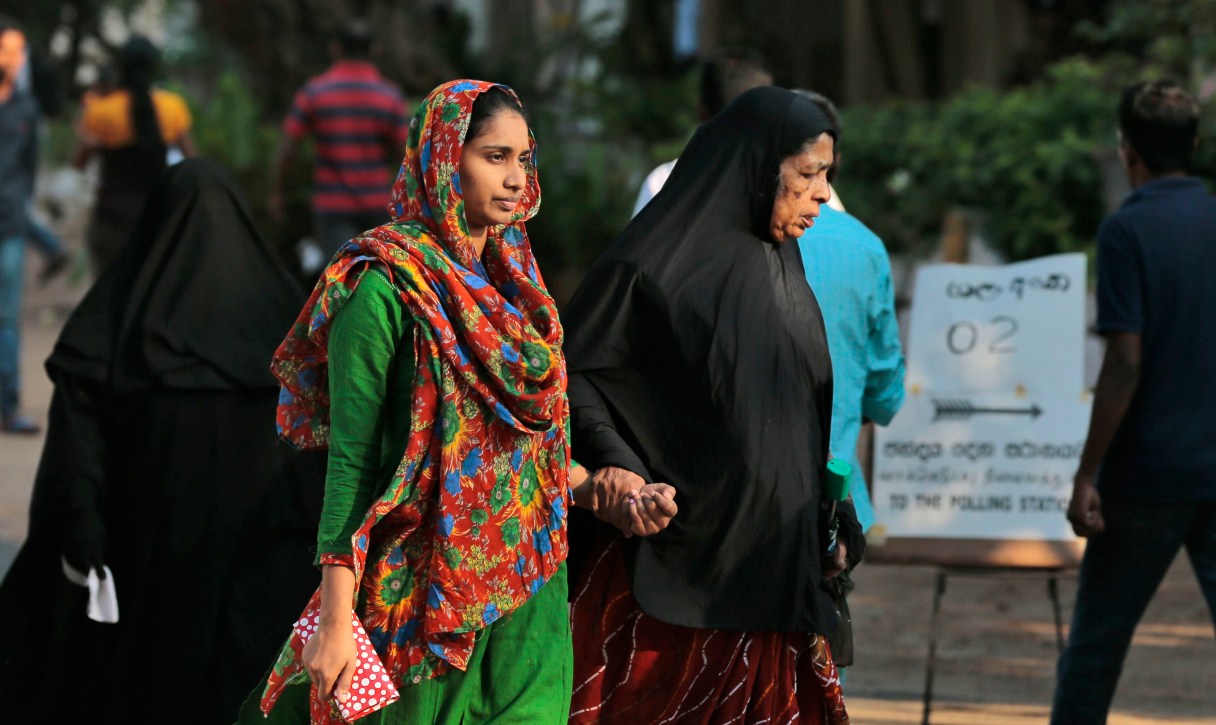
COLOMBO, Sri Lanka (AP) – Voters went to the polls Thursday in Sri Lanka, where President Mahinda Rajapaksa faces a fierce political battle after his onetime ally suddenly defected from the ruling party to run against him.
November defection by former Health Minister Maithripala Sirisena turned the race, which Rajapaksa had been widely expected to easily win, into a referendum on the president and the enormous power he wields over the island nation of 21 million.
People waited in long lines to cast their ballots in the capital of Colombo, while in northern Jaffna, the ethnic Tamil heartland where voting has been poor in previous national elections, there was good early turnout.
U.S. Secretary of State John Kerry spoke to Rajapaksa on Wednesday, and urged the government to hold a free and fair election and to ensure vote counting takes place credibly, according to State Department spokesperson Jen Psaki.
Rajapaksa’s power grew immensely after he crushed the Tamil Tiger rebels in 2009, ending a 25-year civil war. After his victory in the last election, in 2010, he jailed his opponent and used his overwhelming parliamentary majority to scrap a constitutional two-term limit for the president and give himself the power to appoint judges, top bureaucrats, police officials and military chiefs.