
Friday, November 13, 2026Nov 13

Japan Cabinet OKs record military budget with eye on China

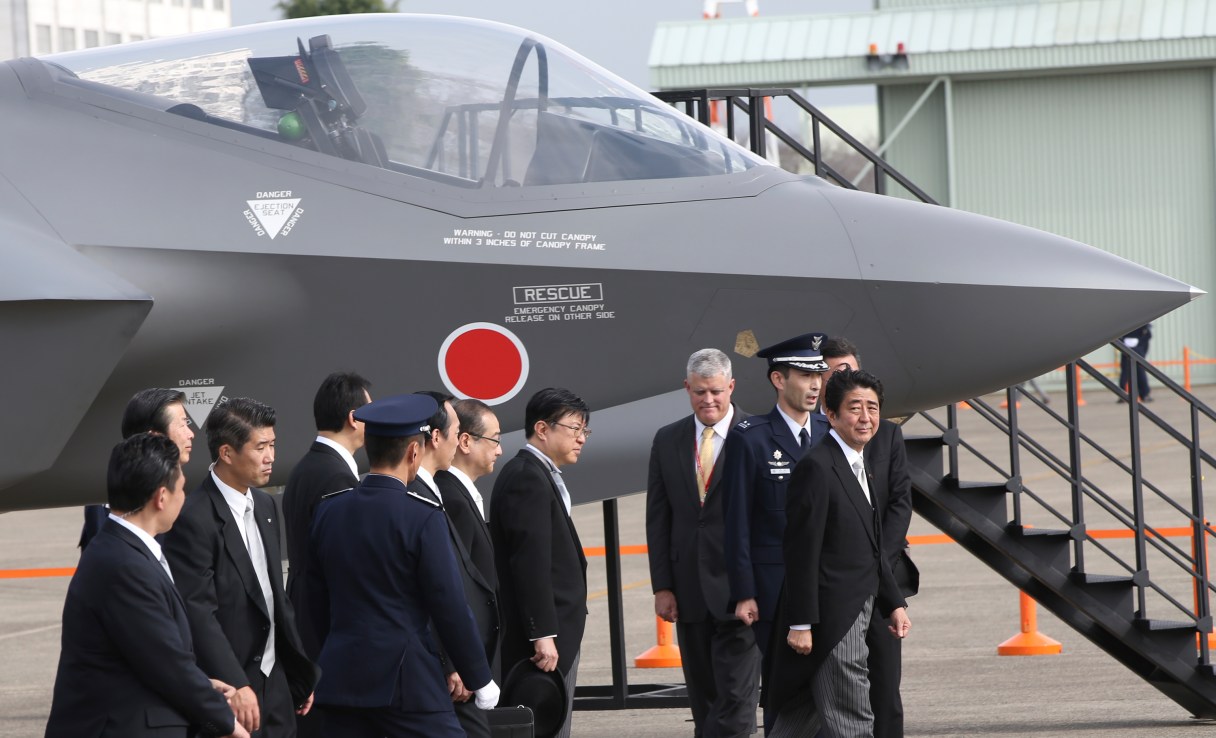
In this Oct. 26, 2014 photo, Japanese Prime Minister Shinzo Abe, far right, walks past a mock-up of the F-35 fighter jet during the annual Self-Defense Forces Commencement of Air Review at Hyakuri Air Base, north of Tokyo. Japan's Cabinet approved the country's largest ever defense budget on Wednesday, Jan. 14, 2015, including plans to buy surveillance aircraft, drones and F-35 fighter jets to help counter China's rising assertiveness in the region. (AP Photo/Eugene Hoshiko)
In this Oct. 26, 2014 photo, Japanese Prime Minister Shinzo Abe, far right, walks past a mock-up of the F-35 fighter jet during the annual Self-Defense Forces Commencement of Air Review at Hyakuri Air Base, north of Tokyo. Japan's Cabinet approved the country's largest ever defense budget on Wednesday, Jan. 14, 2015, including plans to buy surveillance aircraft, drones and F-35 fighter jets to help counter China's rising assertiveness in the region. (AP Photo/Eugene Hoshiko) In this Oct. 26, 2014 photo, Japanese Prime Minister Shinzo Abe, far right, walks past a mock-up of the F-35 fighter jet during the annual Self-Defense Forces Commencement of Air Review at Hyakuri Air Base, north of Tokyo. Japan's Cabinet approved the country's largest ever defense budget on Wednesday, Jan. 14, 2015, including plans to buy surveillance aircraft, drones and F-35 fighter jets to help counter China's rising assertiveness in the region. (AP Photo/Eugene Hoshiko)

TOKYO (AP) – Japan’s Cabinet approved the country’s largest ever defense budget on Wednesday, including plans to buy surveillance aircraft, drones and F-35 fighter jets to help counter China’s rising assertiveness in the region.

Prime Minister Shinzo Abe’s Cabinet endorsed a nearly 5 trillion yen ($42 billion) defense budget for the year beginning in April as part of a record 96.3 trillion yen ($814 billion) total budget.

The budget must still be approved by parliament, but Abe’s coalition holds majorities in both houses.

The 2 percent rise in defense spending is the third annual increase under Abe, who took office in December 2012 and ended 11 straight years of defense budget cuts.

The increase mainly covers new equipment, including P-1 surveillance aircraft, F-35 fighter jets and amphibious vehicles for a new unit similar to the U.S. Marine Corps. The aim is to boost Japan’s capacity to defend uninhabited islands in the East China Sea that it controls but which are also claimed by China.