
Saturday, November 14, 2026Nov 14

APNewsBreak: California unveils strictest rules on pesticide

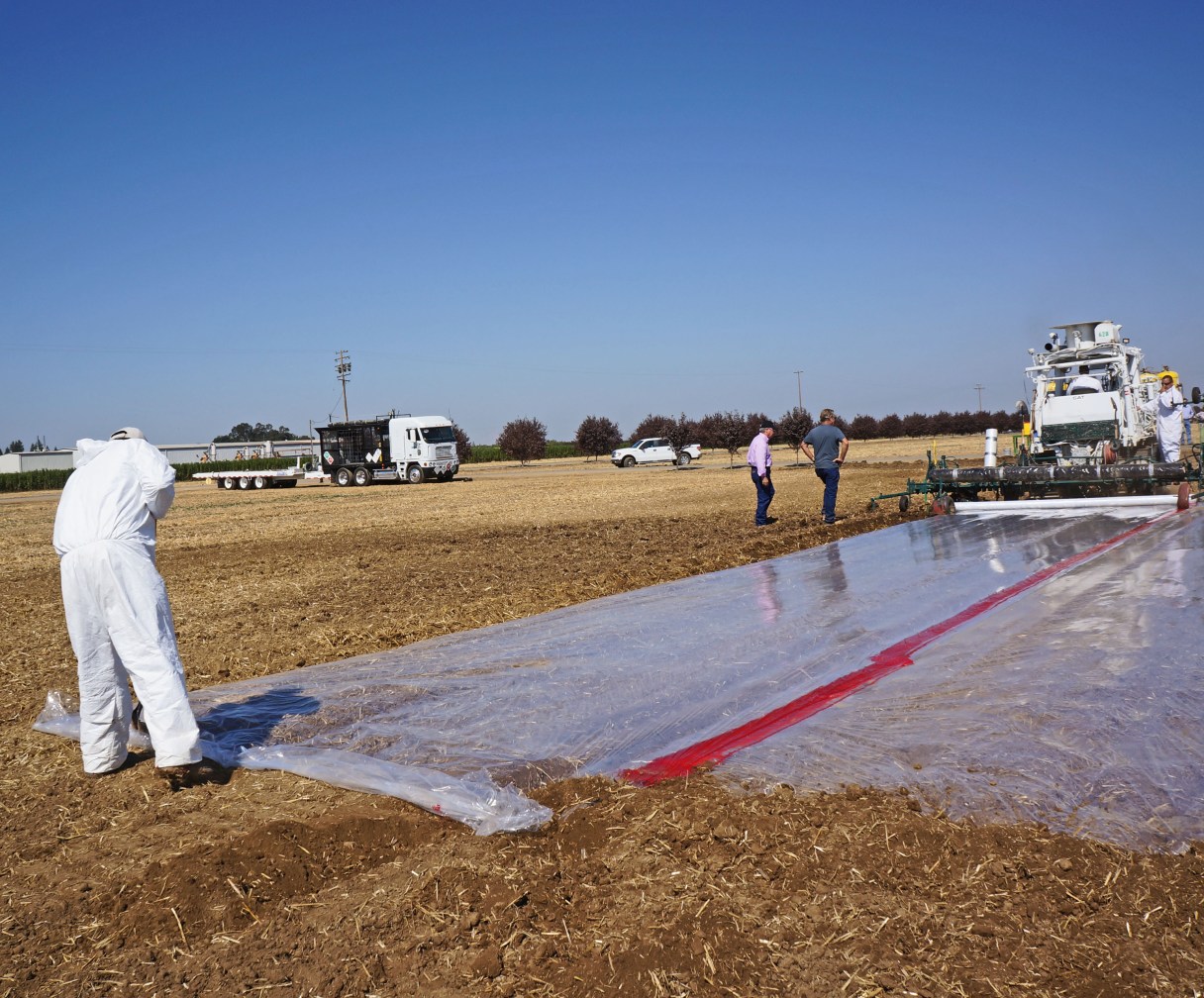
In this Sept. 27, 2012 photo provided by the California Department of Pesticide Regulation, workers test soil in Yuba City, Calif. The California Strawberry Commission announced Tuesday, Jan. 13, 2015, awards totaling more than $1 million in recent state and federal research grants to advance the scientific knowledge on sustaining healthy soils to control plant diseases, and reduce the need for soil fumigation. The research will focus on evaluation of experimental soilborne disease management systems using biologically active soil treatments. (AP Photo/California Department of Pesticide Regulation)

FRESNO, Calif. (AP) – California farmers now must abide by the nation’s strictest rules for a widely used pesticide in a change designed to protect farmworkers and people who live and work near agricultural fields but is likely to raise prices on produce.

The restrictions announced Wednesday target chloropicrin, a pesticide injected into the ground before planting crops such as strawberries, tomatoes and almond orchards. In recent years, the chemical has caused hundreds of people to suffer from irritated eyes, coughing fits and headaches, state officials said.

The new regulations surpass standards required by U.S. Environmental Protection Agency.

Brian Leahy, director of the California Department of Pesticide Regulation, said Tuesday that the higher standard is needed in California, the nation’s leading agricultural producer and most populated state, where farms are often next to people. Costs are sure to rise for farmers, who will pass it along to consumers, but Leahy said it is worth it.

“It is burdensome,” Leahy said. “But if we’re going to use these tools, we’ve got to ensure that they’re used as safely as possible.”