
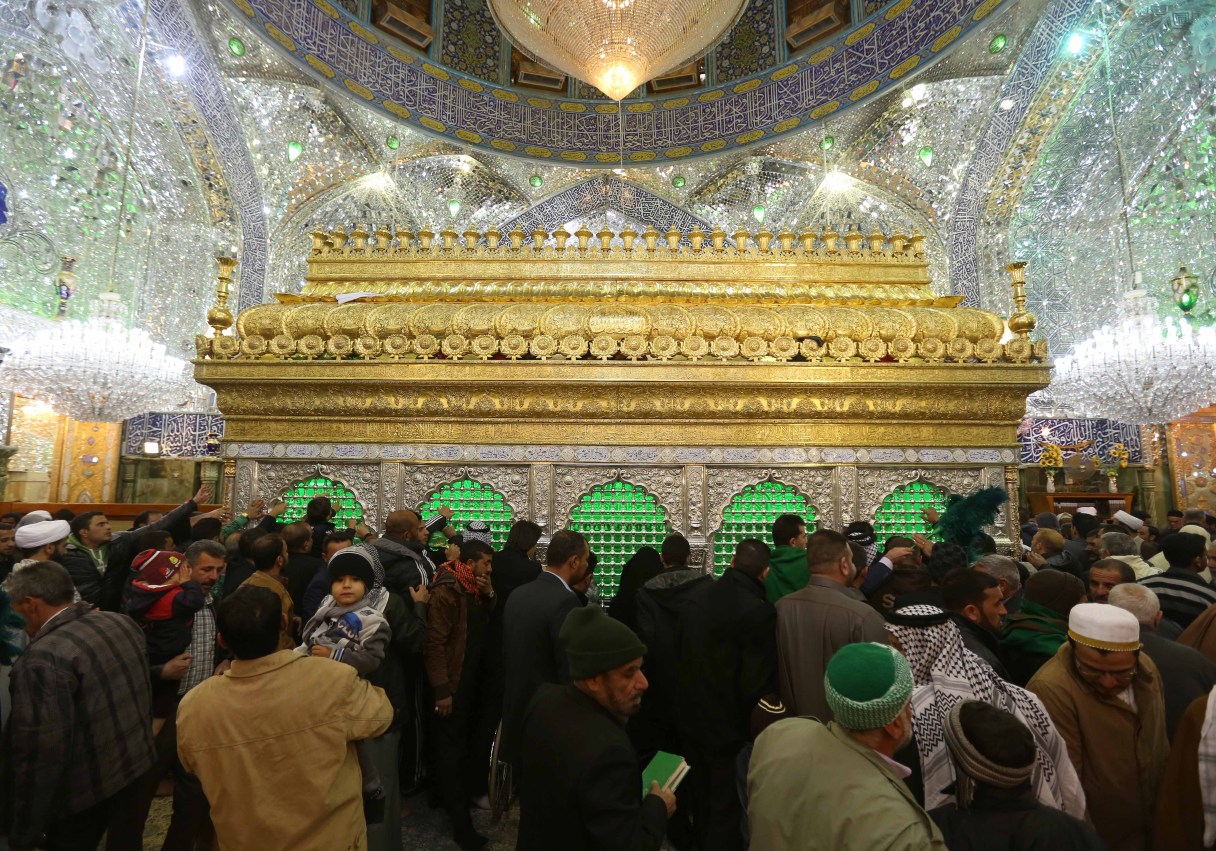
NAJAF, Iraq (AP) – Since Sunni militants of the Islamic State group overran large parts of Iraq, the country’s most prominent Shiite cleric has fundamentally altered his spiritual role and has plunged straight into politics, weighing in on government policy and the fight against the extremists.
The shift by the Iranian-born Grand Ayatollah Ali al-Sistani underlines the key role played by religion in post-Saddam Hussein Iraq and takes the troubled country down a potentially dangerous path, given its deep sectarian and ethnic tensions. His role falls well short of Iranian-style theocracy, in which the top cleric has the final word on everything, but Iraq’s government clearly feels it must listen to him.
Al-Sistani saw it as a necessity to step in with his moral authority given the failures of politicians and the collapse of the military when the Islamic State group overran much of the north and west last summer, an aide said.
“It is his legitimate right, but he did not seek to exercise it. It was forced upon him,” the aide in the holy city of Najaf, south of Baghdad, told The Associated Press, speaking on condition of anonymity because he was not authorized to talk to the media. “People wait from one Friday to the next to hear what Sayed al-Sistani has to say.”
But Alireza Nader, senior policy analyst at the RAND Corporation, said that even if it is seen as necessary, “heavy intervention by the clergy means that Iraq’s government is not going to be secular any time soon, although not theocratic either. But perhaps something in between.”