
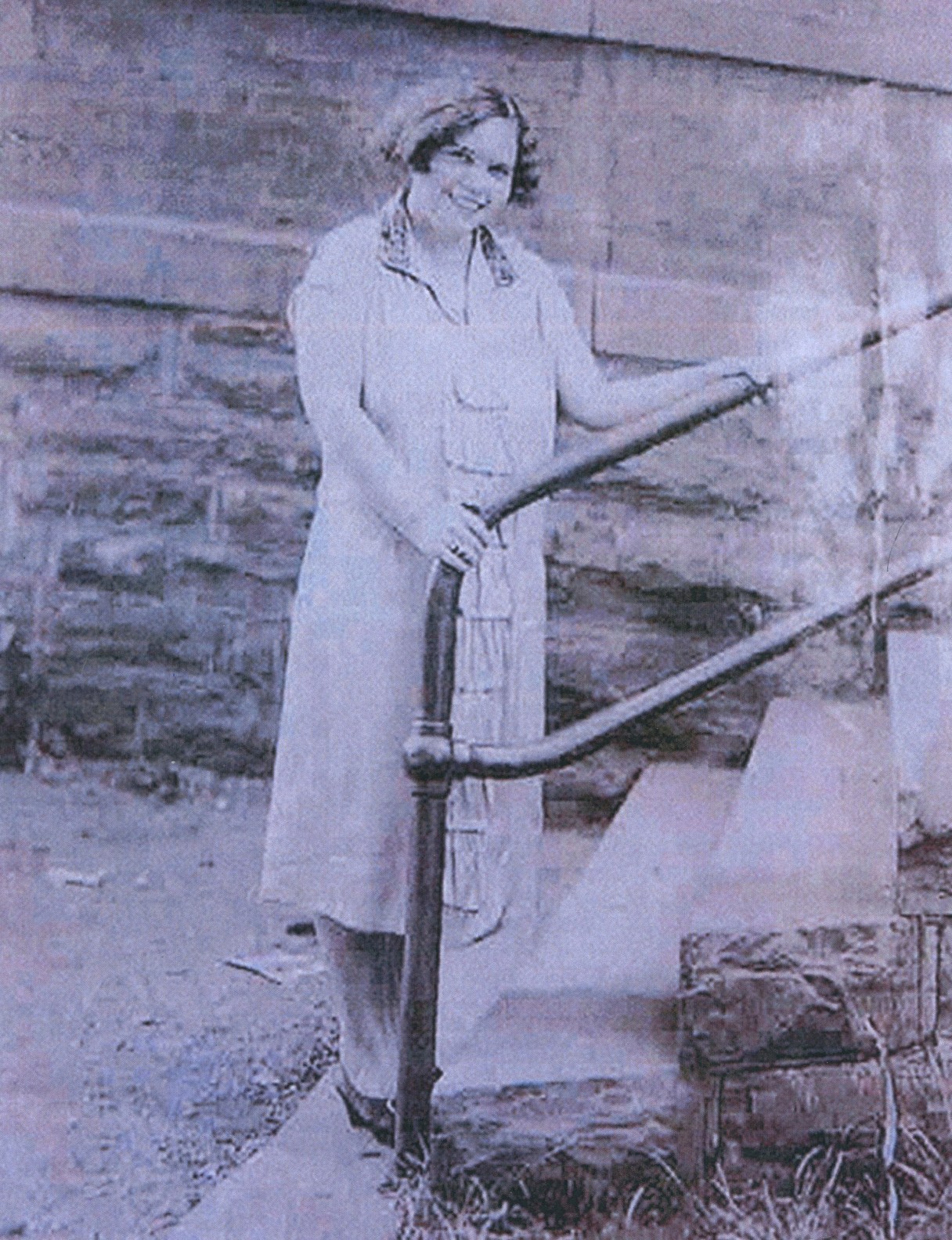
A slight woman with an inquisitive mind, Nellie Kenyon stands out in the history of investigative journalism in Chattanooga during the early- to mid-20th century.
She started her career working part time for the Chattanooga News while a public school student. Once full time with the paper, she developed a reputation as a tough news reporter in the male-dominated profession — having “southern sweet” blue eyes that twinkled, and a temper.
On an early assignment in 1925, she was the only female reporter covering the historic Scopes “Monkey” Trial in Dayton, Tenn. John Thomas Scopes, a local school teacher, was charged with violating state law for teaching the Darwinian theory of evolution. Arriving 10 days early in Dayton, she spoke to the judge about the dirty condition of the courtroom. She suggested that it be painted, and it was.
At the trial, Kenyon met the famous newspaper writer H.L. Mencken, who was reporting for the Baltimore Sun. Mencken asked Nellie about social opportunities on a Saturday night in the rural community. She mentioned: 1) attending the only movie theater in Dayton; 2) watching the monkeys that Barnum and Bailey Circus contributed to the public spectacle, and 3) attending a “Holy Roller” church service. Mencken agreed to the latter and wrote a column noting that “a sound Episcopalian or even a Northern Methodist would be regarded as virtually an atheist in Dayton.”
In 1931, Kenyon helped police capture the robber who held up the Highland Park Bank. She solved the case by showing the investigating officers how the main suspect had planned the crime following the same pattern of conduct outlined in the detective magazine left in his boarding house along with a handcuff key used to shackle the bank tellers. In recognition of her feat, she was invited to the offices of Tower Magazine in New York City, where she received an award of $1,000 and a gold medal for the best detective-reporter work of the year. Kenyon and Eleanor Roosevelt, wife of the governor, posed before the cameras, struck up a friendship, and lunched together. Helen Keller sat near Kenyon and received the speeches translated through her fingertips. Keller said in her remarks that she was glad the award was given to a woman.