
Saturday, November 14, 2026Nov 14

Mystery Greek tomb contained at least 5 corpses, experts say

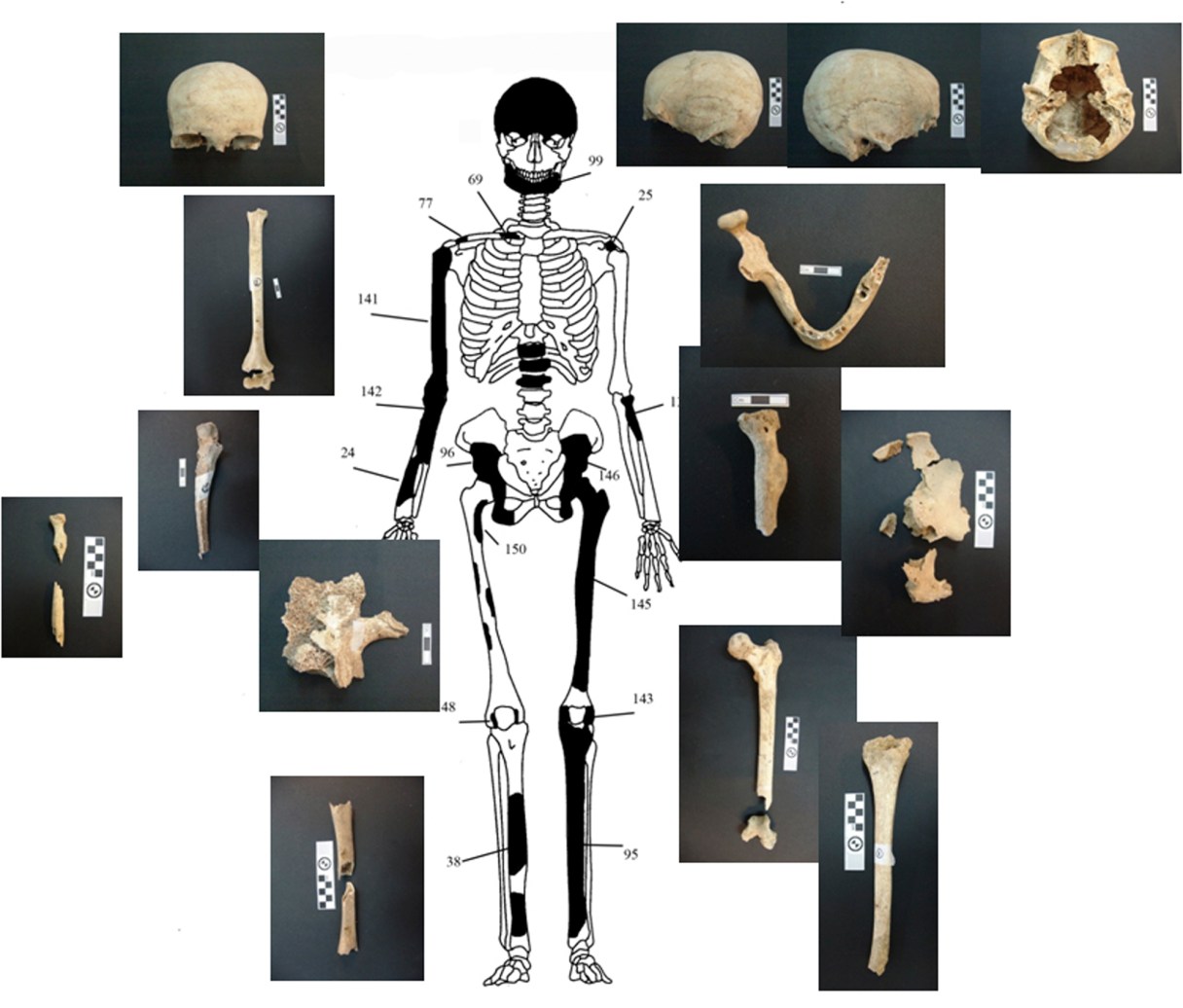
This undated handout image released by the Greek Culture Ministry on Monday, Jan. 19, shows pictures of bones and their position, in black, on a human skeleton believed to belong to a woman aged over 60, from a resplendent ancient tomb excavated in northern Greece last year. The ministry says the grave contains skeletal remains from at least five individuals _ the woman, a newborn infant, two men aged 35-45 and another unspecified adult. The tomb has been dated to between 325 B.C. — two years before the death of ancient Greek warrior-king Alexander the Great — and 300 B.C. Experts speculated it could have been built for a general or a relative of Alexander's, who himself was buried in Egypt. (AP Photo/Greek Culture Ministry)

ATHENS, Greece (AP) – Human bones found in a resplendent ancient tomb in northern Greece belong to at least five individuals, including an elderly woman and a baby, Greek officials said Monday.

The announcement by the Culture Ministry further muddles a high-profile excavation hampered by unrealistic expectations and political attention.

The three-month dig at ancient Amphipolis, 600 kilometers (375 miles) north of Athens, has uncovered three vaulted chambers behind a facade decorated with two big marble sphinxes. Inside, archaeologists found a pair of larger-than-life statues of young women and a mosaic pavement depicting the abduction of the goddess Persephone by Hades, king of the underworld.

It is unclear when each of the five individuals died or were buried and even whether the tomb had been built for them all.

The thoroughly-plundered tomb has been dated to between 325 B.C. – two years before the death of ancient Greek warrior-king Alexander the Great – and 300 B.C., although some archaeologists think it could be considerably later. Experts speculated it could have been built for a general or a relative of Alexander’s, who himself was buried in Egypt.