
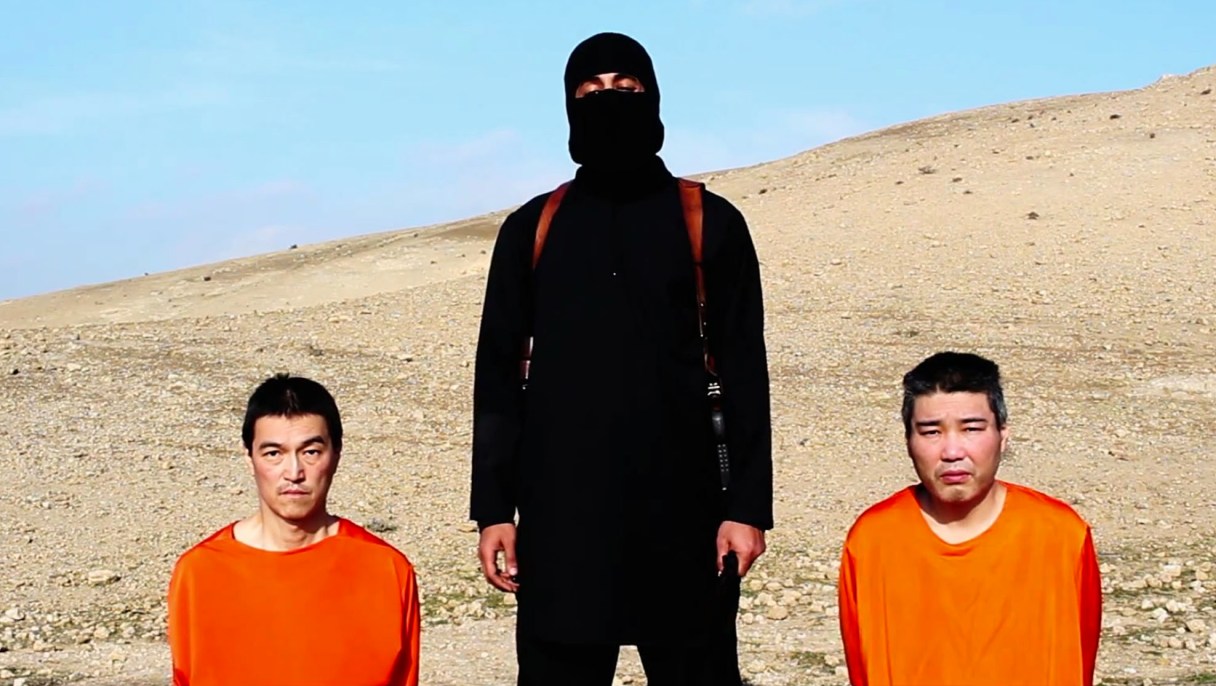
TOKYO (AP) – One is a freelance journalist respected for his reporting on refugees and children in war zones. The other is man who seems obsessed with guns and went to Syria to train with fighters.
Despite their differing backgrounds and passions, their paths had crossed before. Now, in a chilling video released this week, the two Japanese men were seen kneeling on the ground in orange jumpsuits with a masked, knife-wielding figure threatening to kill them if their government failed to pay a $200 million ransom by Friday.
Kenji Goto, the journalist, and Haruna Yukawa are in some ways outliers in Japan, a relatively risk-averse society. Their capture by the Islamic State group, the militants who have seized part of Syria and Iraq, has created a sudden crisis for Japanese Prime Minister Shinzo Abe, whose government is working feverishly to try to free them.
Yukawa, 42, set up a company a year ago offering security services in conflict areas after running an online business selling military-related items. But then he went to Syria to train with militants, according to a post on his blog. Photos posted in July on his Facebook page showed him holding a Kalashnikov rifle, and his personal blog included entries about his visits to Iraq and Syria, along with videos of him and bloody scenes from the region.
The images seemed at odds with the description of him as “gentle, likable person” by Nobuo Kimoto, a retired former local assembly who also served as an adviser to Yukawa’s business, Private Military Company. The outfit’s website says it provides security services for Japanese nationals overseas, but the company isn’t functioning.