
Thursday, November 12, 2026Nov 12

Japan working to gain IS hostage’s release, analyzing video

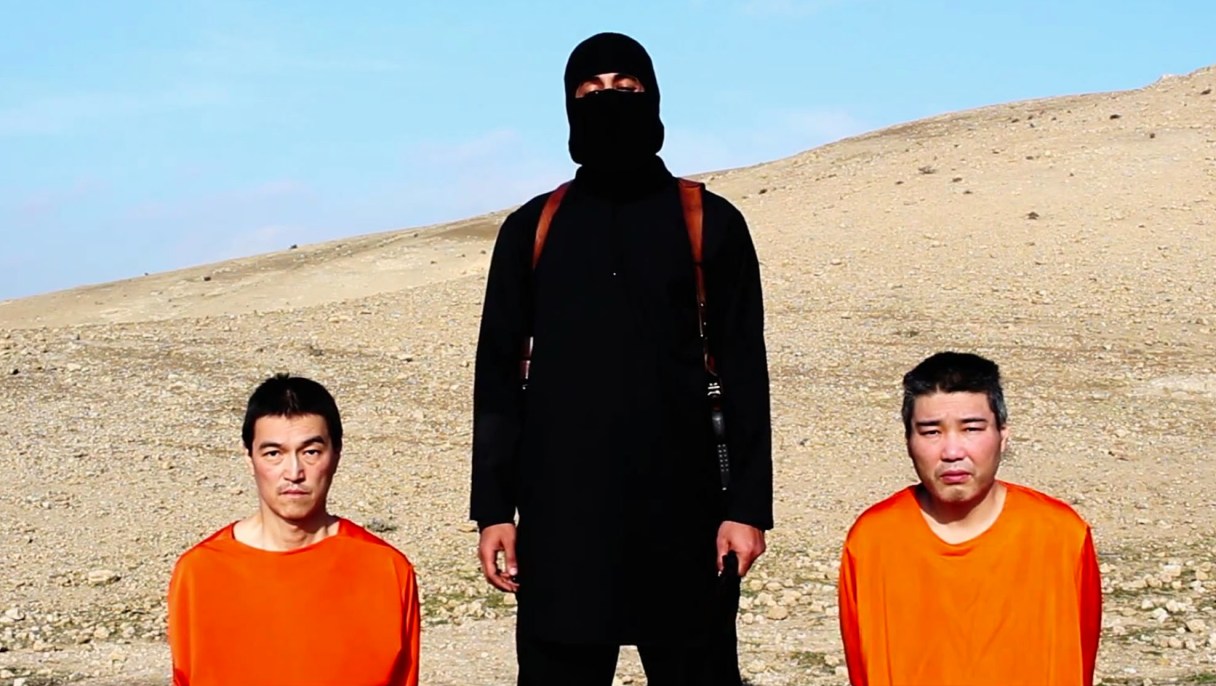
This file image taken from an online video released by the Islamic State group's al-Furqan media arm on Tuesday, Jan. 20, 2015, purports to show the group threatening to kill two Japanese hostages that the militants identify as Kenji Goto Jogo, left, and Haruna Yukawa, right, unless a $200 million ransom is paid within 72 hours.
This file image taken from an online video released by the Islamic State group's al-Furqan media arm on Tuesday, Jan. 20, 2015, purports to show the group threatening to kill two Japanese hostages that the militants identify as Kenji Goto Jogo, left, and Haruna Yukawa, right, unless a $200 million ransom is paid within 72 hours. This file image taken from an online video released by the Islamic State group's al-Furqan media arm on Tuesday, Jan. 20, 2015, purports to show the group threatening to kill two Japanese hostages that the militants identify as Kenji Goto Jogo, left, and Haruna Yukawa, right, unless a $200 million ransom is paid within 72 hours.

TOKYO — Japan was working Monday to coordinate efforts with Jordan and other countries to save a hostage held by the extremist Islamic State group.

“We all have one unchanged goal and we will absolutely not give up until the end. And with that faith, we will try our utmost to reach that goal. That’s how it is,” said Yasuhide Nakayama, a Japanese deputy foreign minister sent to Amman, Jordan, to work on the crisis.

Back in Tokyo, government spokesman Yoshihide Suga told reporters that the government was still analyzing a video posted online that purported to show one of the two hostages, Haruna Yukawa, had been killed.

The government has been in crisis mode since the Islamic State group said in an online video on Jan. 20 that it had two Japanese hostages and would kill them within 72 hours unless it paid $200 million. That deadline passed Friday.

Asked if the government had concluded the latest video was authentic, Suga said, “We cannot deny that the likelihood is high.”