
Wednesday, November 18, 2026Nov 18

IS hostage drama shows change in propaganda technique

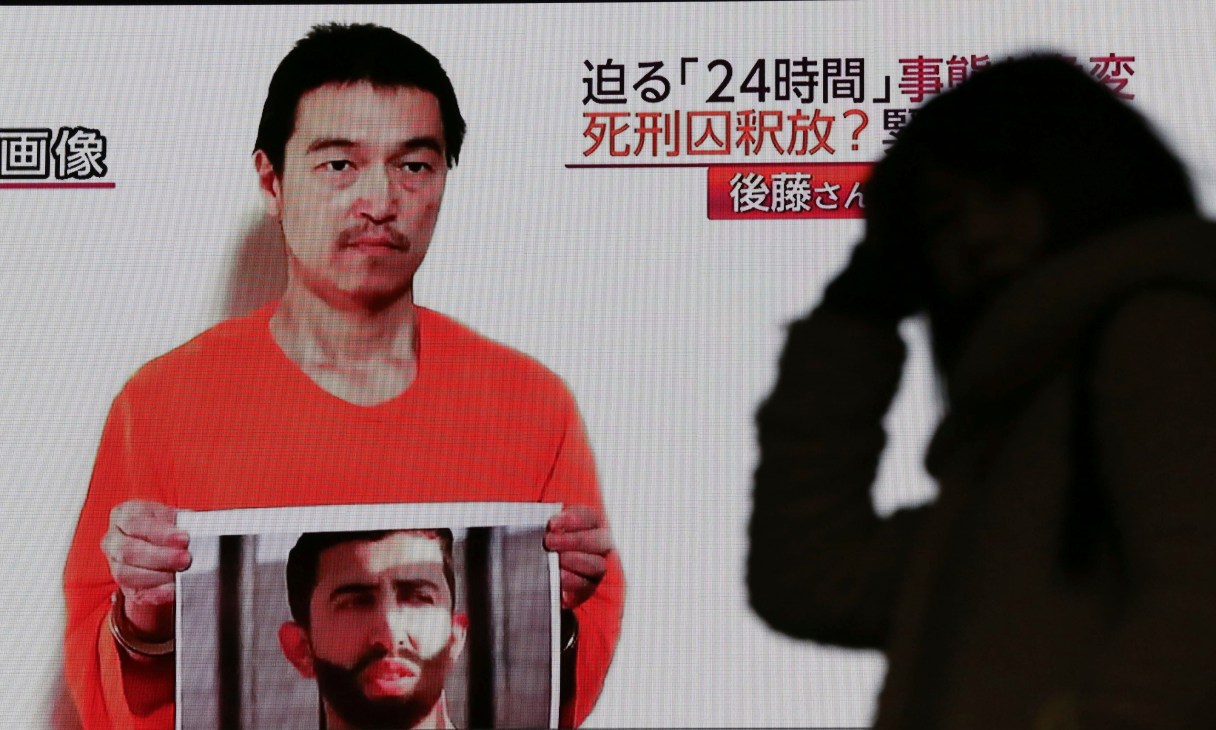
FILE - In this Wednesday, Jan. 28, 2015 file photo, a passerby is silhouetted against a large TV screen broadcasting a news program in Tokyo reporting on a video posted on YouTube by jihadists on Tuesday, Jan. 27, that purports to show a still photo of Japanese hostage Kenji Goto holding what appears to be a photo of Jordanian pilot 1st Lt. Mu'ath al-Kaseasbeh. Far from the high-tech, slickly edited videos involving beheaded Western hostages through which the group impressed supporters and terrorized opponents, recent messages purporting to be from Japanese hostage Kenji Goto have been through digitized, audio dispatches featuring either still photos or text. (AP Photo/Eugene Hoshiko, File)

BEIRUT (AP) – The latest Islamic State hostage drama involving a veteran Japanese war correspondent and a young Jordanian pilot marks the first time the group has publicly demanded prisoner releases. It also signals a change in the extremist group’s propaganda technique.

Far from the high-tech, slickly edited videos involving beheaded Western hostages through which the group impressed supporters and terrorized opponents, recent messages purporting to be from Japanese hostage Kenji Goto have been through digitized, audio dispatches featuring either still photos or text.

A change has been noted even before.

The first video involving the Japanese, released on Jan. 20, conformed to previous Islamic State group videos and bore the logo of its al-Furqan media group, showing both Goto and Haruna Yukawa, another Japanese hostage, kneeling next to a masked militant holding a knife. A $200 million ransom demand was made.

At first glance the video appeared to be filmed in the same location as those showing American hostages James Foley, Steven Sotloff and Peter Kassig, and British captives David Haines and Alan Henning.