
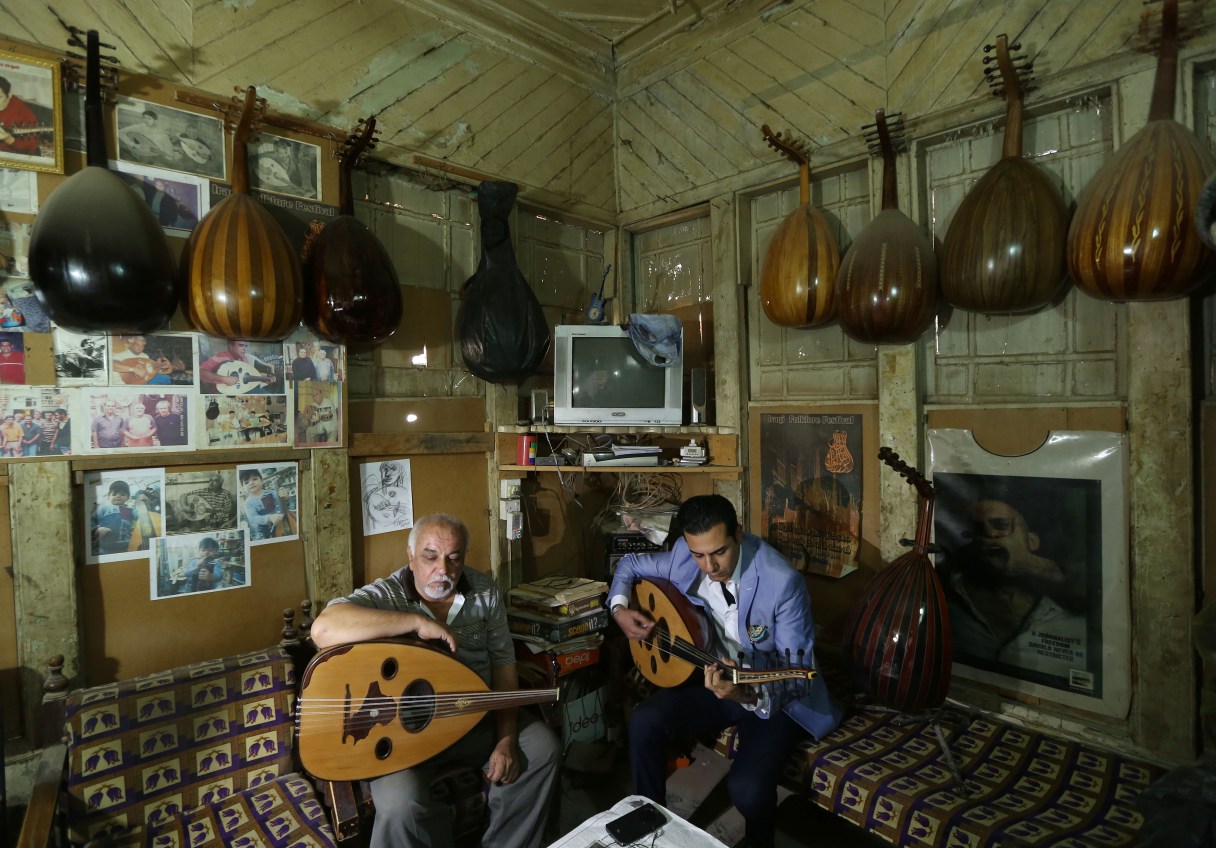
BAGHDAD (AP) – In a Baghdad workshop plastered with black-and-white photos from a more peaceful time, Mahmoud Abdulnabi hand-carves a wooden oud, a string instrument with ancient roots that has fallen silent in much of the war-torn country.
“The oud is different than other musical instruments,” said Abdulnabi, who has crafted ouds played by some of Iraq’s best known musicians, many of whom look down from headshots on the walls. “If you feel joyful, it can play your joy. If the circumstances are sad it can play your sorrow and… help to empty whatever is in your chest.”
The Islamic State group has banned music in the third of Iraq under its control, but in Baghdad a growing number of musicians and other artists are defying the extremists, hoping to revive a rich culture smothered by decades of war.
“In Iraq there is renewed interest in oud and other high-caliber music since the war, but this effort is still in the very beginning,” said Bassam Salim, an expert oud player and teacher in Baghdad. “Every artist has a very huge responsibility to renew and revive the real value of (classical) Iraqi music.”
Abdulnabi is one of the last craftsmen in Baghdad who carves ouds by hand. “Our brothers, the makers in Syria, Turkey and Egypt, might produce 12 pieces a day” using machines, Abdulnabi said. “We produce one or two pieces in a month.”