
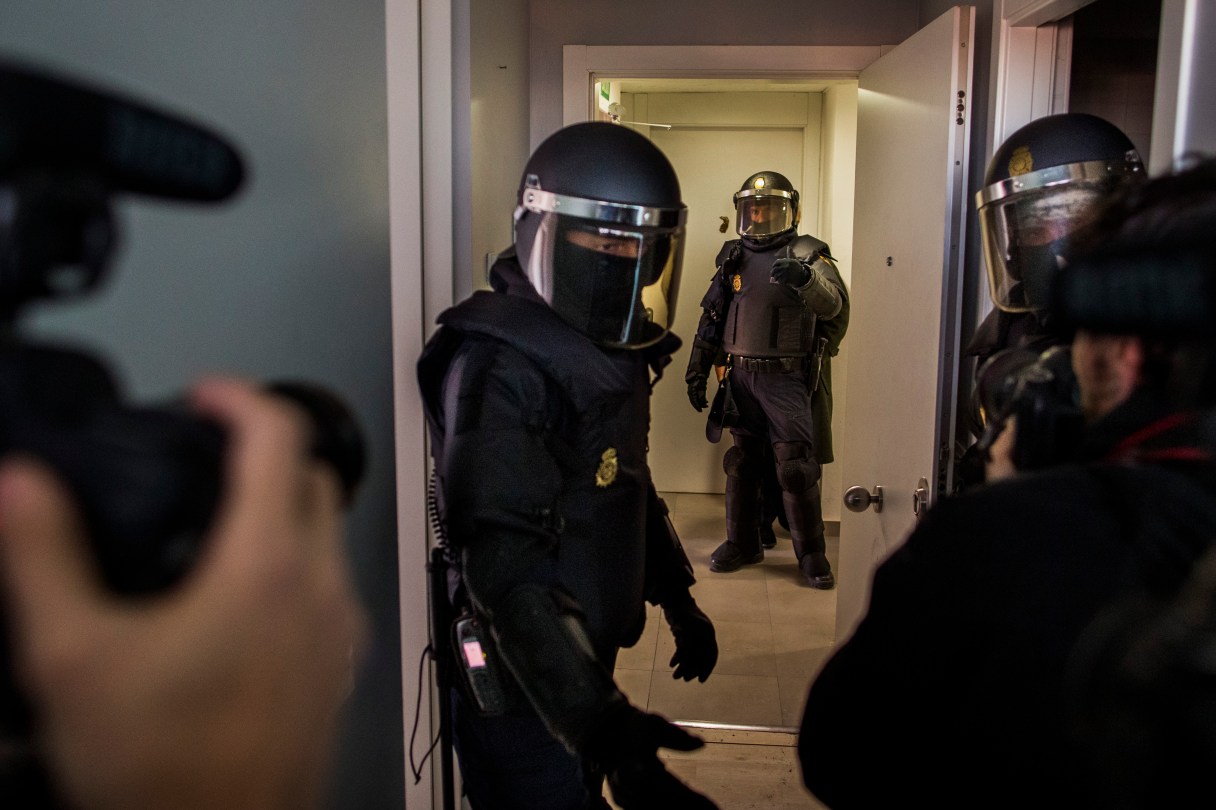
MADRID (AP) – Three years ago, just after anti-austerity activists demonstrated outside Madrid’s main train station, freelance cameraman Juan Ramon Robles captured riveting video of riot police inside the station beating people who said they had nothing to do with the protests.
Robles won prizes for the footage of a bloodied young man and stunned commuter train passengers, and the images from the Atocha station went viral in Spain and around the world.
Today, he fears, such images might never be seen because of a new public security law that went into effect this week.
A clause in the wide-ranging legislation that critics have dubbed the “gag law” provides for fines of up to 30,000 euros ($33,000) for “unauthorized use” of images of working police that could identify them, endanger their security or hinder them from doing their jobs.
It also specifies that Spaniards’ right to information must be respected. But media lawyers and freedom-of-expression advocates warn the clause is vaguely written, and worry that police could use it to add on charges that come with jail time or to destroy images taken by mainstream journalists, citizen journalists, activists and regular people.