
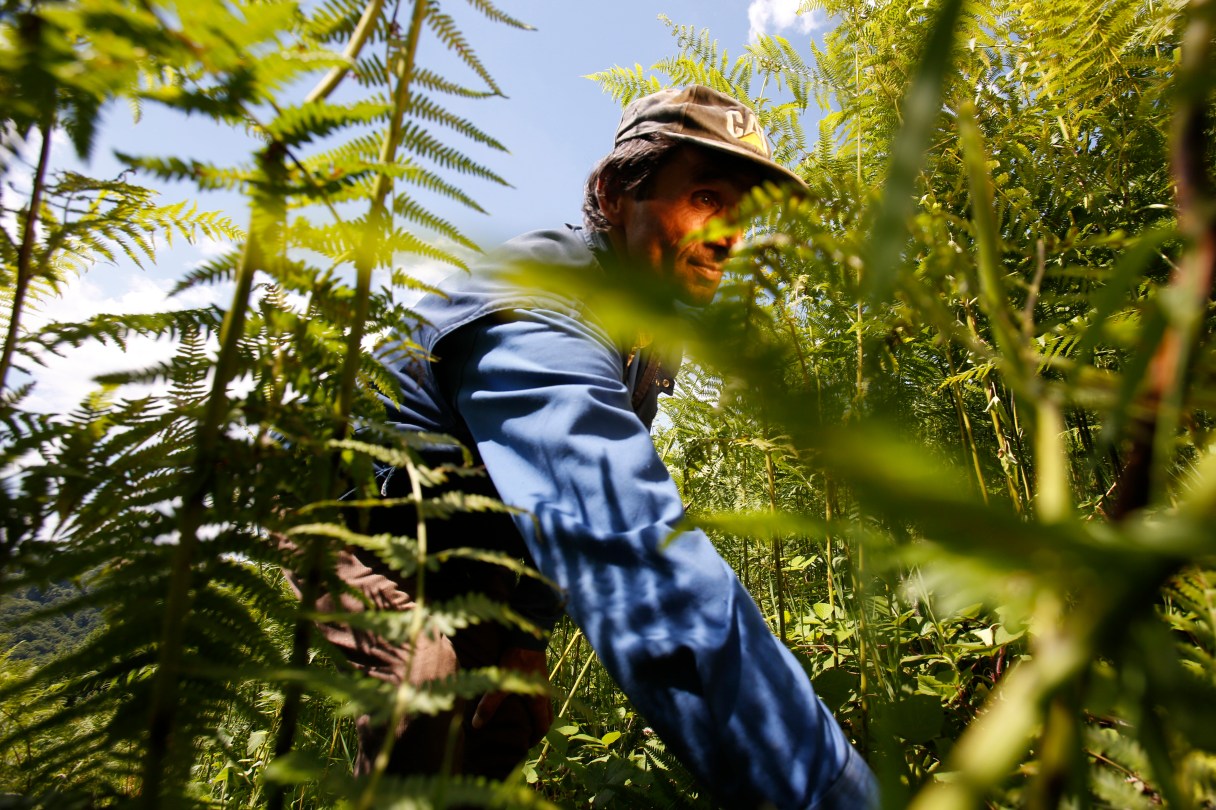
SREBRENICA, Bosnia-Herzegovina (AP) – Day after day, Ramiz Nukic goes into the woods around Srebrenica in search of a tragic quarry: human bones.
There’s rarely a day in which he does not find the remains of at least one murdered boy or man, even 20 years after the Europe’s worst massacre since World War II. Srebrenica’s killing fields swallowed up 8,000 bodies, and the murderers took pains to hide evidence of the genocide.
Nukic’s quest started in 1999 after he returned to his empty hometown of Kamenice and began looking for the remains of his murdered father and younger brother. As the family’s only male massacre survivor, he became obsessed with bringing closure to their loss. Every day he discovered bones that gave other families the gift of mourning, but not his own. Every day he kept trying, and quietly he built up an astonishing record: Nukic’s discoveries have allowed Bosnia’s Institute for Missing Persons to identify nearly 300 Srebrenica victims.
But his father and brother eluded him.
Srebrenica was a Muslim town besieged by Serb forces in Bosnia’s 1992-95 ethnic war, in which Serbs tried to wrest away territory from Bosnian Muslims and Croats to form their own state. Serb troops led by Gen. Ratko Mladic – on trial in The Hague on genocide charges – overran the enclave in July 1995 and some 15,000 Srebrenica men fled into the mountains.