
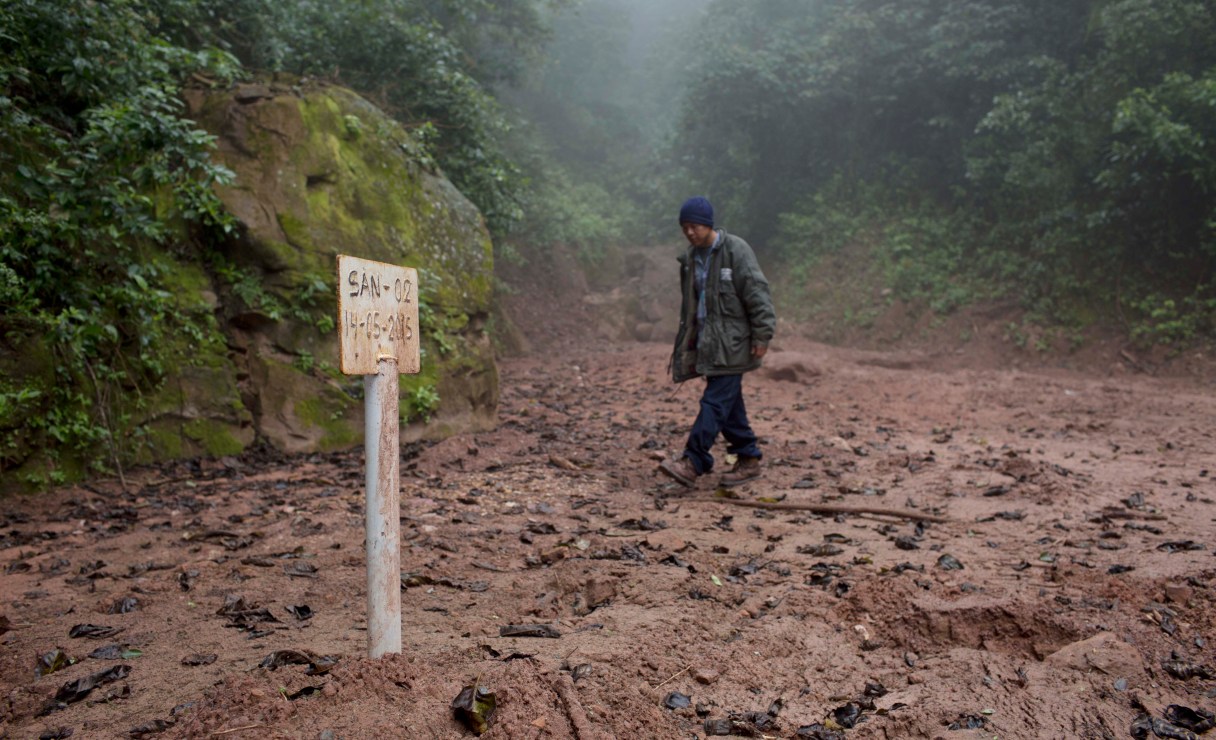
AGUARAGUE NATIONAL PARK, Bolivia (AP) – In the vine-entangled forests of the Aguarague National Park, crude that seeped for decades out of abandoned wellheads saturates the soil and has stained the bedrock of creeks that provide water to the indigenous Guarani who live nearby.
The petroleum stench is overpowering as David Benitez, who lives in the park and grazes his cattle among the wells, sifts tainted soil between his fingers.
“The odor is much stronger in the summer, when there’s no water to wash the oil downstream,” says the 47-year-old farmer.
Pope Francis is expected to raise concerns about the environmental costs of development next week when he meets with Bolivian President Evo Morales and his counterpart in Ecuador, Rafael Correa, on the first two stops of a three-country tour. Francis’ weeklong trip follows his landmark encyclical demanding dramatic measures to halt climate change and ensure future generations aren’t living in “debris, desolation and filth.”
The Guarani for years have fought to protect their native lands in and around this narrow 70-mile-long park in the southeastern Chaco region that flanks Bolivia’s richest natural gas fields. Francis has called on governments to better engage such indigenous peoples, calling them nature’s best caretakers because the land, for them, is sacred.