
Monday, November 16, 2026Nov 16

California water rates rise as cities lose money in drought

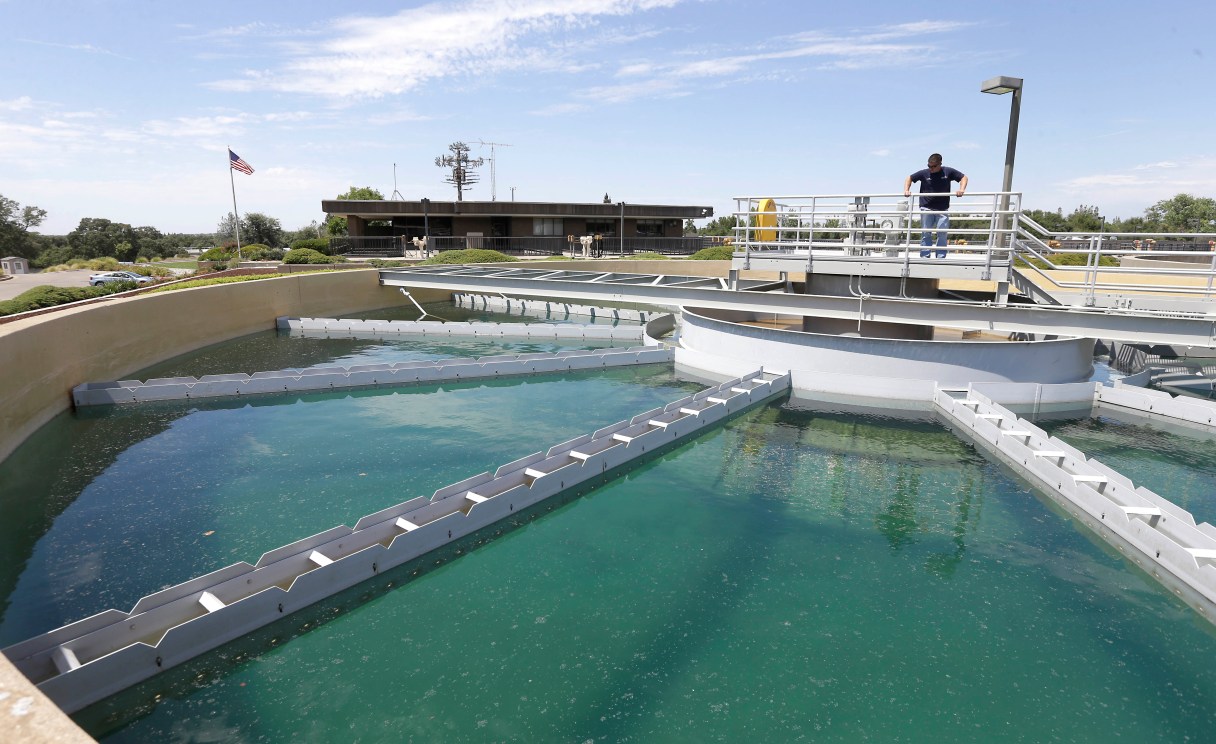
In this photo taken Thursday, July 2, 2015, Dan Johnson, a treatment plant operator inspects a sediment pond at the Roseville Water Treatment Plant in Granite Bay, Calif. Due to the reduction of water use, plant operators are using only two of the three sediment ponds that are the first step in preparing the raw water taken from nearby Folsom Lake, for use by Roseville area water users.  Due to the less water use, Roseville is among the water agencies that have had to impose a "drought surcharge," in order to make up the lost revenue.(AP Photo/Rich Pedroncelli)
In this photo taken Thursday, July 2, 2015, Dan Johnson, a treatment plant operator inspects a sediment pond at the Roseville Water Treatment Plant in Granite Bay, Calif. Due to the reduction of water use, plant operators are using only two of the three sediment ponds that are the first step in preparing the raw water taken from nearby Folsom Lake, for use by Roseville area water users. Due to the less water use, Roseville is among the water agencies that have had to impose a "drought surcharge," in order to make up the lost revenue.(AP Photo/Rich Pedroncelli)

ROSEVILLE, Calif. (AP) – Saving water doesn’t always mean saving money in parched California.

Millions of Californians expecting relief on their water bills for taking conservation measures instead are finding higher rates and drought surcharges.

Water departments are increasing rates and adding fees because they’re losing money as their customers conserve. They say they still have to pay for fixed costs including repairing pipelines, customer service and enforcing water restrictions – and those costs aren’t decreasing.

The financial blow is only expected to grow because Gov. Jerry Brown’s administration has ordered communities to slash their water use anywhere between 8 and 36 percent compared to 2013 levels in response to the four-year drought. Those cuts are expected to leave agencies with a $1 billion hole in revenue, and they’ll likely turn to customers to plug it, according to state estimates.

“Just because you use less water does not mean you have lower rates or a lower bill,” said Lori Dolqueist, a water attorney who represents private utilities. “All of these agencies and private water companies are being told to sell less of what they do. It’s a challenge financially.”