
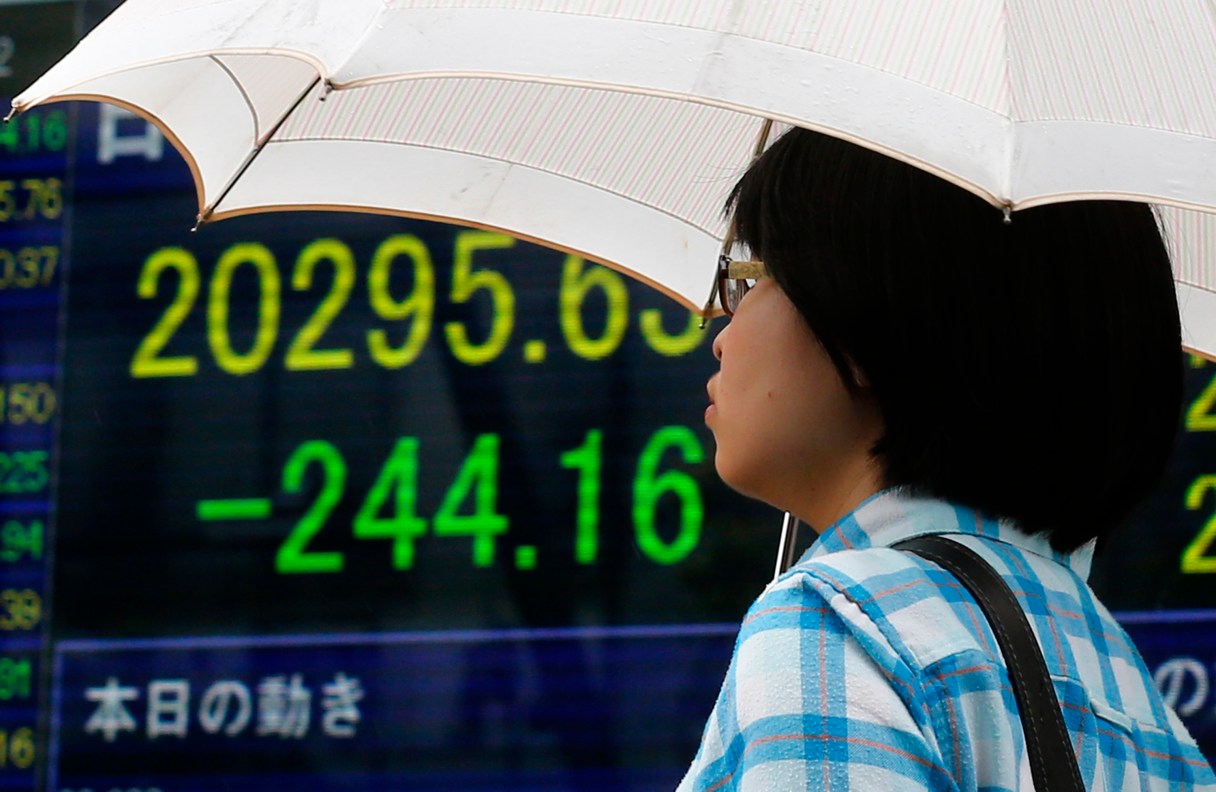
TOKYO (AP) – Asian markets mostly fell Monday as investors reacted to Greece’s sound rejection of terms set by its international creditors, deepening uncertainties over its status as a member of the 19-nation eurozone. But Chinese shares rebounded after heavy losses last week.
The initial response to Sunday’s Greek referendum was negative but not panicked; Greece’s debt woes have long overshadowed the markets.
Japan’s Nikkei 225 stock index was down 1.4 percent at 20,263.27 by mid-morning. South Korea’s Kospi fell 1.0 percent to 2,082.69. Hong Kong’s Hang Seng index edged down 0.1 percent to 26,027.36.
But mainland Chinese shares jumped, recovering from their recent swoon after 28 companies agreed to postpone planned initial public offerings and brokerages pledged more than $19 billion for a fund to stabilize the free-falling market.
The Shanghai Composite index surged nearly 6 percent after the market opened and was trading 4.4 percent higher at 3,847.34. The Chinese securities companies say they will continue to invest in the market as long the Shanghai Composite, China’s equivalent of the Standard & Poor’s 500 index, remains below 4,500. It closed at 3,686 on Friday.