
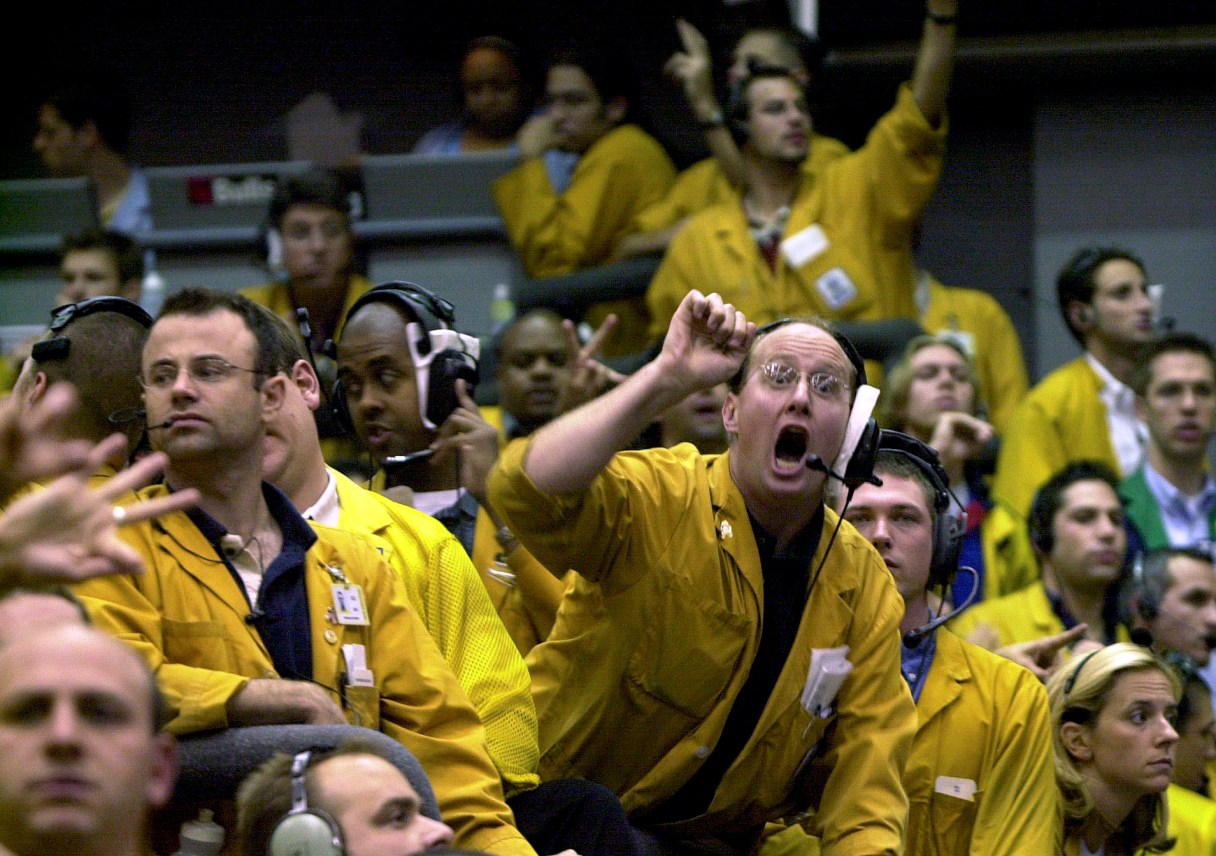
NEW YORK (AP) – Pete Meegan had every intention of going back to college, but then he got a summer job in the Chicago trading pits and fell in love with the “roar” of the floor, the excitement of “4,000 people yelling, ‘Buy! Buy! Buy!'” and decided no more classroom for him.
That roar will soon go silent. On Monday, most futures pits in Chicago and New York, where frenzied buying and selling once helped set prices on cattle and corn, palladium and gold, and dozens of other commodities, are expected to close for good. Traders yelled and shoved and flashed hand signals, just as they did in the movie “Trading Places.” But now the computer – faster, cheaper and not nearly as noisy – has taken over.
It will be a sad day for Meegan, still in the pits 34 years after dropping out of college, donning a trading jacket and mustering the courage to tell his dad.
“I thought he was gonna kill me, but he was like, ‘I don’t care if you pick up garbage or you’re a dog groomer. If you are happy doing what you are doing, you’re ahead of 99 percent of the people in the world,'” recalls Meegan, now 54.
The few dozen jobs that will be lost when the pits shut down is just part of it, veterans say. What’s also disappearing is a rich culture of brazen bets, flashy trading jackets and kids just out of high school getting a shot at making it big. The pits were a ruthless place, but they were also a proving ground where education and connections counted for nothing next to drive and, occasionally, muscle.