
Read more
Witness describes crash that killed six, injured sixFear of longer commutes puts pressure on U.S. cities to act
How many failures in our road safety enforcement system does it take before we pay attention to the details that would make our roads and trucks and systems safer?
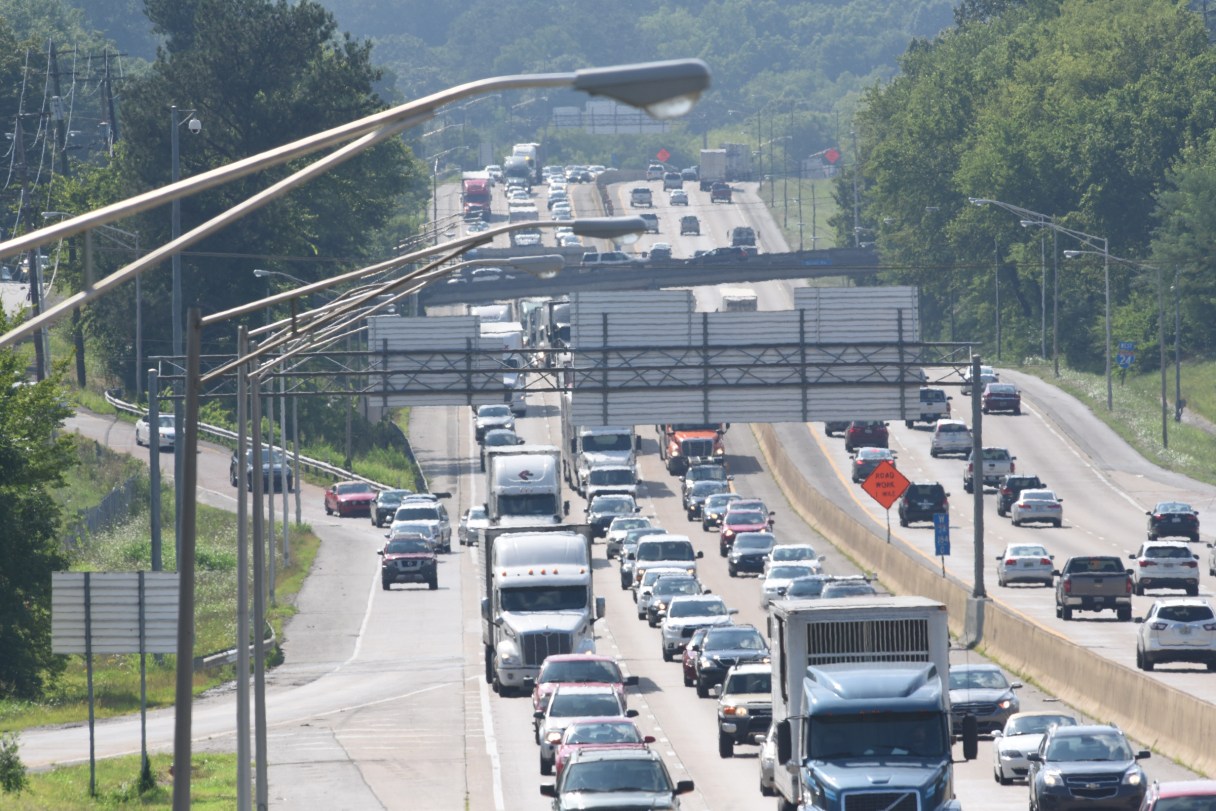
Frankly, the answer is still up in the air, but the one safe assumption we can make is that we must take action soon before these failures take still more lives than the six lost in the June 25 nine-vehicle accident on I-75 near Ooltewah. That tragic crash left another six people injured and still six more with horrible memories and losses.
Eight vehicles were stopped in the road because of highway construction when a tractor trailer coming from behind plowed into them, according to Chattanooga police.
James Gillis watched it all through his rear-view mirror. “That truck was mowing cars down,” he told Times Free Press reporter Shelly Bradbury. “I know that for sure.”
In the days following the accident, it became clear that the driver of the truck – and the trucking company he worked for – had spotty histories, yet several encounters with America’s public safety systems hadn’t been enough to prevent this horrific crash.
The trucker, 39-year-old Ben Brewer, of Kentucky, had – just the day before – been cited for careless driving in Wildwood, Fla., according to a Florida Highway Patrol crash report. At about 9:30 a.m. that Wednesday, Brewer’s truck struck the left bumper of another truck while passing. About 400 miles and a little over 24 hours later, he plowed into eight cars here.
Worse still, we’ve now learned that Brewer was a fugitive from justice on a drug charge. In April 2013, Wisconsin officers encountered Brewer in Janesville after receiving a report that someone was attempting to pass a prescription for narcotics written by a pain clinic in Florida. In searching Brewer, police found four white round capsules that Brewer said was for his attention deficit hyper activity disorder. The officers later identified the drug as Gabapentin, a prescription medication used to treat epilepsy. Brewer failed to show up on his court date and a bench warrant was issued for his arrest.
Yet somehow, he was still hired and working for a trucking company. And somehow, he and his company had escaped safety systems aimed at providing interventions against the kind of tragedy that unfolded at the end of June.
Federal records show the small trucking company, Cool Runnings Express, in the past two years failed three of eight random vehicle inspections – 37 percent – and failed two of 14 driver inspections, or 14 percent, records with the Federal Motor Carrier Safety Administration show. The national average among trucking companies is about 21 percent and 6 percent, respectively.
But even the so-called safety watchdog, the Federal Motor Carrier Safety Administration, is under review. Last week, an independent review team appointed in response to specific 2013 National Transportation Safety Board recommendations bolstered the NTSB’s finding that FMCSA had failed to identify significant safety issues during previous audits of the motor carriers involved in four previous serious commercial motor vehicle crashes.
One of those previous serious crashes was in Murfreesboro in June 2013, and it was frighteningly like the crash here: a truck-tractor with a semitrailer operated by the Louisville, Ky., carrier H&O Transport, Inc., collided with eight other vehicles that were stopped by a two-vehicle traffic collision ahead. The trucker, traveling 55-60 mph, struck the traffic queue. Two people were killed; six were injured. H&O operated 33 trucks with 32 drivers and a history of operating violations. NTSB’s report termed the FMCSA’s failure to intervene before the Murfreesboro accident “a missed opportunity to improve carrier safety.”
The independent review concurred: “The current operating dynamics within FMCSA require significant changes,” and the agency needs to “better align” its analytical processes with the risks that cause crashes.
On Monday, American Trucking Associations called on the agency, a separate administration within U.S. Department of Transportation, to accelerate its efforts to integrate more “risk-based assessments” into its enforcement programs. In other words, even trucking companies want the government to be more of a trucking watchdog than it has been.
Meanwhile, the Department of Transportation has said the Highway Trust Fund, which pays for safety systems – far more than just roads and bridges – will run out of money later this month or in early August if Congress does not come to an agreement on an extension in the next couple of weeks. Lawmakers in Washington face a July 31 deadline to pass federal transportation funding before the deadline, and they are struggling to come up with a way to pay for an extension.
In the I-75 accident here, the dead were from Tennessee, Georgia, California and Ohio; the injured and the horror-filled survivors were from Tennessee and Mississippi.
We have a national highway system, and this is a national problem. When our highway and public safety enforcement infrastructures fail us, we fail, too – unless we roar like a watchdog.