
Friday, November 13, 2026Nov 13

US trade deficit widens in May as exports struggle

In this Jan. 6, 2015 photo, the MOL Competence, a 1036-foot long, 150-foot wide container ship carrying 45,000 tons of cargo, is moored at the TraPac Container Terminal in Jacksonville, Fla. The Commerce Department reports on the U.S. trade gap for May 2015 on Tuesday, July 7, 2015. (Bruce Lipsky/The Florida Times-Union via AP)
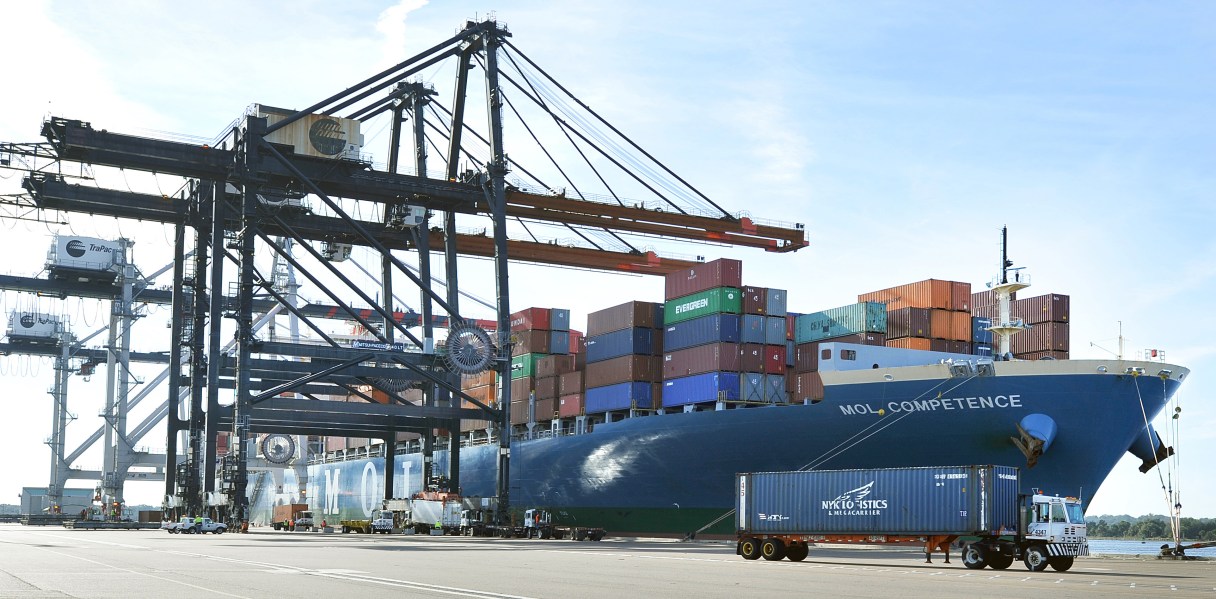
In this Jan. 6, 2015 photo, the MOL Competence, a 1036-foot long, 150-foot wide container ship carrying 45,000 tons of cargo, is moored at the TraPac Container Terminal in Jacksonville, Fla. The Commerce Department reports on the U.S. trade gap for May 2015 on Tuesday, July 7, 2015. (Bruce Lipsky/The Florida Times-Union via AP) In this Jan. 6, 2015 photo, the MOL Competence, a 1036-foot long, 150-foot wide container ship carrying 45,000 tons of cargo, is moored at the TraPac Container Terminal in Jacksonville, Fla. The Commerce Department reports on the U.S. trade gap for May 2015 on Tuesday, July 7, 2015. (Bruce Lipsky/The Florida Times-Union via AP)

WASHINGTON (AP) – The U.S. trade deficit widened slightly in May, reflecting declines in sales of American-made aircraft and machinery as exports continued to suffer from a strong dollar.

The deficit increased 2.9 percent to $41.9 billion in May, up from an April imbalance of $40.7 billion, the Commerce Department reported Tuesday.

Imports fell 0.1 percent to $230.5 billion. Exports slid at a faster pace of 0.8 percent to $188.6 billion. American producers have been hurt this year by a rising value of the dollar, which makes U.S. goods less competitive in overseas markets.

Even with the slight rise in May, the deficit over the past two months is averaging less than in the first quarter. That should help boost growth in the second quarter.

Trade slashed nearly 2 percentage points off growth during the first three months of the year. The big drag from trade combined with an unusually severe winter sent the economy into reverse, contracting at an annual rate of 0.2 percent in the January-March period.