
Monday, November 16, 2026Nov 16

Right-to-die advocates call California loss a brief setback

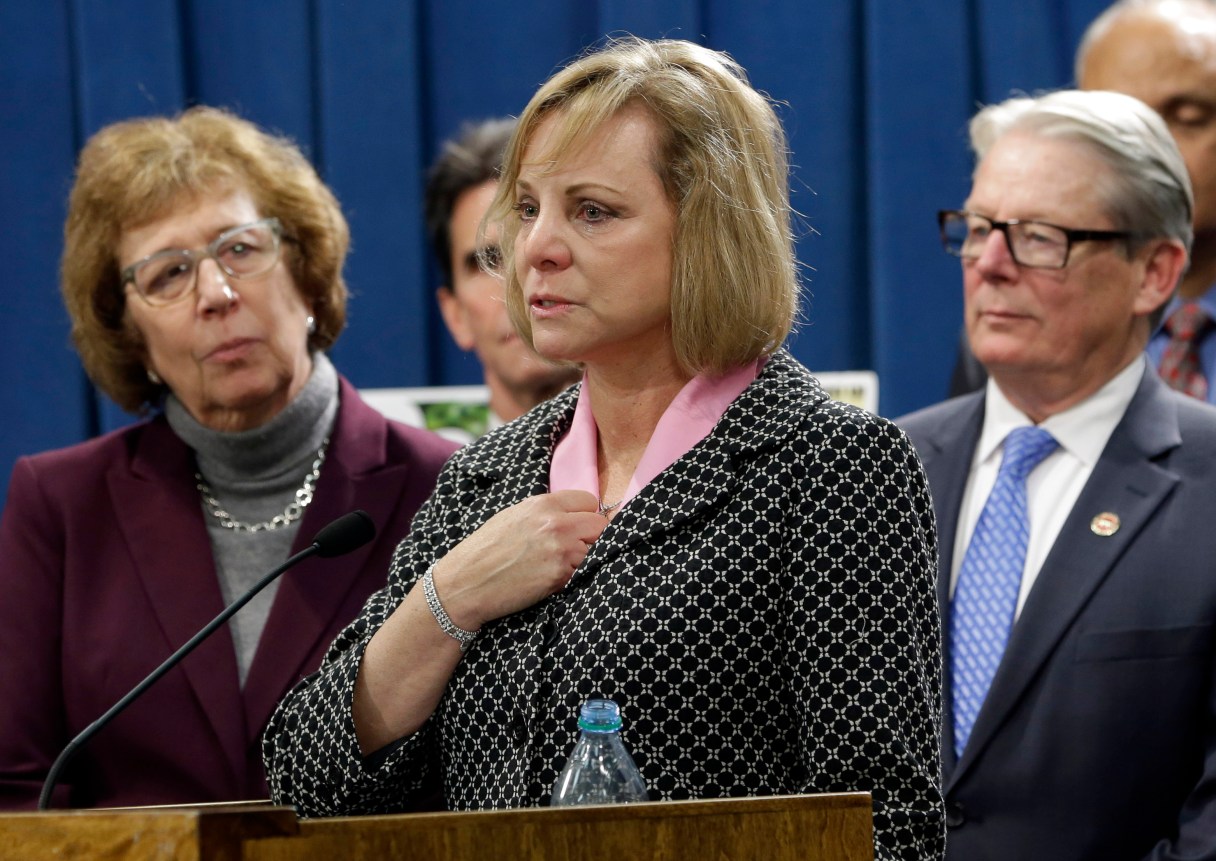
FILE - In this Wednesday, Jan. 21, 2015, file photo, Debbie Ziegler, center, the mother of Brittany Maynard, speaks in support of proposed legislation allowing doctors to prescribe life-ending medication to terminally ill patients during a news conference at the Capitol, in Sacramento, Calif. A bill, authored by Sen. Lois Wolk, D-Davis, left, and Sen. Bill Monning, D-Carmel, right, that would allow California physicians to help terminally ill patients end their lives, is struggling to muster enough support ahead of a legislative vote Tuesday, July 7, 2015. Maynard, a 29-year-old San Francisco Bay Area woman who had terminal brain cancer, moved to Oregon where she could legally end her life. (AP Photo/Rich Pedroncelli, File)

SACRAMENTO, Calif. (AP) – California dealt the national right-to-die movement a huge blow when legislation allowing doctors to prescribe life-ending drugs stalled, but advocates aren’t conceding defeat.

The movement was reinvigorated by the nationally publicized story of Brittany Maynard, a 29-year-old California woman who moved to Oregon last fall to die on her own terms after a brain cancer diagnosis. She argued in widely-viewed online videos that she should have been able to access life-ending drugs in her home state.

That wasn’t enough to sway lawmakers on California’s Assembly Health Committee ahead of a bill deadline, so the legislation’s authors ended their efforts until next year.

Lawmakers and aid-in-dying advocates vowed Tuesday they would continue to fight on behalf of the bill and would begin work on placing an initiative on the 2016 ballot as a back-up option. California is seen as one of the best shots at expanding the thin ranks of right-to-die states that includes Oregon, Washington, Montana and Vermont.

“We are going to see more serious movement in California, it is the most likely, and I do not see today’s situation as a loss,” said George Eighmey, the vice president of the Death with Dignity National Center who helped write Oregon’s 1994 law. “Finally, it’s going to hit that critical mass where it hits more and more states.”