
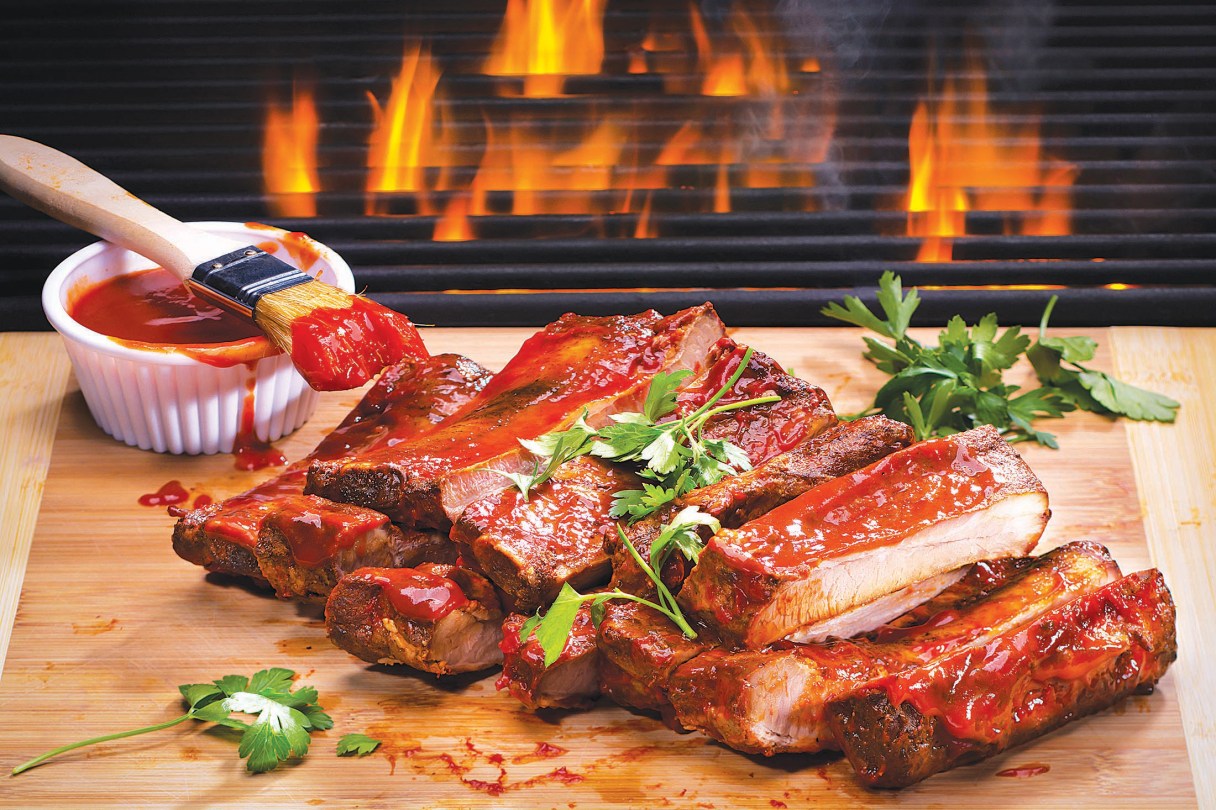
Centuries ago, men discovered that smoking meat was a tasty – and safe – way to preserve meat. On a parallel path, others discovered that reconstituting it in a sauce not only added moisture back into the meat, it made it taste pretty darn good as well.
These sauces were not created, as some mistakenly believe, to hide the unsavory flavors of meat gone bad, according to a history of barbecue sauce on amazingribs.com. Bad meat will make people sick whether it tastes good or not.
In any case, Columbus is often credited with introducing Europe to “barbacoa,” a technique he learned from the residents of the New World. Since then, people around the world have been experimenting with sauces to flavor the smoked meat. They are still perfecting it, and the term “barbecue sauce” has become a catch-all for a quick sauce to go on meat, poultry and fish, either as a finishing glaze or as a dipping sauce. Truly, anything goes.
Barbecue sauce is a very personal thing. For some, it means a thick, sweet red sauce. For others, it is mustard-based. For those who grew up in North Carolina, it’s vinegar-based. In the 1800s, butter and vinegar were the primary ingredients, along with black pepper. Almost every would-be sauce boss has a secret ingredient – everything from brown sugar to tequila to beer to espresso to blueberries, orange juice and maple syrup.
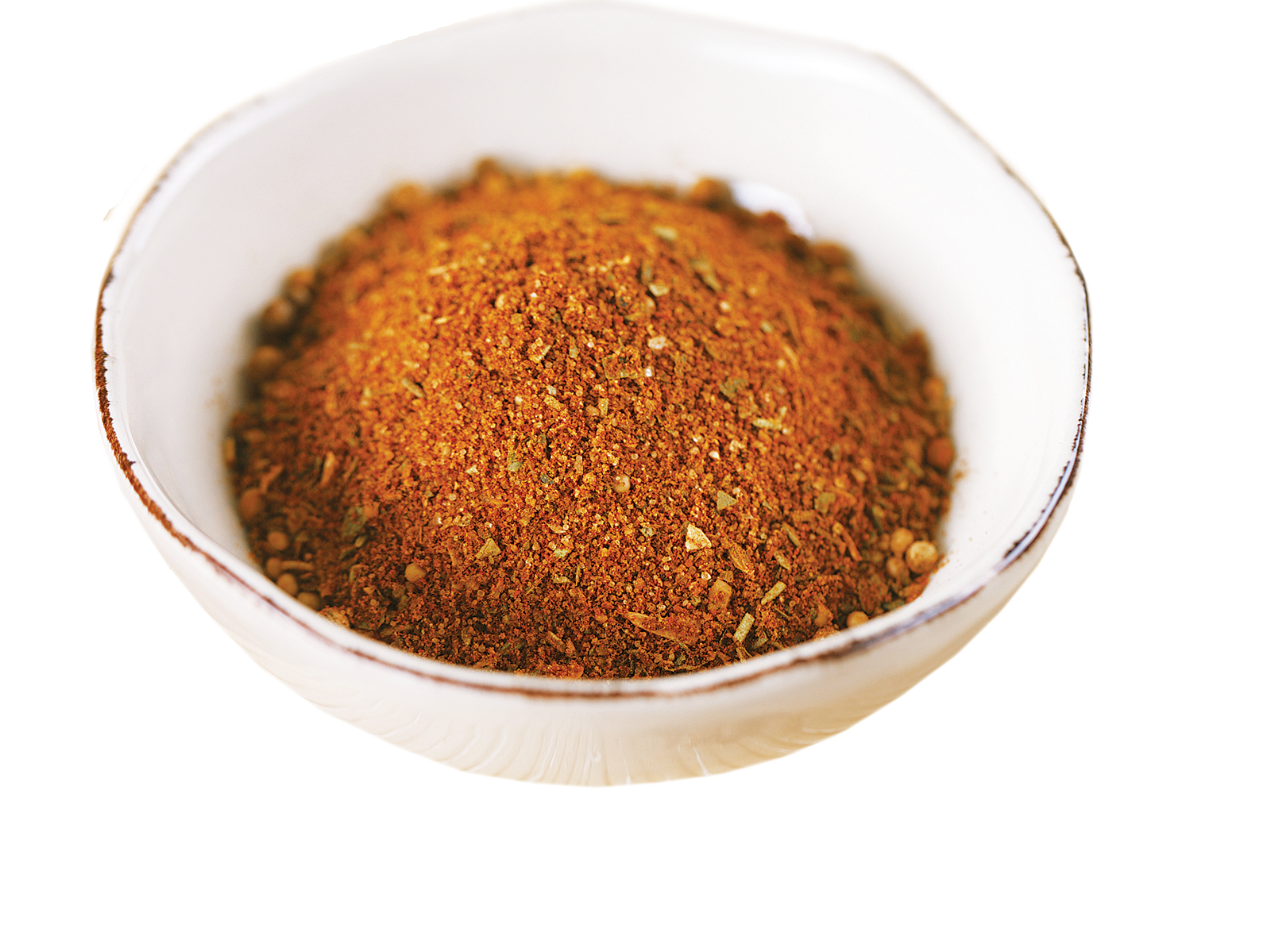 Classic spice rub
Classic Spice Rub
The best barbecue starts and ends with a great dry rub. You can use this one as a key ingredient in your barbecue sauce, but sprinkle the dry rub directly on the meat prior to cooking (and basting with the sauce). That way you get a double dose of this great rub. * 1/4 cup packed brown sugar * 1 tablespoon sweet paprika * 1 tablespoon smoked paprika * 1 tablespoon ground black pepper * 1 tablespoon ground white pepper * 1 1/2 tablespoons kosher salt * 2 teaspoons garlic powder * 2 teaspoons onion powder * 1/2 teaspoon cayenne pepper In a small bowl, combine all ingredients, mixing until evenly blended. Can be stored at room temperature in an airtight container for up to 6 months. Start to finish: 5 minutes. Makes 3/4 cup.
Patty Cooper, a former Chattanoogan now living in Switzerland – “where I need to make all my Southern cooking from scratch” – says whatever you prefer to put in your sauce, the key is getting the foundation right.
“My best tip is, after you have lightly caramelized some finely chopped onions and green pepper in butter, add your brown sugar and turn it down low until you get it dissolved and clear. All the rest is optional depending on how you build your sauce, but that step is a real time- saver and not often cited in recipes.
“I daresay I make the best pork butt in the French-speaking Alps as I used a wood-burning oven (until recently when I got a fancy-pants gas range from the U.K.). My barbecue brings tears to the eyes of my colleagues from Texas, Missouri and the Carolinas,” she insists.
Neil Magnessun found himself without any barbecue sauce one evening about 30 years ago and didn’t want to run to the store. He went to the fridge and cupboard and found some ketchup, syrup and brown sugar, “and then just salt and pepper to taste.”
It’s a formula he’s stuck with.
“Yeah, I hit it pretty much it the first time,” he says. “I try to keep it proportionate to how much I’m cooking. If it’s just me, I might use a half a cup of each [ketchup, brown sugar and syrup] and stick my finger in it and taste it and adjust.”
He puts it on nearly everything he grills, he says, and sometimes on meat he cooks in the oven, as well.
On the competitive barbecue circuit, most teams start with their favorite store-bought barbecue sauce, then doctor it with “secret” ingredients. Favorite add-ins include bourbon, brown sugar, squeeze margarine, honey, maple syrup, soy sauce, beef bouillon and a healthy dose of the spice rub that they coat the meat with before cooking.
Doctoring up a purchased product is one way to get a personalized barbecue sauce. But you can also start from scratch, that way you don’t have to spend time covering up anything you don’t like. Instead, you can layer on the flavors you love. And you’ll be shocked at how easy it is.
The most popular barbecue sauces start out with a base of tomatoes. Crushed tomatoes are easy to use because they are uniform and already broken down. If you want the sauce to have a more savory flavor, sweat some aromatics, such as onions and garlic, before adding the crushed tomatoes. If you’re looking for a lighter sauce or glaze that complements the food without covering up the natural flavors, start simply with the tomatoes.
After that, the most important thing to keep in mind is to make sure the sweetness is offset by an acidic ingredient, such as vinegar, wine or citrus juice. You want to make sure there is a perfect balance of sweet, salty and tart notes.
If you will be using the sauce as a glaze, you need to add enough liquid to make it easy to brush on, and you need to add enough sugar so it will caramelize as it cooks. Caramelization is key to a great barbecue sauce. But sugar cooks very quickly and can burn easily, so brush on the barbecue sauce only during the final 10 minutes of cooking
And if you want the familiar barbecue sauce flavor, don’t forget the Worcestershire sauce. The tamarind in the Worcestershire sauce is what we all associate with that classic flavor.
Basic Barbecue Sauce
3 tablespoons vegetable oil
1 medium-size onion, minced
1 clove garlic, minced
1/4 green bell pepper, cored, seeded, and minced
1/2 cup ketchup
1/2 cup tomato sauce
3 tablespoons cider vinegar, or more to taste
3 tablespoons Worcestershire sauce
2 tablespoons fresh lemon juice
2 tablespoons pineapple juice (optional)
1 teaspoon of your favorite hot sauce, or more to taste
1/2 teaspoon liquid smoke, or 2 tablespoons meat drippings
2 tablespoons molasses
3 tablespoons dark brown sugar, or more to taste
2 tablespoons prepared mustard of your choice
1 teaspoon dry mustard
1/2 teaspoon freshly ground black pepper
Salt
Heat the oil in a large nonreactive saucepan over medium heat. Add the onion, garlic and bell pepper and cook until softened but not brown, about 4 minutes.
Stir in the ketchup, tomato sauce, cider vinegar, Worcestershire sauce, lemon juice, pineapple juice (if using), hot sauce, liquid smoke, molasses, brown sugar, prepared and dry mustards, black pepper and 1 cup of water and bring to a boil. Reduce the heat to low and let the sauce simmer, uncovered, until thickened, about 15 minutes, stirring often to prevent scorching. If the sauce becomes too thick, add a little more water.
Remove the barbecue sauce from the heat and taste for seasoning, adding salt to taste and more cider vinegar, hot sauce, and/or brown sugar as necessary; the sauce should be highly seasoned.
Transfer the barbecue sauce to a serving bowl and serve warm or at room temperature. The sauce will keep, tightly covered in the refrigerator, for several weeks.
Makes 2 1/2 to 3 cups.
Sassy Bourbon and Brown Sugar Barbecue Sauce
This sauce is great on ribs, chicken, pork and hearty fish, such as salmon and catfish. Try it also on portobello mushrooms, charred onions and slabs of grilled potatoes.
28-ounce can crushed tomatoes
1 cup firmly packed brown sugar
2 tablespoons molasses
1/2 cup bourbon
1/2 cup Ketchup
1/4 cup chili sauce (such as Heinz)
1/4 cup cider vinegar
2 tablespoons red wine vinegar
1/4 cup Worcestershire sauce
1 tablespoons classic spice rub (recipe below)
1 tablespoon unsweetened cocoa
In a large saucepan over medium heat, combine all ingredients. Stir well, then simmer for 30 minutes, or until the sauce has thickened. Let stand off the heat for 10 minutes, then transfer the sauce to a blender. Puree until very smooth. The sauce can be refrigerated in an airtight container for 2 weeks.
Start to finish: 50 minutes. Makes 4 cups.
The Associated Press contributed to this story.