
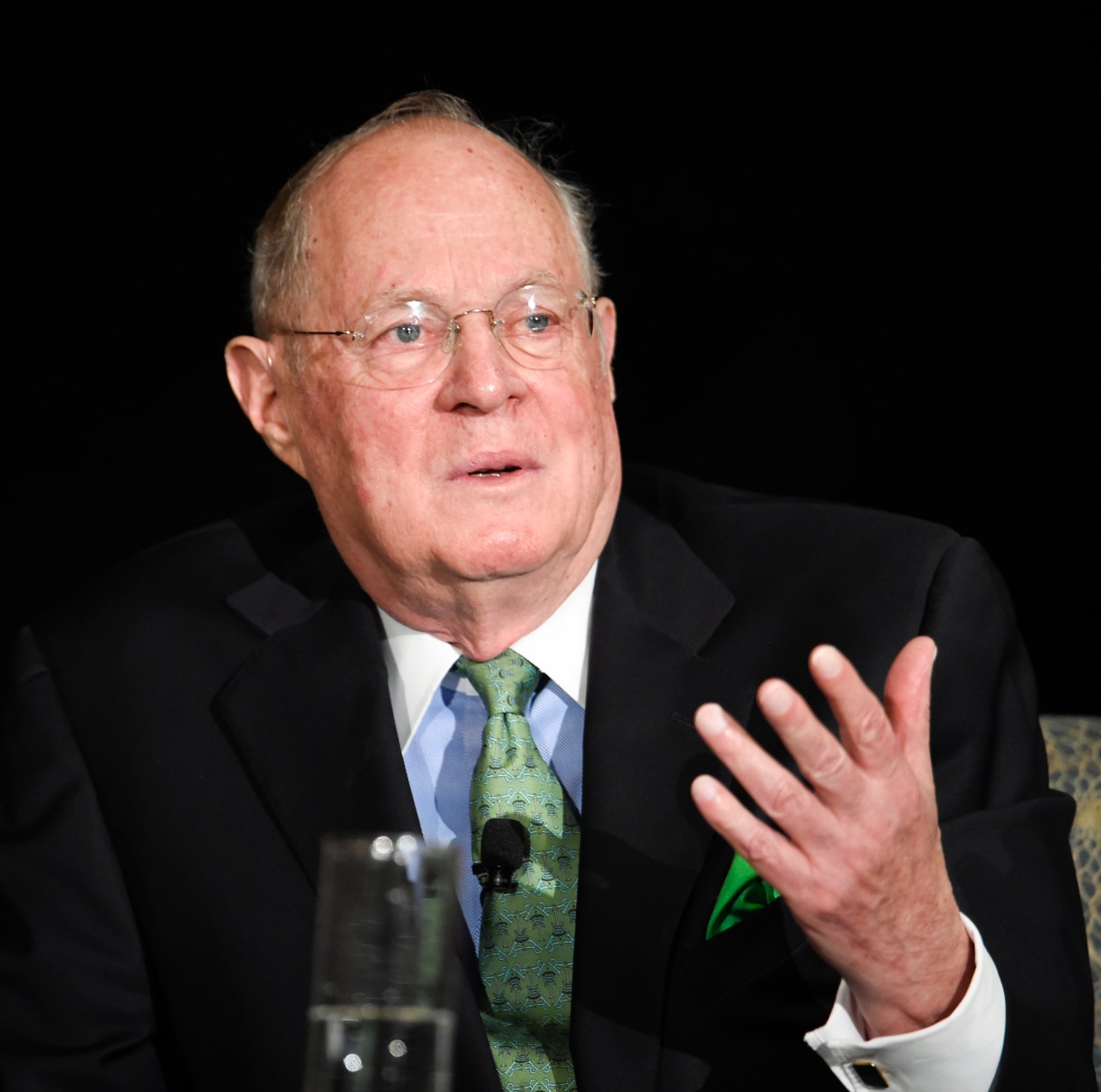
SAN DIEGO (AP) – U.S. Supreme Court Justice Anthony Kennedy on Wednesday likened controversy over the court’s decision to allow gay marriage to public reaction over the 1989 ruling that said burning an American flag was protected free speech.
Kennedy, who was the deciding vote in both cases, described how the reaction decades ago was critical at first but changed over time.
His remarks at the 9th Circuit Judicial Conference were his first public comments since he wrote the decision last month that put an end to same-sex marriage bans in 14 states. Kennedy drew the comparison in response to a moderator’s question about how justices weather reaction to closely watched rulings.
“Eighty senators went to the floor of the Senate to denounce the court,” he said of the 1989 ruling. “President Bush took the week off and visited flag factories, but I noticed that after two or three months people began thinking about the issues.”
Kennedy went on to say that a lawyer from Northern California approached him at a restaurant after the flag burning decision to tell him how his father, a prisoner of war in Nazi Germany, came around to the decision.