
Monday, November 16, 2026Nov 16

Japan lower house of parliament OKs expanded military role

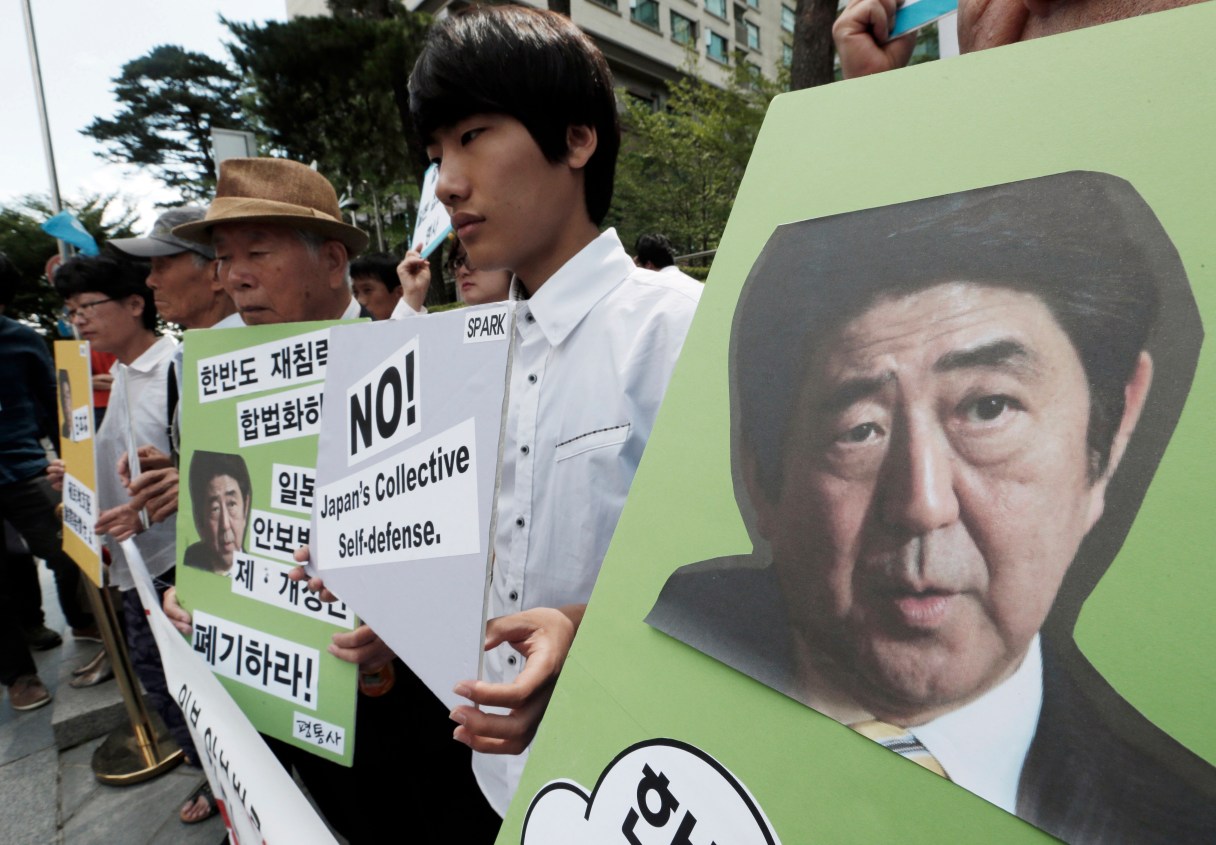
South Korean protesters stage a rally to protest against Japanese parliament’s possible approval of the controversial security legislation in front of the Japanese embassy in Seoul, South Korea, Thursday, July 16, 2015.  A Japanese parliamentary committee on Wednesday approved legislation that would expand the role of Japan's military after Prime Minister Shinzo Abe's ruling bloc forced the vote in the face of protests from some lawmakers and citizens. Then letters at banners read "No! Japan's Collective Self-defense." (AP Photo/Ahn Young-joon)
South Korean protesters stage a rally to protest against Japanese parliament’s possible approval of the controversial security legislation in front of the Japanese embassy in Seoul, South Korea, Thursday, July 16, 2015. A Japanese parliamentary committee on Wednesday approved legislation that would expand the role of Japan's military after Prime Minister Shinzo Abe's ruling bloc forced the vote in the face of protests from some lawmakers and citizens. Then letters at banners read "No! Japan's Collective Self-defense." (AP Photo/Ahn Young-joon)

TOKYO (AP) – Japan’s lower house of parliament on Thursday approved legislation that would allow an expanded role for the nation’s military in a vote boycotted by the opposition.

The vote came one day after Prime Minster Shinzo Abe’s ruling bloc forced the bills through a committee despite intensifying protests.

Opposition lawmakers walked out after their party leaders made final speeches against the bills. Only members of the Japan Restoration Party voted for their counterproposal and against the ruling party legislation.

Abe wants to strengthen the military’s role to counter China’s growing presence in the region and contribute more to international peacekeeping efforts.

The legislation was crafted after his Cabinet last year adopted a new interpretation of Japan’s pacifist constitution, which was drafted by the U.S. and has been in place since a year after the end of World War II.