
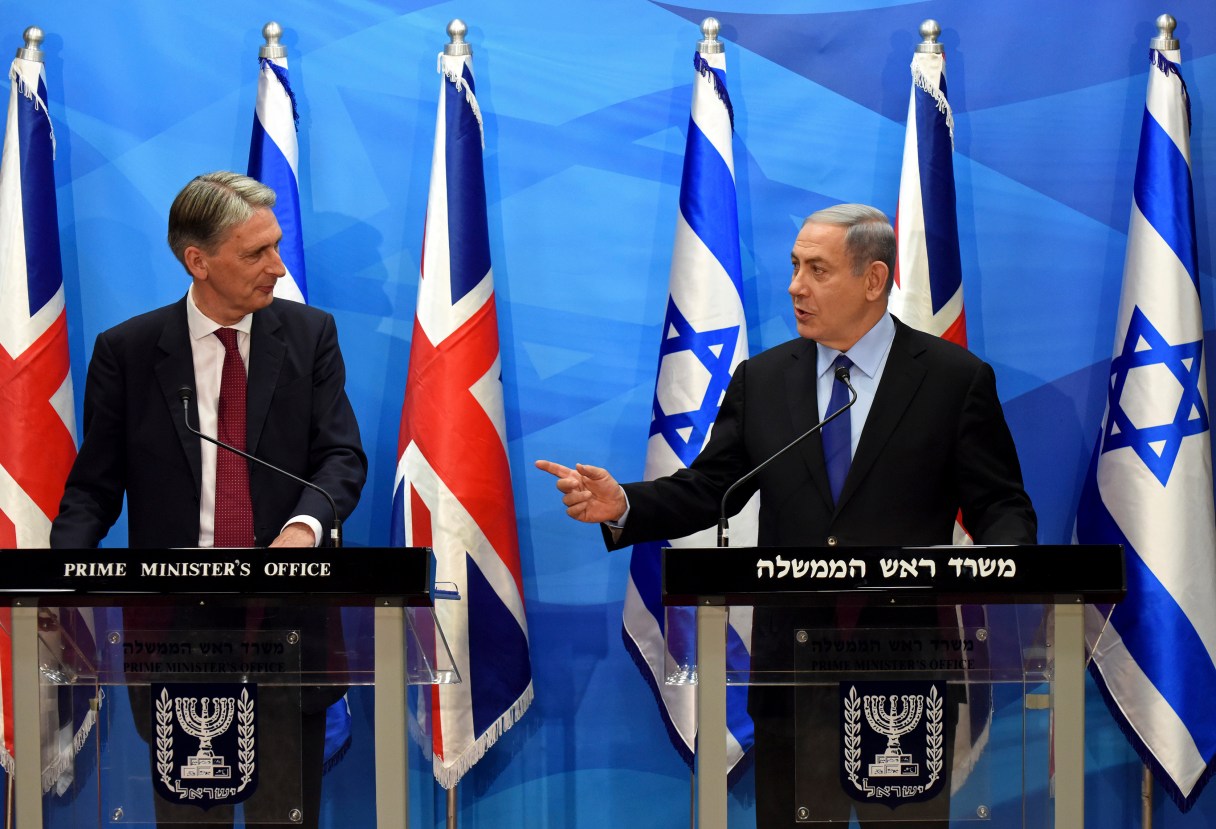
JERUSALEM (AP) – Israel’s prime minister and the British foreign secretary publicly sparred over the nuclear deal with Iran on Thursday, veering off prepared comments to exchange sharply different positions toward the agreement.
The awkward encounter reflected two world views: Western powers hope the deal can eventually moderate Iran and bring it back into the international community, while Israel believes Iran will use any newfound legitimacy as cover to strengthen militant groups and further destabilize the region.
Prime Minister Benjamin Netanyahu battled unsuccessfully to scuttle what he called “a bad deal” emerging in the talks, insisting that any sanctions relief would provide Iran with a “cash bonanza” that will make it easier for the Islamic Republic to continue to support Israel’s enemies, including the Lebanese Hezbollah Shiite militant group and the Palestinian group Hamas, and meddle in proxy conflicts in the Middle East.
Since the deal was announced, Netanyahu has condemned it as a “stunning historic mistake,” saying Israel was not bound by the agreement and suggesting that military action remains an option. Opposition legislators have rallied around Netanyahu against the deal, and Netanyahu’s chief political rival, Isaac Herzog announced he would travel to the U.S. to lobby for a compensation package to insure Israel’s military advantage in the region.
In his appearance with Foreign Secretary Philip Hammond on Thursday, Netanyahu expressed his concern that the deal does not seek to link sanctions relief to Iran’s conduct.