
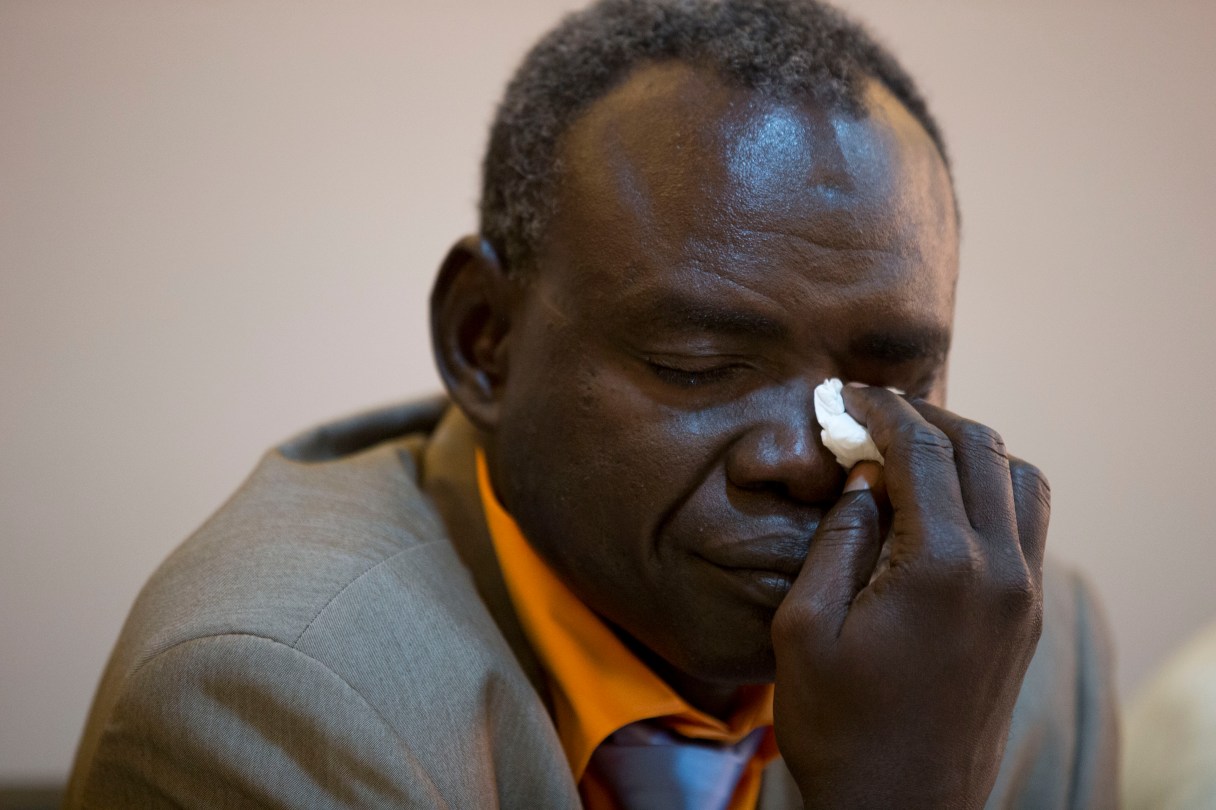
DAKAR, Senegal (AP) – The bodies came daily. Sometimes 10, sometimes 20 lives lost to torture, malnutrition or sickness in prison in Chad, say survivors.
Clement Abaifouta, a prisoner himself, had to wrap them in sacks and bury them.
“There was a lot of suffering, a lot of pain,” he said about his time in jail until 1989. “What did I do to have gotten four years in prison? I want to know why.”
Abaifouta wants justice, like thousands of other political prisoners who were victims of torture during Chadian ex-dictator Hissene Habre’s rule from 1982-1990. On Monday Habre will go on trial in Senegal, fulfilling the work of many who say they suffered abuse under his rule and setting a bold precedent for justice in Africa.
For more than a decade after his overthrow Habre lived freely in Senegal. His easy exile was a symbol of impunity in Africa until his he was taken into custody and charged in 2013. Now his trial is a warning to other African dictators that they may be held accountable in Africa for their actions, say human rights experts.