
Monday, November 16, 2026Nov 16

2 women to vie in Taiwan presidential election for 1st time

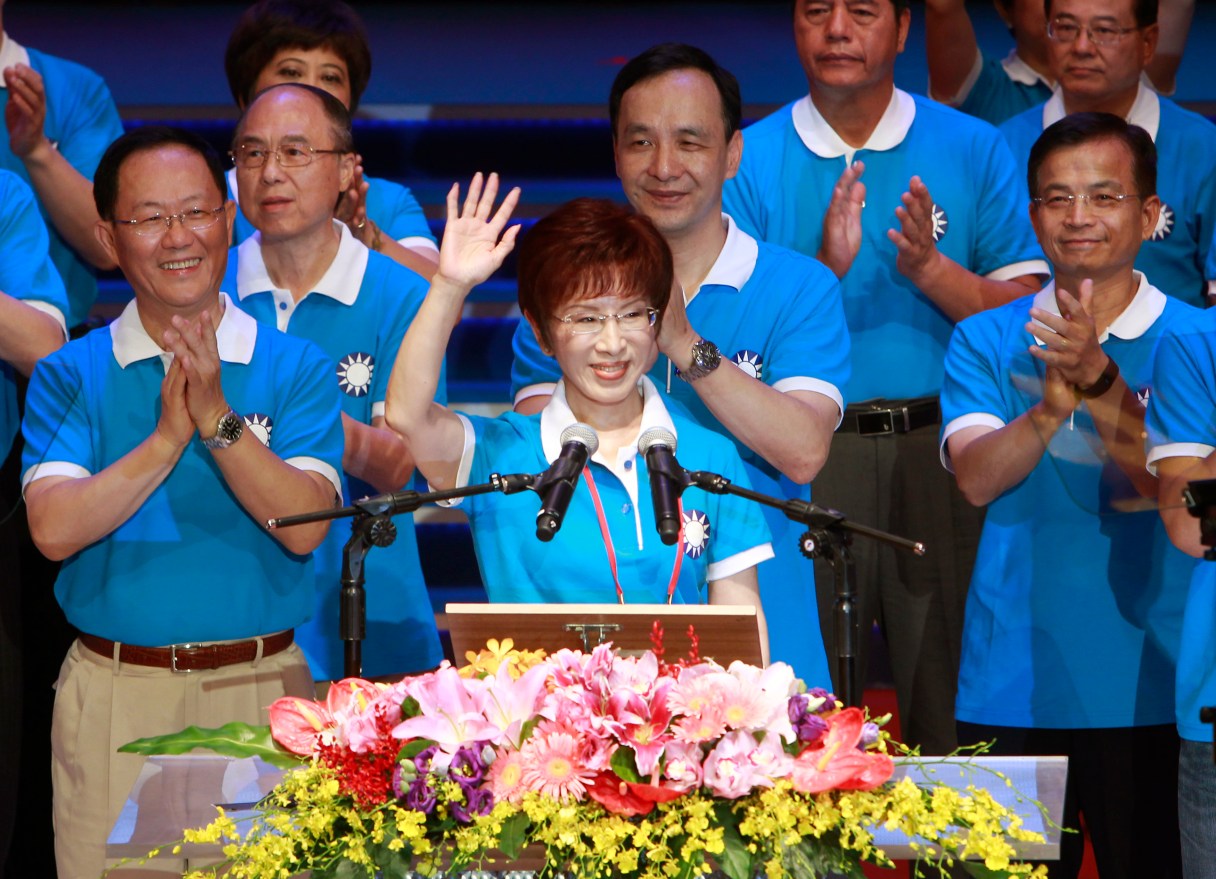
Backed by the ruling Nationalist Party members, Hung Hsiu-chu, a former teacher and current deputy legislative speaker, waves as she is nominated as the party's candidate in the January presidential election, Sunday, July 19, 2015, in Taipei, Taiwan. The top two political parties in Taiwan have each nominated a woman for president in 2016, a historic first signaling acceptance of female leadership and kicking off a campaign highlighted so far by clashing views on ties with political rival China. Hung supportive of friendly relations with China will run against Tsai Ing-wen, the opposition Democratic Progressive Party chairwoman and an advocate of more cautious relations with Beijing. (AP Photo/Chiang Ying-ying)

TAIPEI, Taiwan (AP) – Taiwan’s top two political parties have each nominated a woman for president in 2016, a historic first signaling acceptance of female leadership and kicking off a campaign highlighted so far by clashing views on ties with rival China.

The ruling Nationalist Party on Sunday picked as its candidate Hung Hsiu-chu, a former teacher and the current deputy legislative speaker. Hung, who supports friendly relations with China, will run against Tsai Ing-wen, the opposition Democratic Progressive Party chairwoman and an advocate of more cautious relations with Beijing. Tsai leads in opinion polls ahead of January’s election.

Ties with Beijing, long icy but cordial since 2008, have shaped up as an early campaign issue.

Voters in Taiwan, which has been democratic since the late 1980s, have never elected a woman as president nor had a choice between two female candidates backed by the major parties.

Joanna Lei, chief executive officer of the Chunghua 21st Century Think Tank in Taiwan, said that some younger women struggle to advance in Taiwan. However, she said society accepts the leadership of women over age 50 because they historically ran clans in China, where Taiwan’s culture originates.