
Monday, November 16, 2026Nov 16

North Korea gig fits well with iconic Slovenian band’s image

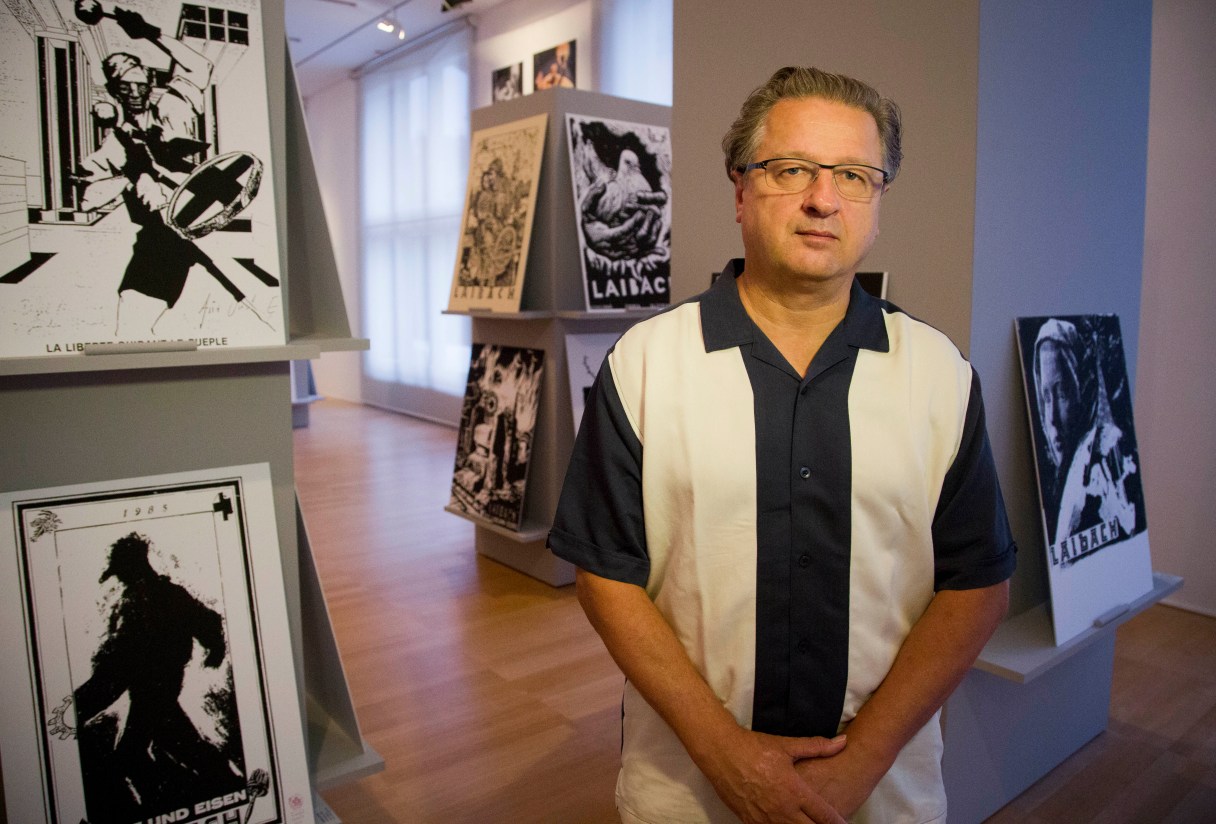
CORRECTS NAME - In this Thursday, July 16, 2015 photo taken in Ljubljana, Slovenia, leader of Slovenian conceptual band 'Laibach' Ivan Novak talks to The Associated Press during an interview, in front of the band's posters at an exhibition. The group has announced they will hold two concerts in Pyongyang next month. The tour will coincide with the ceremonies marking the 70th anniversary of the Korean peninsula's liberation from Japanese colonization, and will include Laibach's own music and popular Korean songs, band leader Novak said. (AP Photo/Darko Bandic)

LJUBLJANA, Slovenia (AP) – For a band inspired by art in totalitarian regimes, a gig in North Korea is a dream come true.

Slovenia’s iconic Laibach – whose music is described as a mixture of industrial rock and Kraftwerk-style electronics, but which is also known for its controversial use of authoritarian imagery – has recently announced it will play two concerts in Pyongyang next month.

The tour will coincide with the ceremonies marking the 70th anniversary of the Korean peninsula’s liberation from Japanese colonization, and will include Laibach’s own music as well as popular Korean songs, spokesman Ivan Novak told the Associated Press.

“Originally, we invited ourselves and then they invited us,” Novak said.

Formed in 1980, when Slovenia was still part of Communist-run Yugoslavia, Laibach immediately stirred controversy with its name – German for Slovenia’s capital city Ljubljana – and because it used a black cross as one of its symbols.