
Monday, November 16, 2026Nov 16

Collector finds marine reptile fossil in mountains of Alaska

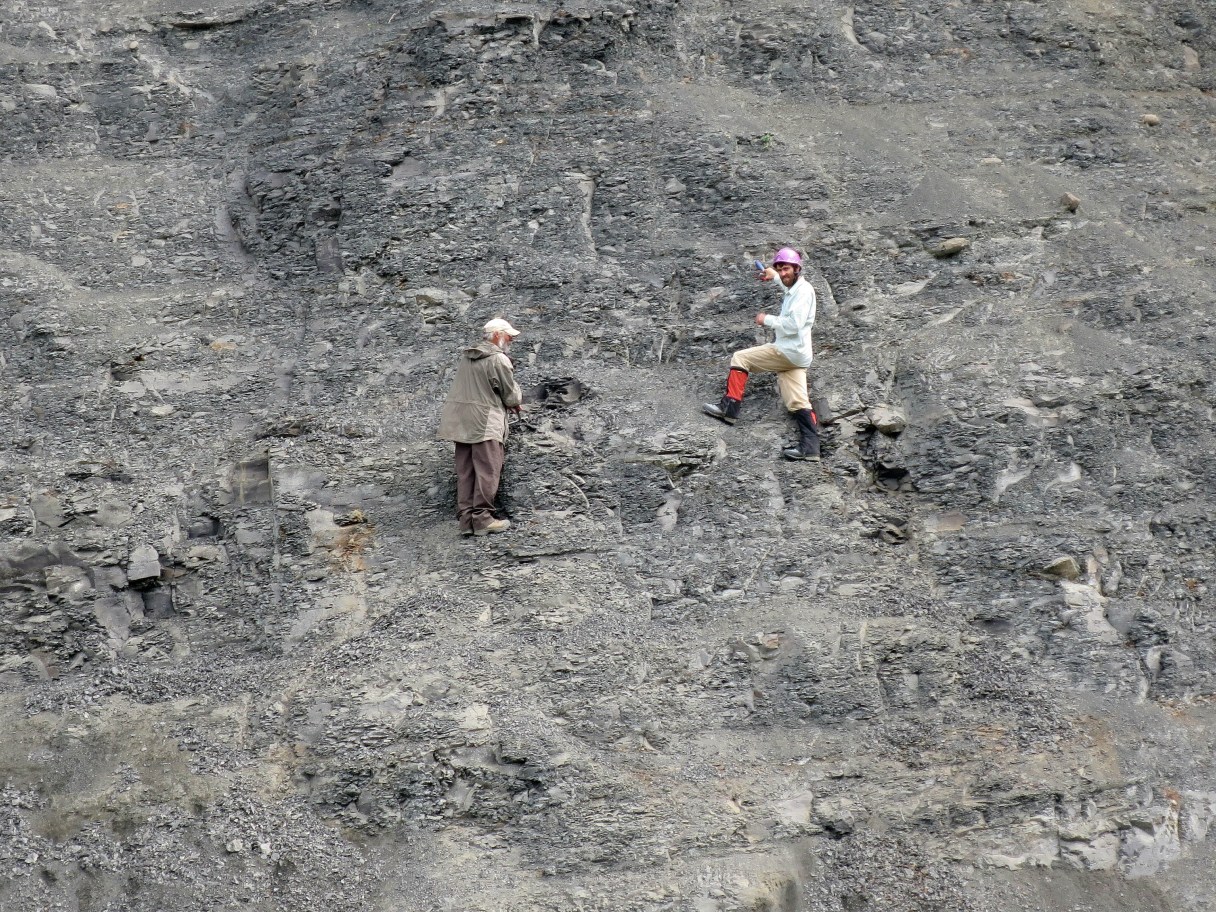
In this June 2015 photo provided by the University of Alaska Museum of the North, fossil collector Curvin Metzler, left, who discovered the elasmosaur fossil, and Earth Sciences Curator Patrick Druckenmiller examine the spot where bones were found sticking out of the cliff in the Talkeetna Mountains in Alaska. Researchers have confirmed the discovery of a marine reptile fossil in the Talkeetna Mountains, the University of Alaska Museum of the North announced Wednesday, July 22, 2015. (James Havens/University of Alaska Museum via AP)

ANCHORAGE, Alaska (AP) – Researchers have confirmed the discovery of a marine reptile fossil in the Talkeetna Mountains, the University of Alaska Museum of the North announced Wednesday.

Fossil bones of an elasmosaur (ee-LAZ’-moh-sohr), a type of plesiosaur (PLEE’-see-oh-sohr), were found by Anchorage-based fossil collector Curvin Metzler.

Elasmosaurs had extremely long necks and limbs like paddles that allowed them to swim underwater, Patrick Druckenmiller, the museum’s earth science curator and a marine fossil expert, said in the announcement.

“Picture the mythical Loch Ness monster and you have a pretty good idea what it looked like,” he said.

The species lived about 70 million years ago during the Late Cretaceous period. The marine reptiles lived during the age of dinosaurs but are not classified as dinosaurs because they did not walk on land or fit other dinosaur criteria, museum spokeswoman Theresa Bakker said.