
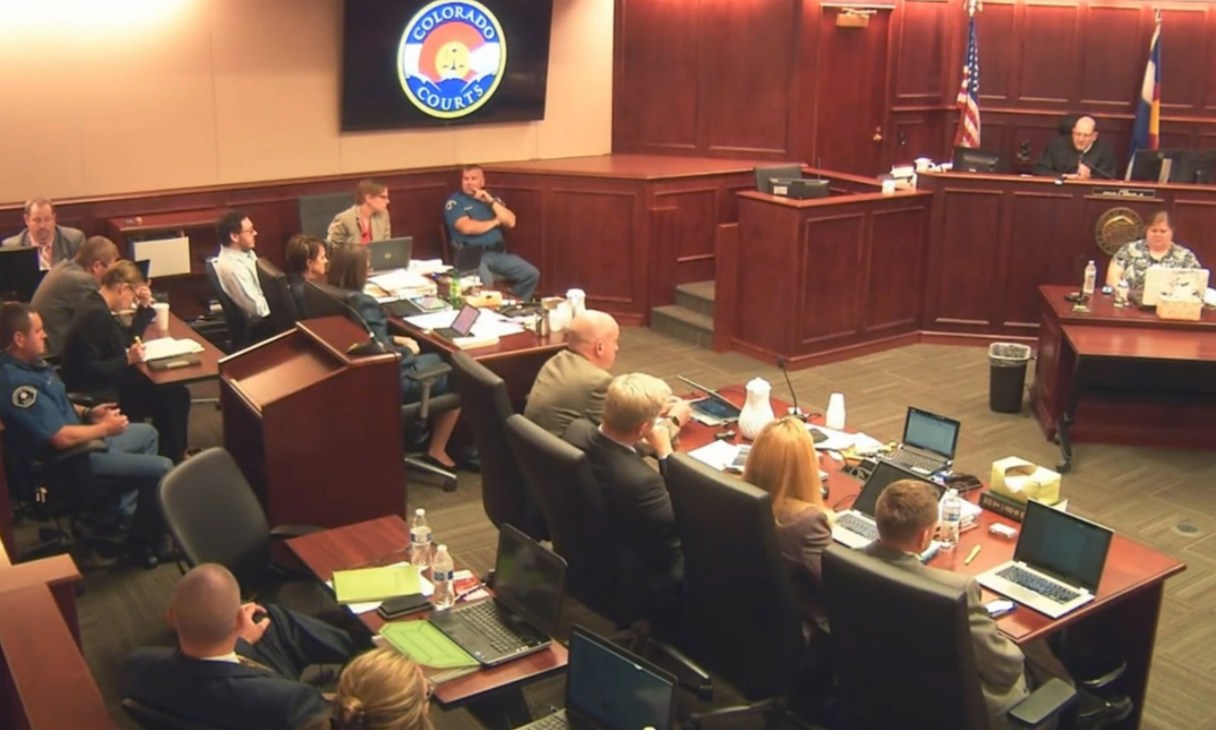
CENTENNIAL, Colo. (AP) – Prosecutors have urged jurors to sentence Colorado theater shooter James Holmes to death, saying he wanted to murder all 400 people at a midnight movie premiere but managed to kill only 12 because his assault rifle jammed.
Jurors are in the very early stages of a complicated three-step process to determine whether Holmes should be executed or sentenced to life in prison without parole for the attack, which also left 70 injured.
They will resume deliberations Thursday over whether prosecutors have proven at least one of several legal factors that would warrant death.
Prosecutor Rich Orman showed jurors photos of each person killed and read their names – bringing some of their relatives in the courtroom to tears. Holmes deliberately and cruelly killed all of them, including 6-year-old Veronica Moser-Sullivan who “had four gunshot wounds to her little body,” Orman argued.
The defense offered no counter-argument, effectively conceding that prosecutors had met the first of several requirements for the death penalty: That at least one aggravating factor was present in the massacre. Those factors include the killing of a child, the number of victims involved, and that the killings were particularly heinous.