
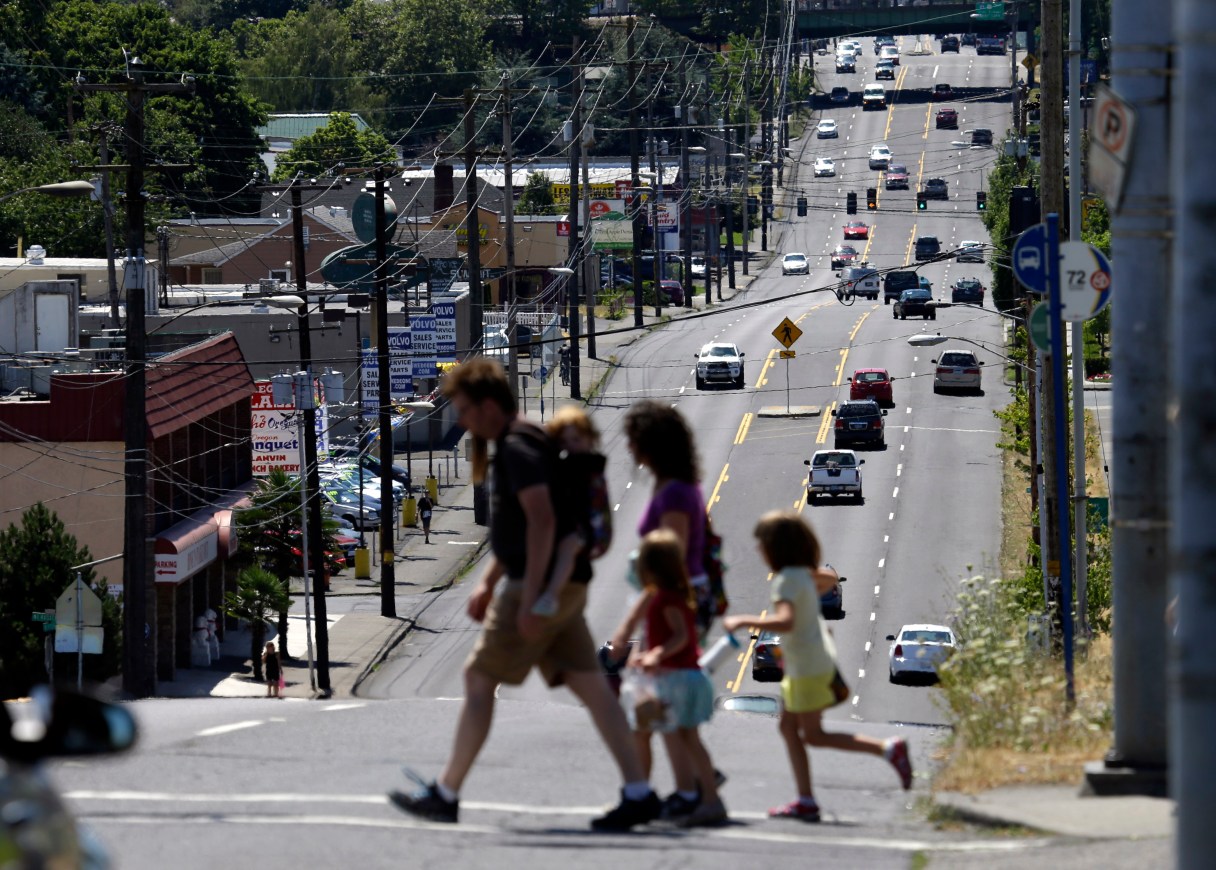
PORTLAND, Ore. (AP) – Portland may be known for fashionable hipsters, devotion to public transit, locally sourced chickens and artisanal food carts. But a part of this city by the river counters the narrative of livable, weird, predominantly white ‘Portlandia.’
Long-overlooked by visitors and many locals, East Portland stretches far from downtown, on the city’s eastern edge. It’s ethnically and racially diverse, houses a large percentage of the city’s children, low-income families and immigrants, and lacks many of the amenities of ‘cool’ Portland.
Here, shabby apartment complexes, fading strip malls, wide avenues and fast-food chains are the norm. But with a quarter of Portlanders now calling it home and rising costs pushing residents out of the inner core, East Portland has become hard to ignore.
In recent years, city officials have recognized East Portland’s neglect, promising change and implementing improvements. But a group of residents says it’s too little, too late. And in neighborhoods where sidewalks and parks are scant and crime is high, they’re organizing to get greater representation.
A ballot measure filed earlier this month would overhaul Portland’s at large elections and commission form of government in favor of a strong mayor and nine council members elected by district. Most council members would have to live in the neighborhoods they represent, which proponents say would mean better representation for East Portland and areas with less political clout.