
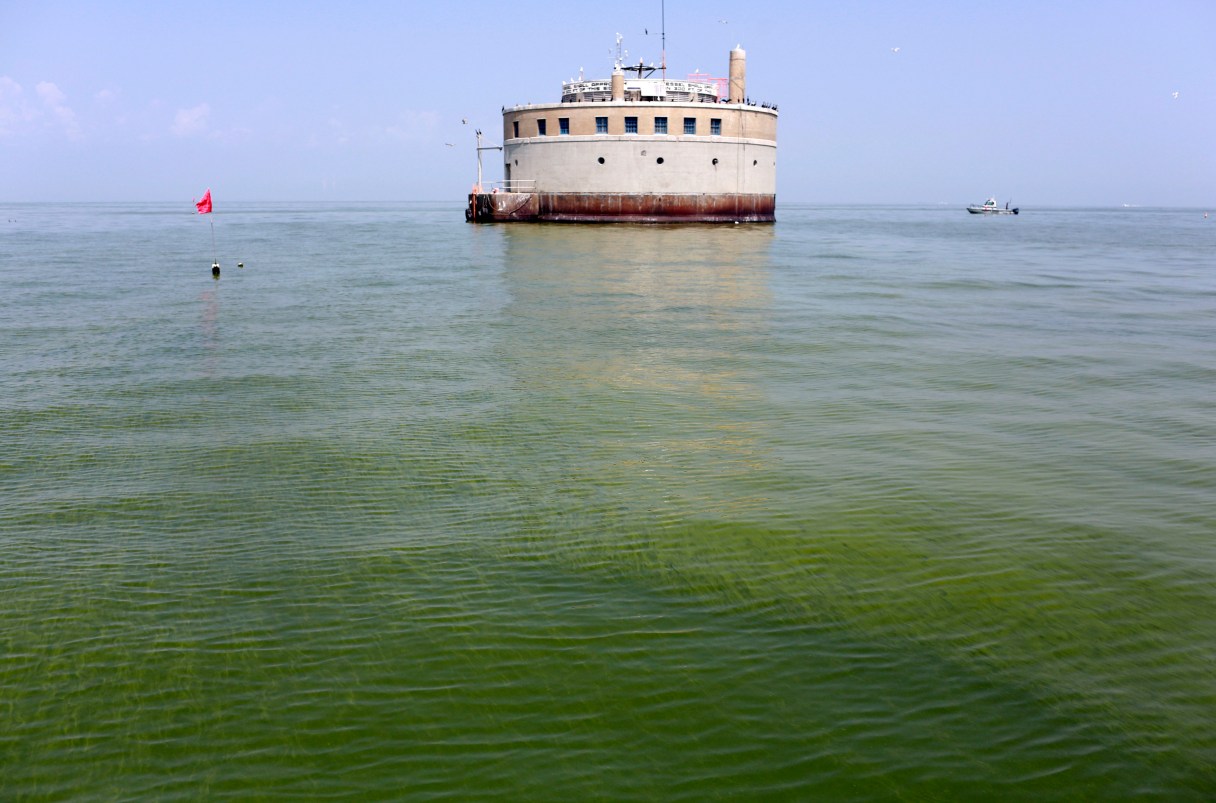
TOLEDO, Ohio (AP) – Toledo has detected the first signs in Lake Erie of the dangerous toxin that resulted in a water crisis last year that left 400,000 people in northwestern Ohio and southeastern Michigan without safe tap water for two days.
Toledo Mayor Paula Hicks-Hudson and city officials announced late Monday that the intake mechanisms that draw Toledo’s drinking water from Lake Erie detected a toxin that can cause liver and kidney damage, The Blade reported (http://bit.ly/1MsT8Ef).
The mayor says the city’s drinking water remains safe but she has updated the status of the water to a “Watch” category. The next stage, “Caution,” means a toxin has been detected in tap water but the level isn’t great enough to require an advisory.
A severe toxic algae outbreak on the lake’s western end – where the toxin was recently detected – was forecast after heavy rains in June washed huge amounts of algae-feeding phosphorus into the lake.
Hicks-Hudson emphasized that the toxin, microcystin, was detected about 3 miles out in the lake and has not been detected inside the Collins Park Water Treatment Plant, which treats the water for hundreds of thousands of residents in the area.