
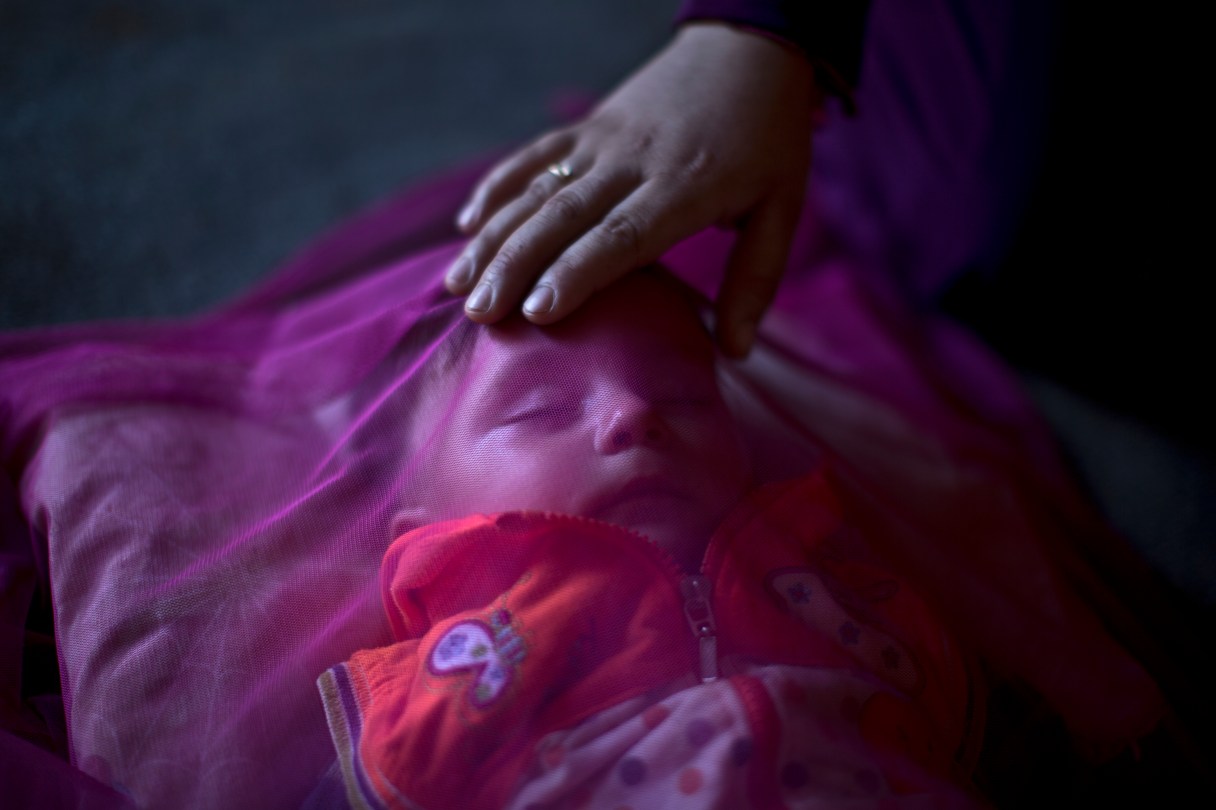
MAFRAQ, Jordan (AP) – Gathered on the desert floor, the Askar family chants prayers for their 1-year-old daughter Jawahir, who died of malnutrition and is buried beneath the sands of their informal refugee camp far from their Syrian hometown.
“She was born in a camp and buried near the camp,” her father Mohammed Askar recounts, still in anguish over her Feb. 24 death. “I wish the circumstances were different and I could have saved my daughter, but we are poor and powerless and we have only God with us.”
Of the 4 million refugees who fled Syria’s grinding civil war, it is the conflict’s youngest exiles, like Jawahir, who often bear the brunt of its woes.
More than 10,000 children have died in the four-year conflict, while over 2.8 million in and out of the country don’t go to school, according to the U.N. children’s agency, UNICEF. Many suffer emotional problems from their experiences, while others get pressed into working to support their families, who struggle to have enough to eat.
Aid agencies have asked for $4.5 billion for 2015 to help refugees, but have been forced to slash support programs because of large funding gaps, which had a devastating effect on the amount of food aid coming.