
Friday, November 13, 2026Nov 13

Drachma revolt adds unease to Greece’s awkward alliance

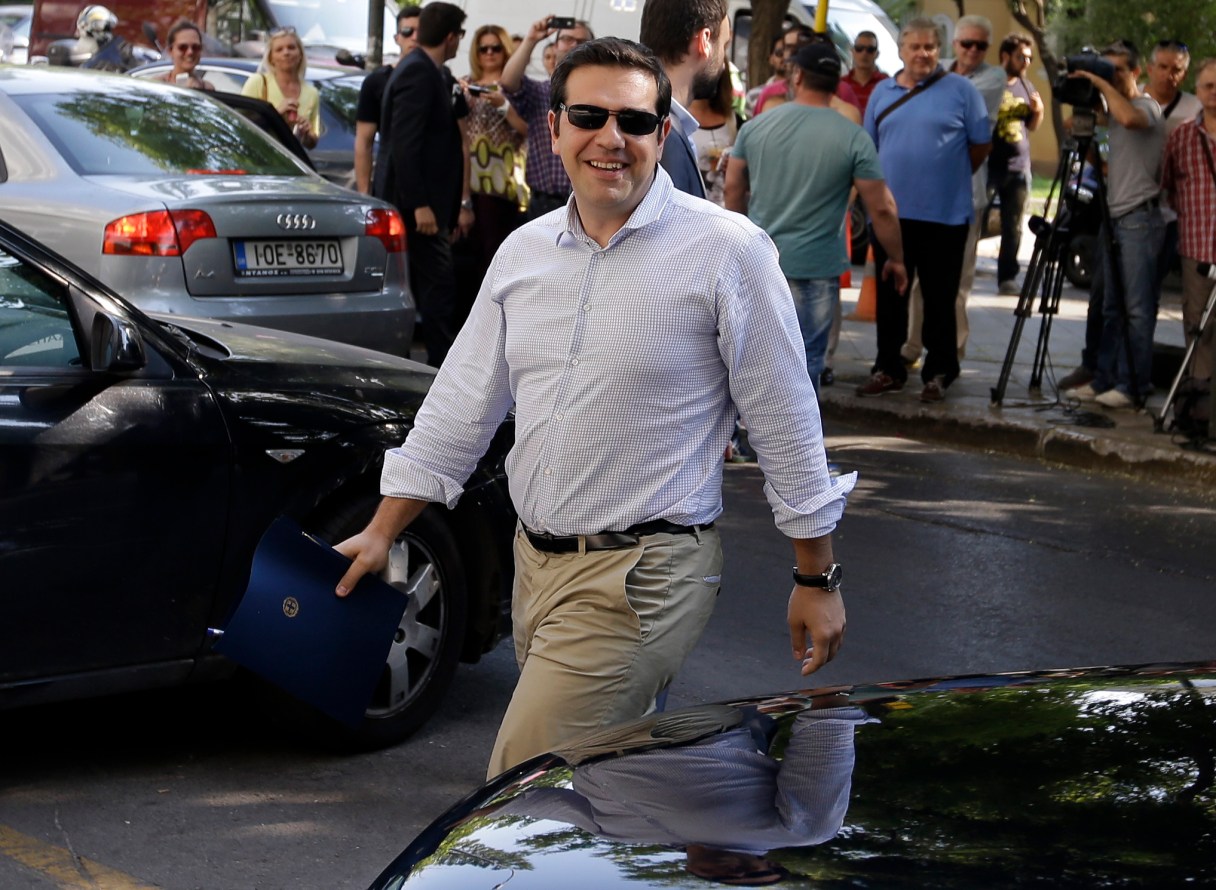
Greece's Prime Minister Alexis Tsipras arrives at Syriza party headquarters for a meeting with senior party officials in Athens, Monday, July 27, 2015. After passing a series of reforms demanded by creditors, the Greek government is hoping that negotiations on the bailout will be completed by Aug. 20 when the country has a big debt repayment of around 3.2 billion euros ($3.5 billion) to make to the European Central Bank. (AP Photo/Thanassis Stavrakis)
Greece's Prime Minister Alexis Tsipras arrives at Syriza party headquarters for a meeting with senior party officials in Athens, Monday, July 27, 2015. After passing a series of reforms demanded by creditors, the Greek government is hoping that negotiations on the bailout will be completed by Aug. 20 when the country has a big debt repayment of around 3.2 billion euros ($3.5 billion) to make to the European Central Bank. (AP Photo/Thanassis Stavrakis) Greece's Prime Minister Alexis Tsipras arrives at Syriza party headquarters for a meeting with senior party officials in Athens, Monday, July 27, 2015. After passing a series of reforms demanded by creditors, the Greek government is hoping that negotiations on the bailout will be completed by Aug. 20 when the country has a big debt repayment of around 3.2 billion euros ($3.5 billion) to make to the European Central Bank. (AP Photo/Thanassis Stavrakis)

ATHENS, Greece (AP) – Prime Minister Alexis Tsipras’ power-sharing acrobatics look harder to perform by the day.

Opposition parties are propping up his left-wing government long enough to negotiate a new bailout and keep the country in the eurozone, while senior members of his own party, Syriza, have revived a campaign to bring back the drachma.

On Thursday, lead bailout negotiators are due in Athens. They will intensify a new round of talks for a massive third rescue package after Athens and lenders from other eurozone countries reached a bitterly fought compromise.

But Tsipras has a more pressing priority. He will be battling to keep control of Syriza at a meeting of the party’s 200-member executive, facing dissenters who argue the Left has abandoned its principles over the past six months under the country’s popular prime minister.

The uncertainty has renewed questions over whether Greece can – or should – endure two more years of austerity and bailout policies that have battered its economy and the political parties that implemented them.