
Monday, November 16, 2026Nov 16

Jurors instructed on reasons to spare Colorado gunman’s life

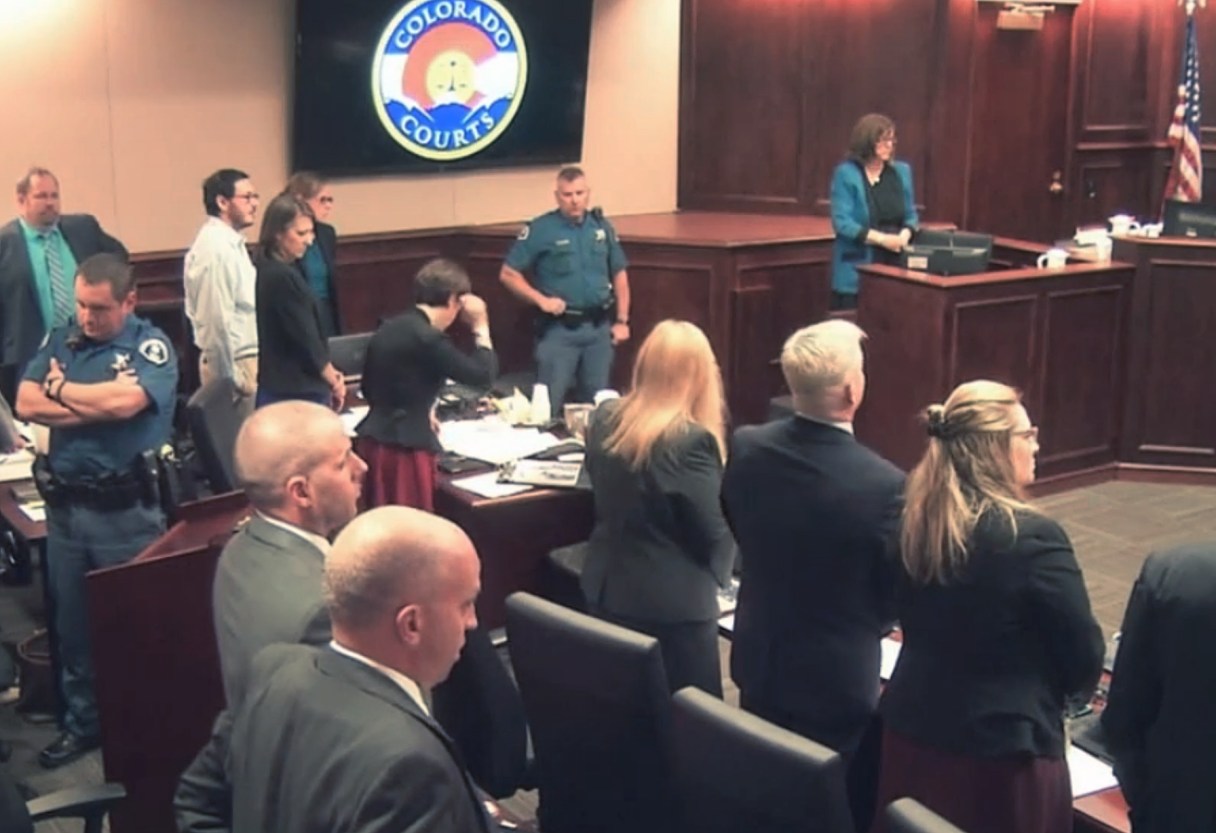
In this image made from Colorado Judicial Department video, Arlene Holmes, top right, the mother of James Holmes, third from left, in white shirt, stand for the jury to leave for a break in testimony during the sentencing phase of the Colorado theater shooting trial in Centennial, Colo., on Wednesday, July 29, 2015. Once they begin deliberating on the sentence, the Holmes jury will be charged with deciding if Holmes is to be executed, or if any mitigating evidence, such as mental health issues, warrants instead life in prison. (Colorado Judicial Department via AP, Pool)

CENTENNIAL, Colo. (AP) – Jurors in the Colorado movie theater trial received instructions Thursday before their next round of deliberations to decide if there are any reasons to override a potential death penalty and sentence James Holmes to life without parole for 12 murders and 70 attempted murders.

The lengthy instructions were the last step before closing arguments in this phase of his sentencing, which focused on Holmes’ childhood, his mental illness, his connections to people who love him and other potentially mitigating factors that would reduce his “moral culpability” and make him worthy of their mercy.

Last week, jurors unanimously agreed that James Holmes’ 2012 attack was cruel enough to justify the death penalty. Now, their focus is on whether his life should be spared nevertheless.

If they decide the death penalty is still an option, they would move to a final phase in which they would hear from victims and survivors.

Judge Carlos A. Samour Jr. described the potentially mitigating factors as any facts or circumstances in his personal history, background or mental health that make capital punishment inappropriate, despite the horrific nature of his crimes three years ago.