
Saturday, November 14, 2026Nov 14

Pakistan buries Islamic militant leader killed in attack

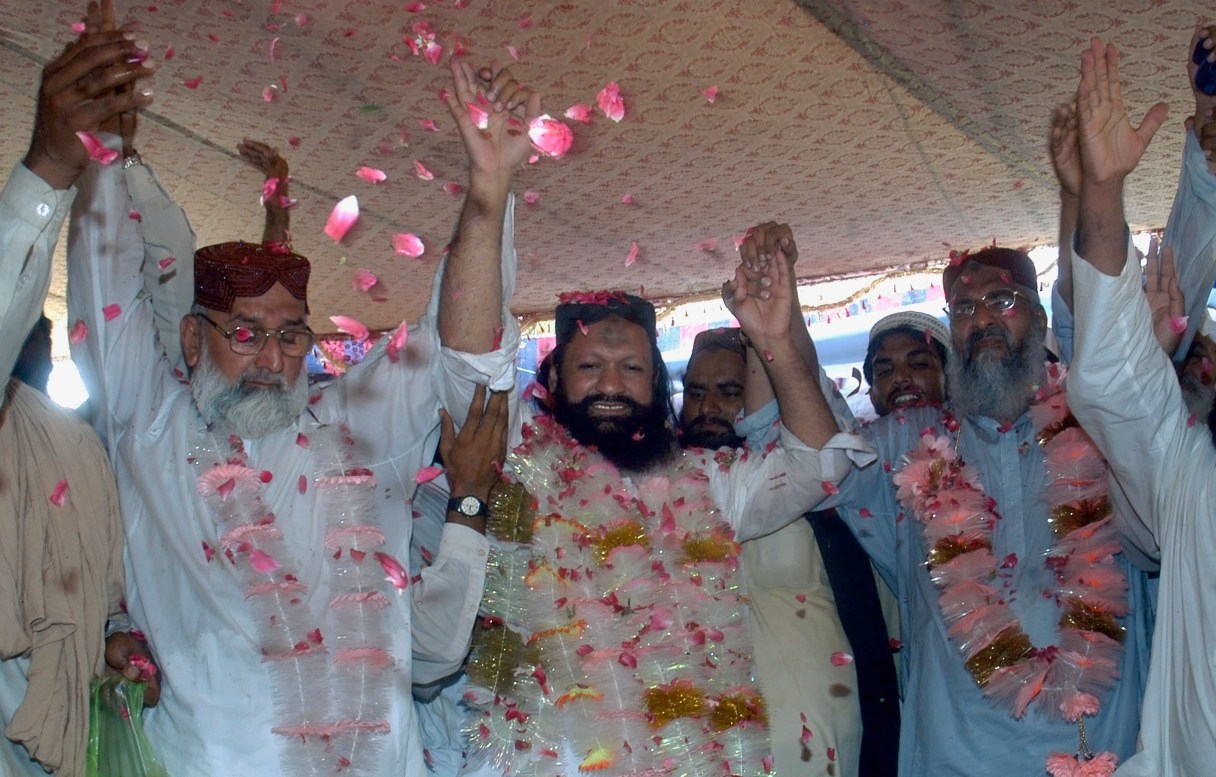
FILE - In this July 15, 2011, file photo, Malik Ishaq, center, a leader of the banned Sunni Muslim group Lashkar-e-Jhangvi, and his colleagues, raise hands in response their supporters who greeted him with rose-petals upon his arrival at his hometown in Rahim Yar Khan, Pakistan, after his release from jail. Ishaq, one of Pakistan’s most-feared Islamic militant leaders, believed to be behind the killing of scores of minority Shiites, was gunned down along with 13 associates during a militant assault on a police convoy that was transporting him from prison on Wednesday. (AP Photo/Khalid Tanveer, File)

MULTAN, Pakistan (AP) – Pakistani police say one of the country’s most feared Islamic militant leaders has been buried amid tight security.

Officer Ashfaq Gujjar says hundreds attended the funeral of Malik Ishaq early Thursday in his hometown of Rahim Yar Khan in central Pakistan.

Ishaq directed the operations of the Lashkar-e-Jhangvi group, linked to the Taliban and to al-Qaida, and allegedly masterminded the killing of scores of minority Shiites.

He was gunned down with 13 other militants, including his two sons, in a Wednesday assault on a police convoy that was transporting him from prison

He was believed to be in his mid-50s and operated freely for years in Pakistan as its intelligence services helped nurture Islamic militant groups in the 1980s and 1990s to maintain influence in Afghanistan and counter archrival India.