
Tuesday, November 3, 2026Nov 3

This story is free to read.

Senate takes up House bill but fails to avoid spying lapse

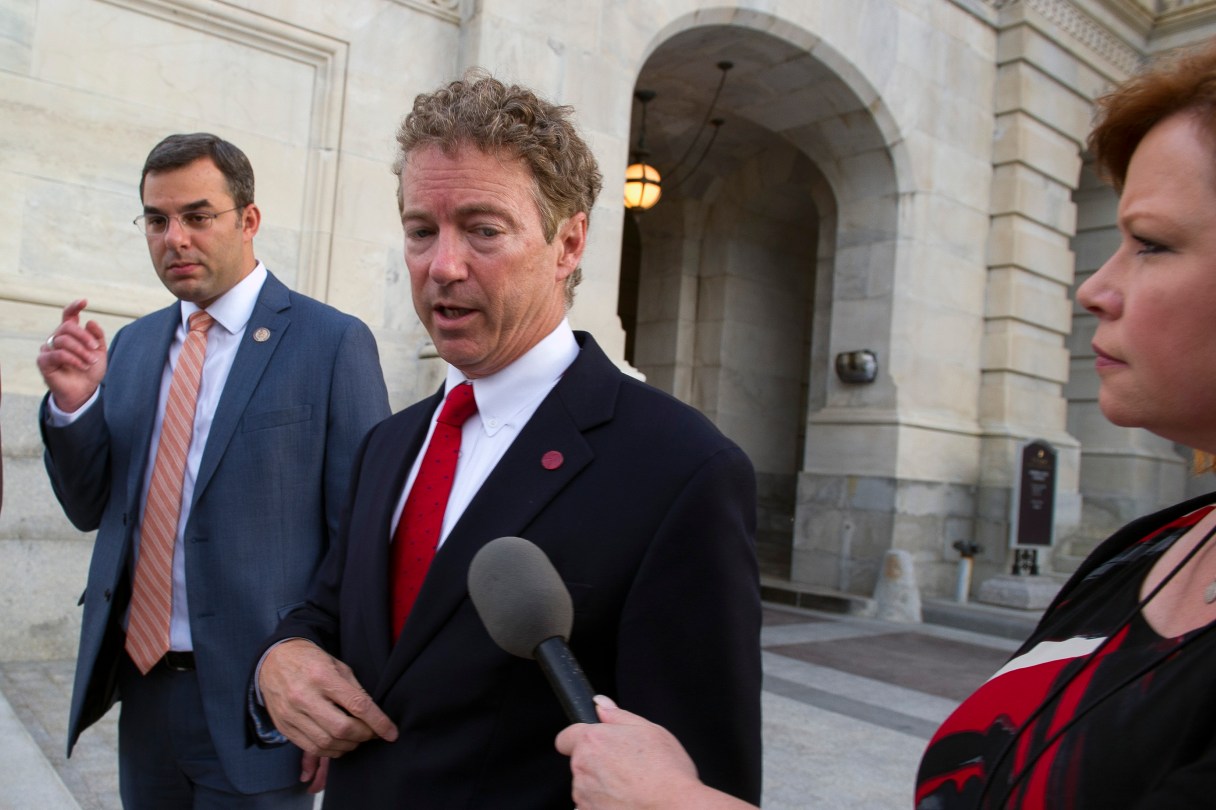
Sen. Rand Paul, R-Ky., talks with a reporter as he leaves the Capitol following his address to the Senate in Washington, Sunday, May 31, 2015. Senate Republicans say they've been unable to make a deal to extend contested anti-terror provisions. As a result, the post-Sept. 11 programs will expire at midnight. (AP Photo/Cliff Owen)
Sen. Rand Paul, R-Ky., talks with a reporter as he leaves the Capitol following his address to the Senate in Washington, Sunday, May 31, 2015. Senate Republicans say they've been unable to make a deal to extend contested anti-terror provisions. As a result, the post-Sept. 11 programs will expire at midnight. (AP Photo/Cliff Owen) Sen. Rand Paul, R-Ky., talks with a reporter as he leaves the Capitol following his address to the Senate in Washington, Sunday, May 31, 2015. Senate Republicans say they've been unable to make a deal to extend contested anti-terror provisions. As a result, the post-Sept. 11 programs will expire at midnight. (AP Photo/Cliff Owen)

WASHINGTON (AP) – Senate Republicans have agreed to begin debate on a House bill that would overhaul the National Security Agency’s handling of American calling records. And they would do it while preserving other domestic surveillance provisions.

But that remarkable turnabout didn’t happen soon enough to prevent the laws governing the programs from expiring at midnight Sunday. Republican Sen. Rand Paul, a presidential contender, stood in the way of extending the program, angering his GOP colleagues and frustrating intelligence and law enforcement officials.

Now, the question is whether the Senate will pass a bill the House can live with. If so, the surveillance programs will resume, with some significant changes in how the phone records are handled. If not, they will remain dormant.