
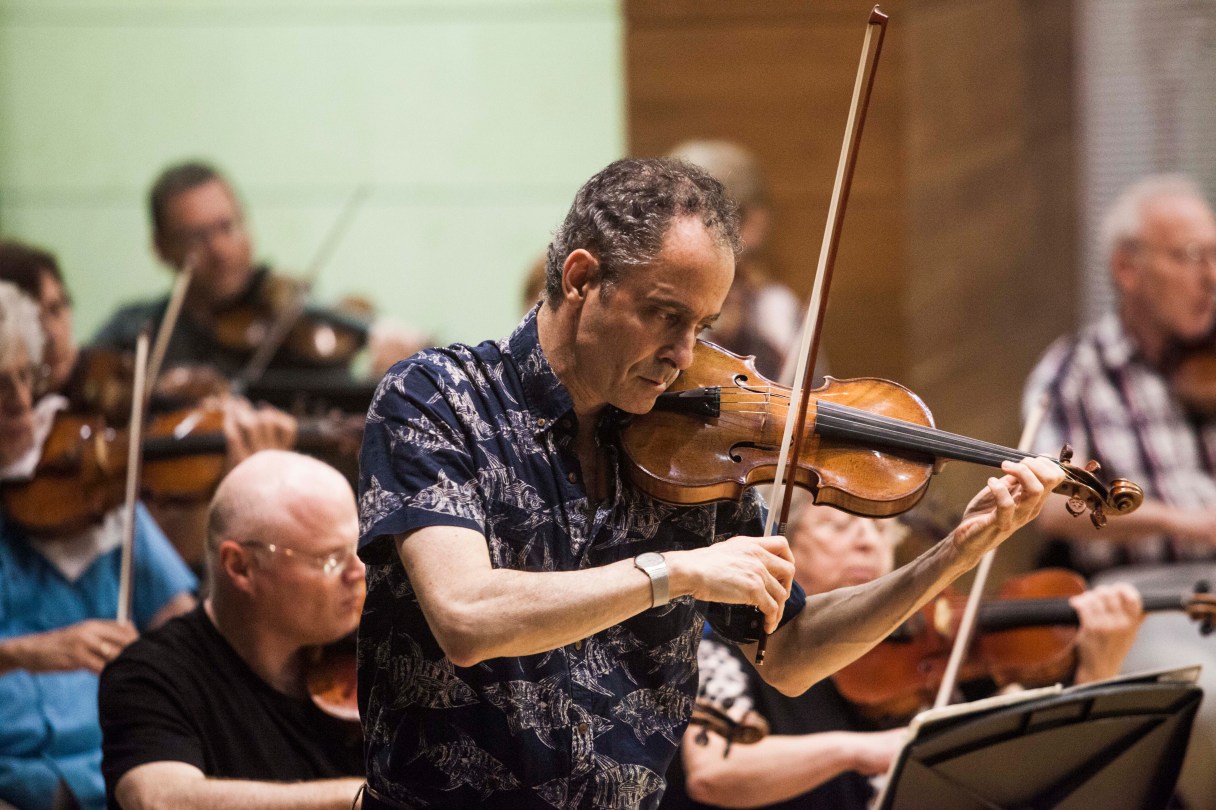
RAANANA, Israel (AP) – In 1933, the promising young Jewish-German violinist Ernest Drucker left the stage midway through a Brahms concerto in Cologne at the behest of Nazi officials, in one of the first anti-Semitic acts of the new regime.
Now, more than 80 years later, his son, Grammy Award-winning American violinist Eugene Drucker, has completed his father’s interrupted work. With tears in his eyes, Drucker performed an emotional rendition of the Brahms Violin Concerto in D Major, Op. 77, over the weekend with the Raanana Symphonette Orchestra.
“I think he would feel a sense of completion. I think in some ways many aspects of my career served that purpose for him,” the 63-year-old Drucker said of his father, who passed away in 1993. “There is all this emotional energy and intensity loaded into my associations to this piece.”
Thursday’s concert, and a second performance Sunday night, commemorated the Judischer Kulturbund – a federation of Jewish musicians in Nazi Germany who were segregated so as not to “sully” Aryan culture.
After the humiliation in Cologne, the elder Drucker became a central player in the Kulturbund, a unique historical phenomenon with a mixed legacy.